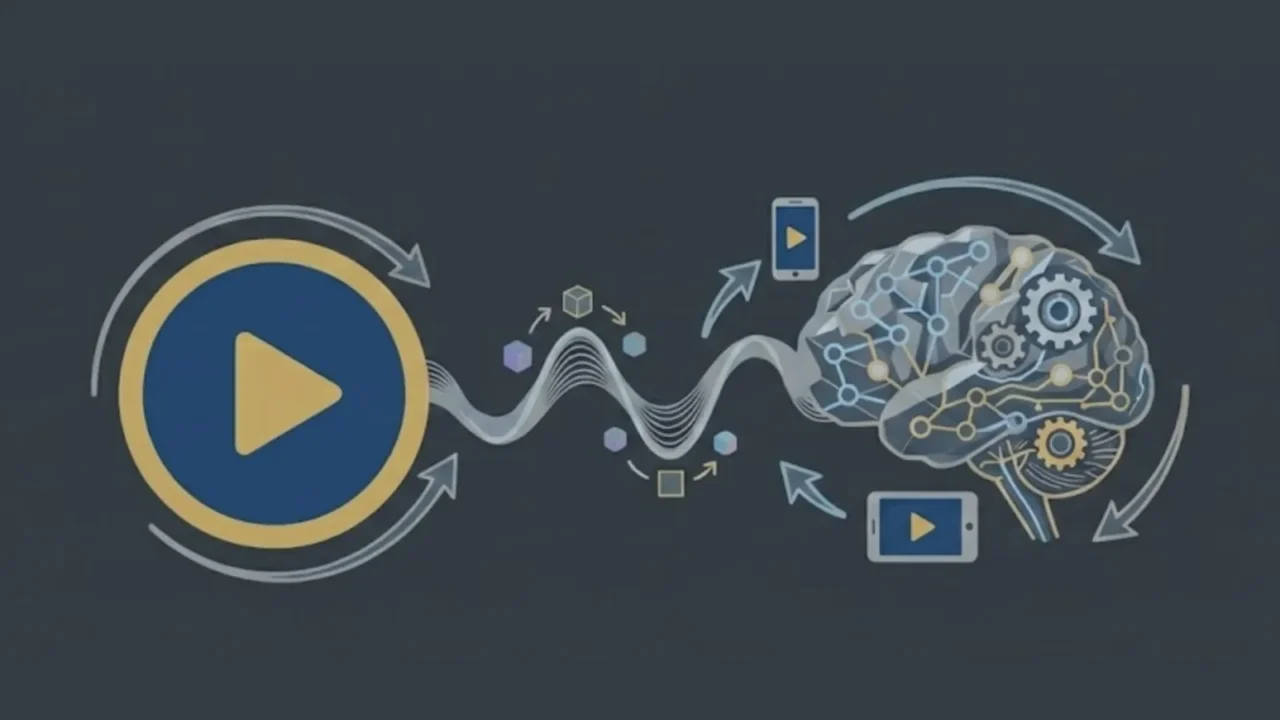

Over the last decade, the transformation of the content delivery industry has been influenced by the cloud, new device form factors and streaming services. Today, audiences have the opportunity to enjoy video content anytime, anywhere, on virtually any device. This is made possible not only by the power of cloud computing, but also by the enhanced adaptive streaming technologies that have emerged from the media industry’s partnership with the IT sector, not to mention the increasing integration of machine learning and artificial intelligence.
Still, the streaming industry’s payoffs are minimal for now. Meanwhile, fulfilling the next generation of audience expectations requires next-generation architecture and ever-increasing levels of personalization. A new streaming platform needs to accomplish two things if it hopes to survive, user engagement and content delivery. User engagement is about keeping people on the platform as long as possible and getting them to come back. Content delivery is about getting the right content to the right user at the right time.
This can be achieved by using decentralized and advanced computing architectures to enhance delivery performance and content responsiveness. In addition to that, augmenting interactive and immersive experiences by using virtual reality, mixed reality, and augmented reality, alongside AI-generated content. Moderation and content generation with AI-powered tools, helps automatically tag metadata and detect censorship. Implementing AI-assisted video compression techniques that reduce bitrates without reducing quality. This will make streaming within reach of more people, using more devices, and across more use-cases.

For a cutting-edge streaming platform to function well and engage users, it must have several key features. The first is AI-driven, personalized recommendations that take into account not just the general tastes of users like them, but also the specific behaviors and preferences of individual users. A second feature is the actual streaming of the video content, but this must be done at a high quality level over a network with frequently changing conditions, hence the term adaptive bitrate streaming. Third is content moderation that is done at scale in a manner that ensures the safety of users and the compliance of the platform with all applicable laws and regulations. Fourth is the almost taken-for-granted capability of being streamable over a wide variety of devices from a range of manufacturers, such that a user can watch their show on the device of their choice, be it a desktop PC or a smartphone. Fifth is an infrastructure that can support not just the platform itself but also the rich set of features and highly interactive design that are both expected and demanded by today’s users.

The platform could benefit from additional, innovative features to enhance user engagement. These include AI-generated content such as series, news, or personalized virtual hosts. Augmented and virtual reality support can offer immersive experiences through 360° videos.

Let’s look at the steps to launch a streaming platform from scratch:


In 2030, the largest streaming platforms are going to be focusing their efforts on what I like to call ‘AI for families,’ which is actually a misnomer. What it means is not content exclusively for families but, instead, content that is brand-safe, wholesome, and premium. The platforms are going to be redefining what ‘premium’ means in the streaming space. They’re also going to be focusing, leveraging generative AI, on hyper-personalization of content at an audience-of-one level and finding new ways for audiences to interact with that content.
Moreover, the initiatives will seek to improve worldwide expansion through means such as emotion-matched dubbing, real-time localization, and features that enhance inclusivity, like sign language interpretation. There is also talk about connecting the platforms with real-world theme park experiences across the streaming spectrum, and using virtual theme parks and personalized AI stories to keep fans and families involved.

These platforms, in their pursuit of a top-tier consumer experience, will use AI to push the boundaries of streaming as we know it. They will use it to deliver an even-more-cinematic experience, and more intelligent storytelling, if you will, than we see today. They will use it to create dynamic episodes, immersive VR/AR experiences or even entirely original content on-demand.
Over the next few years, streaming will evolve into more than just a service. New technologies are emerging that will offer even more innovative ways to keep audiences engaged, from fully interactive experiences to AI-generated content that feels personal and meaningful. We can imagine a future in which streaming is an ever more intelligent, ever more connected, and ever more immersive ecosystem. The merger of technology and storytelling in this future is a space where we can dream—bigger than ever before.