For years, software engineering had a kind of rhythm to it. You solved a problem, broke it down into components, wrote the code, fixed what you broke while writing the code, and slowly shaped something into existence. That rhythm is still there, but AI has undeniably changed its tempo.
Today, generative AI tools sit in the editor next to us. They autocomplete, refactor, explain, forecast, and sometimes even argue. They’re becoming part of the development environment the same way version control or automated testing became part of it years ago. And because of that, the role of a “software engineer” is starting to stretch in new directions.
This isn’t a philosophical shift. It’s already happening in practice.
What AI Already Changes in Day-to-Day Engineering Work
The simplest tasks, the ones engineers used to do almost on autopilot, are the ones AI is folding into its domain first. Gartner expects that by 2027, 80% of the engineering workforce will need to upskill specifically because generative AI will influence everyday development tasks.
The time savings are not imaginary. McKinsey’s research shows that generative AI can make core coding work: writing features, refactoring, and documenting twice as fast in many cases. We’re seeing the same thing with GitHub Copilot: a 2024 empirical study found noticeable productivity gains in real-world environments, not just lab conditions.
This means the daily work of engineers already looks different:
- Less starting from scratch
- More reviewing, guiding, correcting
- More validating assumptions
- Less time on boilerplate and more on shaping the solution
In a sense, engineers now spend less time assembling and more time directing.
The Expanding Role: Engineers as Architects and Systems Thinkers
When a tool starts handling the mechanical parts of a job, the human shifts toward abstraction. Engineering is following that pattern.
Gartner’s 2024 predictions point to this clearly: as more programming tasks become automated, the uniquely human strengths of creativity, judgment, and system-level thinking become more valuable. Rather than replacing engineers, AI accelerates the transition to AI-native engineering, where developers operate at a higher conceptual layer.
A 2024 academic article on the Future of software development with generative AI makes the same argument: AI will remove much of the repetitive manual work, while leaving problem-solving, modeling, and architectural thinking to humans. That’s the work we are uniquely equipped to do.
Instead of spending most of our time writing code line by line, the center of gravity shifts toward designing systems, understanding trade-offs, aligning architecture with product goals, and connecting business problems to technical solutions. In other words, the role is not shrinking; it is expanding upward.
New Responsibilities Created by AI
AI may write code, but it doesn’t understand the consequences of that code. That part is still ours.
The new responsibilities engineers face include validating AI-generated logic, ensuring architectural coherence across generated modules, reviewing outputs for performance, security, and maintainability, handling regulatory, intellectual property, and ethical considerations, and integrating AI-generated components into real production systems.
The same academic article that praises productivity gains also highlights these concerns: companies adopting generative AI face questions around compliance, intellectual property, security, and overall governance.
Bain’s 2024 report tells a similar story: organizations see efficiency gains on paper, but many fail to capture real value because their workflows are not designed around human oversight. AI accelerates, but humans stabilize. Without the latter, the former collapses.
This means that engineers step into a new dual-role: part creator, part reviewer; part builder, part guardian.
Skills That Are Becoming More Important
The emerging skill set looks different from the one many engineers grew up with.
Increasing in importance:
- System design and architecture
- AI tool proficiency and prompt mastery
- Data literacy (enough to understand how models fail)
- Security, governance, and quality assurance
- Collaboration across human–AI hybrid workflows
Gartner predicts the rise of a dedicated “AI engineer” role, a hybrid of software engineering, ML understanding, and system integration. This is not a niche role. It is likely to become the backbone of engineering organizations.
The same SpringerLink research reinforces this: once generative AI takes over repetitive tasks, human engineers must move into the creative, architectural, and oversight layers where AI cannot lead.
This isn’t optional upskilling. It’s the natural evolution of the job.
Skills and Tasks That Are Shrinking in Emphasis
Likewise, some tasks are already fading into the background. Empirical studies of Copilot show significant time savings in tasks such as writing documentation, generating unit tests, handling boilerplate coding, implementing routine CRUD logic, and addressing simple debugging patterns.
McKinsey’s findings echo this: generative AI dramatically accelerates standard coding tasks.
None of these skills disappear entirely, but their relative weight in the engineering role decreases. When AI can produce an entire module outline in seconds, the value shifts to ensuring that the module is correct, secure, well-placed, and aligned with the broader design.
This means writing better code matters more than writing more code.
Opportunities for Engineers in the AI-First Era
With new tools come new possibilities, allowing engineers to focus on higher-value work while building more ambitious systems and contributing earlier in the product lifecycle. Rather than competing with AI, they can partner with intelligent systems to enhance productivity and innovation, while also stepping into newly emerging roles such as AI engineer, AI architect, and AI platform lead.
Gartner forecasts a significant expansion of these roles by 2027. The academic research calls generative AI a “major enabling technology” that improves quality, reduces cost, and increases productivity, giving engineers more space to think, not just produce.
And AI does not just make engineering faster; it makes it broader.
Risks and Challenges Engineers Must Navigate
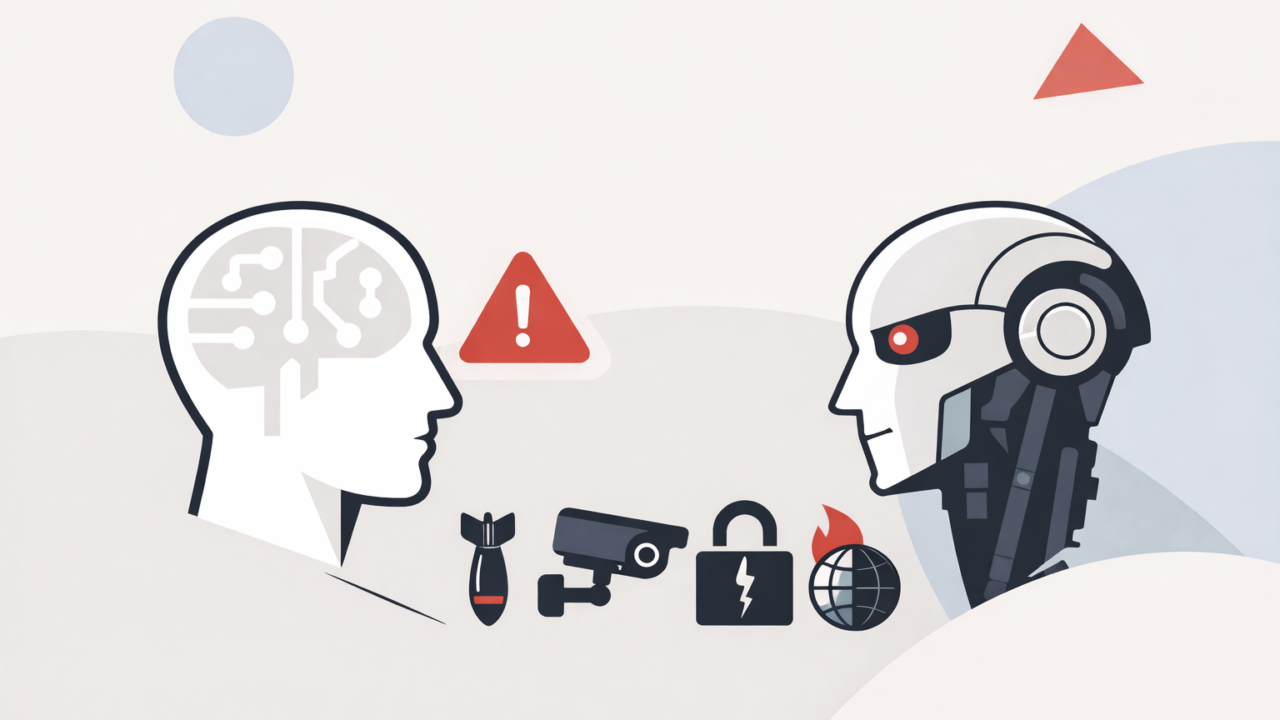
AI’s rise is not only an opportunity. It brings real challenges:
- Over-reliance on AI suggestions
- Security vulnerabilities hidden inside generated code
- Maintainability issues
- Legal and IP uncertainty
- Ethical and regulatory expectations
- Skill atrophy occurs if engineers stop thinking critically
A recent study on collaborative development found a paradox: while AI tools increased individual productivity, they also increased integration overhead by 41.6%, meaning senior engineers had more coordination work, not less.
This reinforces a simple truth: AI accelerates complexity just as much as it accelerates productivity. The burden of understanding the system still rests on the people building it.
What Future Software Engineering Might Look Like
We are moving toward an AI-native development model, where AI tools are embedded throughout the software lifecycle, not just in coding.
Gartner predicts:
- AI-first workflows
- AI engineers as core team members
- Model-driven development environments
The academic literature points to the same future: generative AI will touch not only coding, but also design, testing, documentation, and integration, fundamentally reshaping the SDLC.
In this world, engineers orchestrate more than they manually construct. The job looks less like typing and more like designing, reviewing, deciding, and shaping.
How Engineers Can Stay Relevant
Practical guidance becomes simple:
- Learn AI tools deeply — treat them as part of your craft, not a shortcut.
- Strengthen system design and architecture — AI can’t do this for you.
- Stay fluent in security, quality, and governance — these responsibilities grow.
- Improve communication and collaboration — hybrid workflows require stronger alignment.
- Stay curious — AI evolves quickly; so must engineers.
Across Gartner’s predictions, the academic research, and the industry reports, the message is consistent: human expertise remains essential. AI accelerates the work, but humans still define it.
Conclusion: The Evolving Identity of the Software Engineer
If there’s one idea I want engineers to take away from this shift, it’s this: AI changes how we work, but not why we work.
From the beginning, engineering has been about solving problems, finding clarity in complexity, and building systems that help people. AI doesn’t replace that mission; it amplifies it.
The academic research shows that generative AI frees developers from repetitive tasks, allowing them to focus on higher-level challenges. Gartner’s forecasts reinforce the same point: the engineer’s role is expanding, not contracting.
During my talk at the AI Coding Summit about AI-powered refactoring, I said something I continue to believe: AI doesn’t replace developers. It amplifies their capabilities. It gives us leverage. It gives us reach. Moreover, it allows us to do the parts of the job that matter most. The identity of the engineer is evolving, but it’s moving closer to what the role was always meant to be.