
The digital economy relies on two main interfaces that people do not often consider together.
The first is the storefront, or e-commerce platform, where shoppers browse, compare, buy, and track their orders.
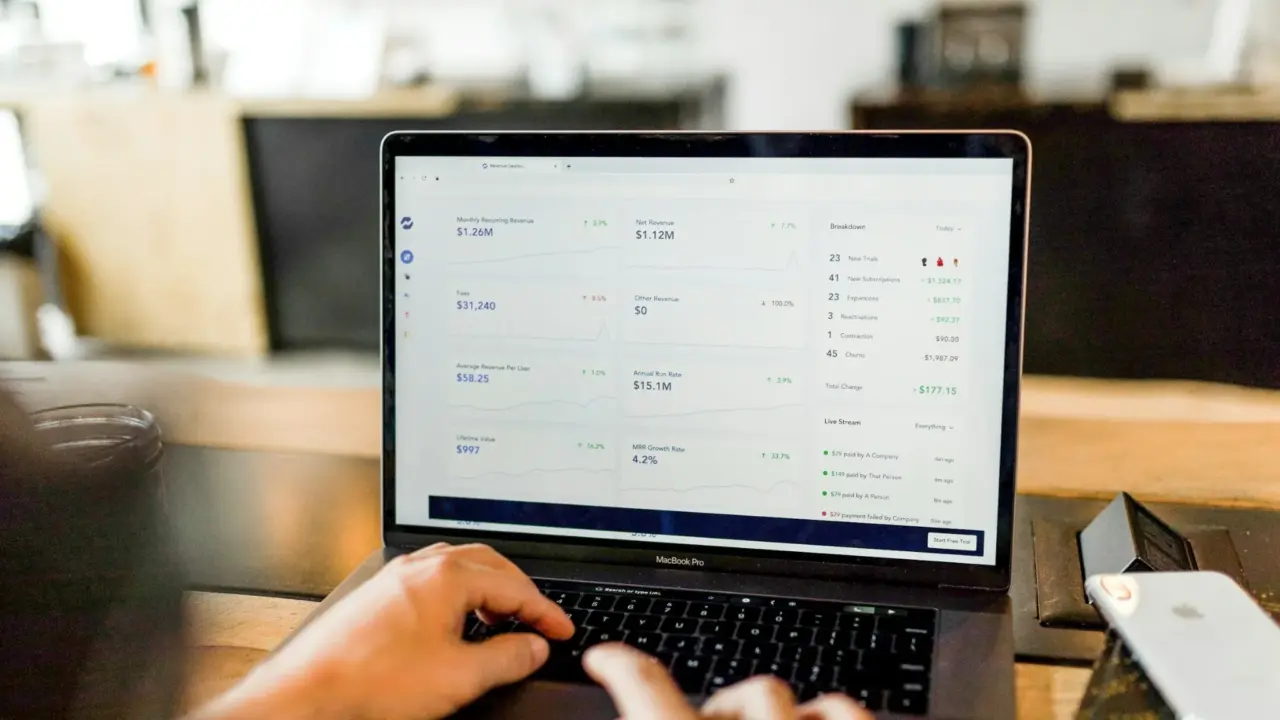
The second is the scoreboard, or dashboard, where sellers and managers monitor orders, inventory, returns, traffic, margins, and customer behavior almost in real time.
One is designed for customers, the other for operators.
Together, they shape how modern life works.
A study from Science Direct explained that this pairing is important because e-commerce is now more than just a way to shop online, and dashboards are more than just charts for executives. E-commerce platforms have become part of daily routines, while dashboards act as the system that tells organizations what is happening in those marketplaces.
The platform shows where demand is, and the dashboard is where decisions start. When these two connect, they change how companies sell, how people shop, how workers manage their time, how supply chains react, and even how we think about convenience.
The study highlights practical benefits like availability and product variety, global reachability, and lower marketing costs. While these terms sound technical, they have real effects on daily life. Now, a small seller can reach customers far beyond their local area.
Someone in a small city can browse more products than any local mall could offer. Niche products can find buyers without needing space in a physical store. This is why e-commerce now feels like a core part of the economy, not something separate.
Dashboards have become essential for quick decision-making. One review found that dashboards help people make better decisions by amplifying cognition and capitalizing on human perceptual capabilities.
A recent survey explains that dashboards are made up of visualizations with different layouts and interactions, and highlights the rise of systems that can suggest or even create dashboard views automatically.
Simply put, dashboards help people quickly spot what is important, especially when the data is too big or complex for regular reports.
Why e-commerce platforms became ordinary so quickly
E-commerce became popular not just because it is digital, but because it fits how people live today. It removed set store hours, made location less important, and made shopping easier. People can compare prices quickly, read reviews, pay right away, and track deliveries from home. While convenience is clear, trust is even more important.
A recent study found that trust, perceived risk, perceived security, and e-WOM significantly influence consumers’ e-commerce purchasing decisions. This shows that online shopping grows fastest when platforms lower anxiety as much as they increase convenience.
Trust is not just a bonus in e-commerce; it is the foundation of every transaction. In physical stores, customers can see and touch products, check out the store, and take their purchase home right away.
Online shopping removes these comforts, so platforms need to build trust through design, secure payments, ratings, seller checks, shipping promises, and return policies.
The same study found that perceived risk strongly affects how trust influences buying decisions. In other words, online shopping depends on whether users believe the platform can handle uncertainty.
This is also why having a wide range of products is so important. E-commerce does not just copy the old store model; it changes what a store can be. Online marketplaces can offer more sellers, more specialized items, and more unique products than physical stores can afford to stock.
Research points to availability and product variety as a key benefit. For shoppers, this means more choices. For small businesses, it means being easier to find. For the economy, it means shelf space is no longer a main limit.
Global reach is another big change. Sellers no longer need a chain of stores to be seen in different regions or countries. The same research that highlights e-commerce’s variety also points to global reachability as a main benefit.
This is especially important for small brands, artisans, and specialized suppliers who used to be limited by location, contracts, or retail gatekeepers.
E-commerce has removed many of these barriers, though it has also introduced new ones like platform fees, ranking algorithms, and ad competition.
What automated dashboards actually do behind the screen
Many people see dashboards as a tool just for managers or executives. In fact, automated dashboards are valuable because they quickly turn business activity into understanding.
Orders come in, returns go up, inventory drops, traffic changes, ads perform differently, and complaints may focus on one product. A good dashboard makes these events clear before problems grow.
Research often says dashboards are about helping people notice what matters, not just about reporting. They are useful because they help focus attention.
The automatic or semi-automatic side of dashboards adds another layer. A 2024 survey on dashboard recommendation systems explains that automation can include the suggestion of data and visualizations, the optimization of layout, and the use of user feedback.
This matters because modern businesses often generate more operational data than any one person can manually structure well. Automated dashboards help decide which indicators deserve prominence, which charts best fit the data, and how the screen should be arranged so a user does not drown in visual noise.
That is especially relevant in e-commerce, where events happen constantly and often simultaneously. A seller may need to know whether abandoned carts are rising, whether one delivery partner is underperforming, whether refund rates are climbing after a product change, or whether a flash sale is eroding margins faster than it is creating revenue.
The dashboard’s job is not merely to display numbers. It is to create a usable view of the business in motion.
Business intelligence, or BI, is described as a process that brings together data collection, storage, and analysis to help organizations perform better and make decisions. A 2024 review found that BI helps organizations improve by offering tools and practices that give access to analysis regular reports cannot provide.
It also pointed out that BI makes it easier to create dashboards and summary reports. This is important because dashboards are not just useful for their visuals—they are valuable because they simplify complex information.
What these systems serve in current life
E-commerce platforms and automated dashboards together meet an important need today: quick coordination. Shoppers want things to be simple, with more options and faster delivery.
Businesses want better insight, faster reactions, and more control. Platforms serve consumers, while dashboards serve businesses. One tracks what people do; the other helps make sense of it. One creates sales; the other helps turn them into decisions.
This combination also fits today’s culture.
People now expect services to be available anytime, personalized, and easy to track.
“Where is my order?” is a common question because the tools exist to answer it. “How are sales right now?” is a normal management question because dashboards make real-time tracking routine. These systems do not just meet expectations—they shape them.
There is a bigger impact here. E-commerce platforms and dashboards are not just tools for shopping or management—they help shape how society handles trust, time, and attention.
Platforms teach people to trust ratings, checkout steps, and delivery promises. Dashboards teach organizations to trust metrics, alerts, and visual summaries. Both systems push for faster decisions, often guided by interfaces.
This can be helpful, but it can also make people forget how much judgment is handed over to design, algorithms, and data.
Why this pairing will matter even more next
The future of commerce is not just about more online shopping. It is about more connected decision systems, like recommendation engines, dynamic pricing, predictive restocking, automated fulfillment, and smarter dashboards that can suggest actions instead of just showing numbers.
A survey on dashboard recommendation systems points to a future where dashboards act as automated helpers, not just custom tools. On the shopping side, personalization is increasing. This means the storefront and the scoreboard will probably become even more closely connected.
The benefits are clear: customers get better experiences, businesses get more insight, problems are solved faster, and markets are bigger. The risks are also clear: more impulse buying, more dependence on complex systems, more pressure to optimize, and a higher chance of confusing clear visuals with real understanding. The main challenge is not whether these tools are helpful—they are. The challenge is to use them wisely, without letting convenience take the place of good judgment.
In the end, e-commerce platforms and automated dashboards are part of the same story. One is where people shop; the other is where results are tracked. Together, they show something important about the digital age: public convenience is almost always built on operator visibility.
This trade-off has made life faster, wider, and more connected. It has also made life more measurable, more optimized, and sometimes more influenced by technology than people realize.
The best response is not nostalgia or giving up, but learning—understanding what these systems do well, where they can mislead, and why they are now central to daily life.