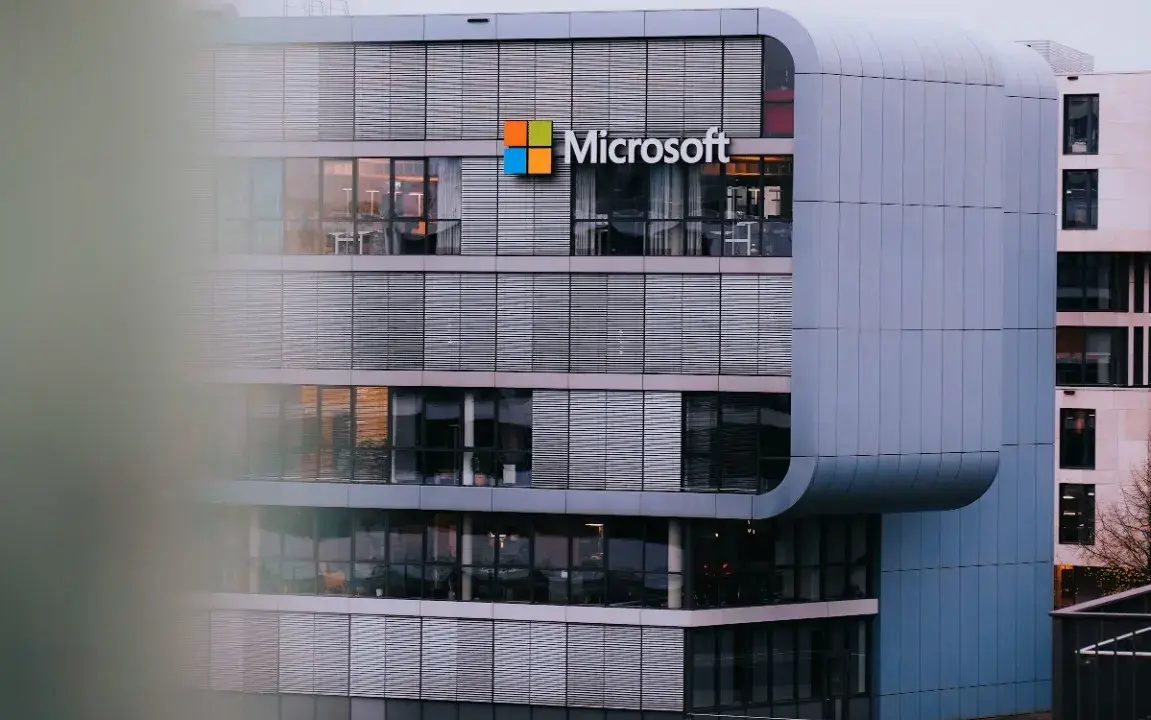
Microsoft closed out its weakest quarter on Wall Street since the 2008 financial crisis, ending a bruising start to 2026 as investors grew more uneasy about the company’s AI spending bill and the possibility that newer AI products could pressure parts of its software business.
Microsoft lost almost a quarter of its value in the first three months of the year, marking its steepest quarterly drop since 2008. The stock finished Tuesday at $370.17.
A quarter defined by AI doubts, not AI excitement
Bloomberg said Microsoft now sits at the intersection of two troubling trends in tech. The first is cost: the company is still ramping up capital expenditures while investors increasingly want clearer proof that AI infrastructure spending will translate into faster revenue growth.
The second is competitive pressure: investors are also selling software stocks on concern that AI startups such as OpenAI and Anthropic are building agents that could replace or weaken products from incumbents like Microsoft.
That combination has hit the stock hard. Microsoft was down 24% in the first quarter, putting it on pace for its biggest loss since the 27% drop recorded in the fourth quarter of 2008.
It also said Microsoft was by far the weakest performer among the Magnificent Seven to start the year, while an index tracking the group had fallen 13% over the same stretch.
Investors are asking when the AI payoff arrives
Part of the pressure comes from the sheer scale of Microsoft’s spending. Bloomberg reported that the company’s capital expenditures, including leases, are projected to reach $146 billion in fiscal 2026, up about 66% from $88 billion in fiscal 2025.
Jonathan Cofsky, portfolio manager at Janus Henderson Investors, told Bloomberg there is concern that some customers may go directly to AI vendors instead of paying Microsoft, which could pressure pricing and margins. He also said Microsoft has become a lot more capital intensive, adding that for the shares to perform better, investors need more confidence that software growth will not materially slow.
Copilot and Azure remain under the microscope
The unease is not only about spending; it is also about product traction. Investors have taken a more skeptical view of Microsoft’s AI investment program because growth has not accelerated sharply enough to match the scale of the outlay.
It pointed to a slight deceleration in Azure growth in the company’s most recent quarterly results and said Copilot has seen limited traction with users, contributing to changes in Microsoft’s AI operations.
Ben Reitzes of Melius Research, who has a hold rating on the stock, wrote that Microsoft’s upside in Azure is capped as the company scrambles to improve Copilot and its own models. That view helps explain why the market’s patience has thinned even though Microsoft remains one of the biggest long-term AI bets in software.
Wall Street still sees upside, but nerves are obvious
Even after the selloff, Bloomberg said optimism has not disappeared. Of the 67 analysts it tracks on Microsoft, 63 still rate the shares a buy, while three have holds and one rates the stock a sell.
The average 12-month price target is $592, implying more than 60% upside and the highest implied return in Bloomberg’s data going back to 2009.
That bullishness is colliding with a much rougher short-term mood.
CNBC’s framing of the quarter as Microsoft’s worst since 2008 captures the market’s current dilemma: investors still believe the company could emerge as a major AI winner, but they are no longer willing to ignore the cost, execution, and competitive risks along the way.
For Microsoft, that means the next phase of the AI race may be judged less by ambition and more by proof.