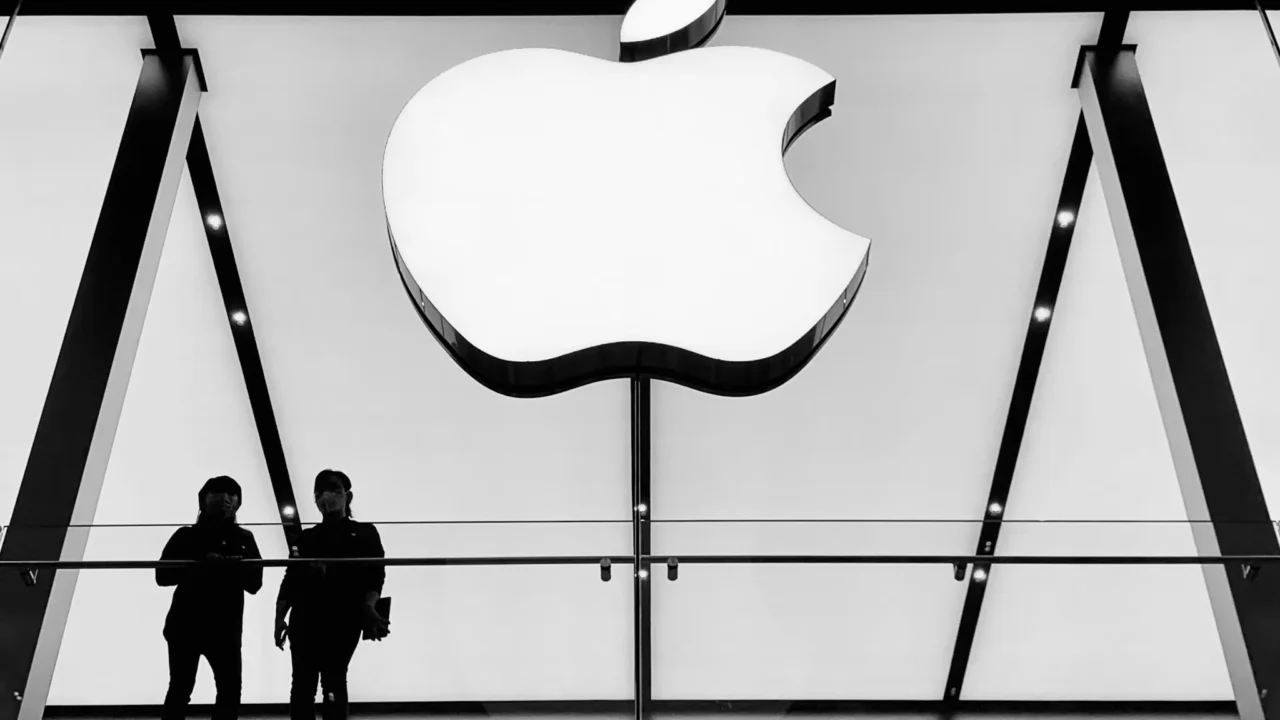
Apple entered its 50th anniversary week with a celebration at Apple Park, where CEO Tim Cook rang Nasdaq’s opening bell from the company’s Cupertino headquarters.
Apple’s AI head start turned into a lag
TheStreet shared the Apple once had an unusually strong early position in AI because Siri arrived on the iPhone in 2011, years before most people had heard the word chatbot.
But that early advantage did not become a full AI platform.
CNBC reported that Apple researchers built strong internal AI systems yet struggled to ship them at scale, while executives prioritized privacy, device performance, and brand risk over the kind of aggressive rollout seen at rivals such as OpenAI, Google, and Microsoft.
Former employees said Apple “lost its nerve” on AI after early stumbles and moved too slowly as generative AI accelerated.
One former Siri leader, as quoted in the piece, said Apple “could have been five years ahead” but let that advantage slip.
That line is what turned Apple’s anniversary coverage into something sharper than nostalgia: a public argument that one of the most powerful tech companies in the world may have wasted its early AI position.
Siri became the symbol of the problem
The AI gap has become most visible through Siri itself.
The result of Apple’s slower AI push is something users can feel directly when they ask Siri a more nuanced question and “watch it stumble.”
That user frustration matters because Siri was once one of Apple’s clearest futuristic promises. Now, in the AI era, it has become the easiest example critics reach for when describing how far Apple trails the current leaders.
The clearest sign of how far Apple has fallen behind is the prospect of Siri increasingly depending on outside AI.
In that framing, the issue is not only that competitors moved faster. It is that Apple, a company famous for controlling its hardware-software stack, may have to lean more heavily on external intelligence to make Siri feel competitive again.
Why insiders still think Apple can win
Even so, the former insiders cited in the reporting were not uniformly pessimistic.
Several Apple veterans still believe the company can win if it stops trying to match rivals on their terms and instead leans into what historically made Apple successful: integrating, simplifying, and polishing technology until it feels intuitive.
Insiders drew comparisons to earlier eras when Apple was not first to the PC, MP3 player, or smartphone, yet still ended up defining those categories through execution.
The insiders see AI through that lens as well. Rather than chasing the flashiest demo, Apple’s opportunity may lie in embedding intelligence into photos, messages, notifications, and apps so the entire device feels more personal and seamless.
That is a different kind of AI win — less about public benchmark bragging, more about whether the product simply works in ways consumers actually notice.
Steve Wozniak was among the Apple veterans cited as pointing to the company’s history of arriving late yet reshaping categories through better integration.
The next test is not history, but execution
That leaves Apple in a familiar but riskier position.
Its supporters can still tell a credible comeback story, but the company no longer gets the benefit of being early.
Apple’s second half-century opens not with a new category-defining breakthrough, but with a question: can the company that made the future feel intuitive do the same for AI before rivals make that impossible?
For now, Apple at 50 looks less like a company that has already lost the AI race than one that can no longer afford another slow lap.