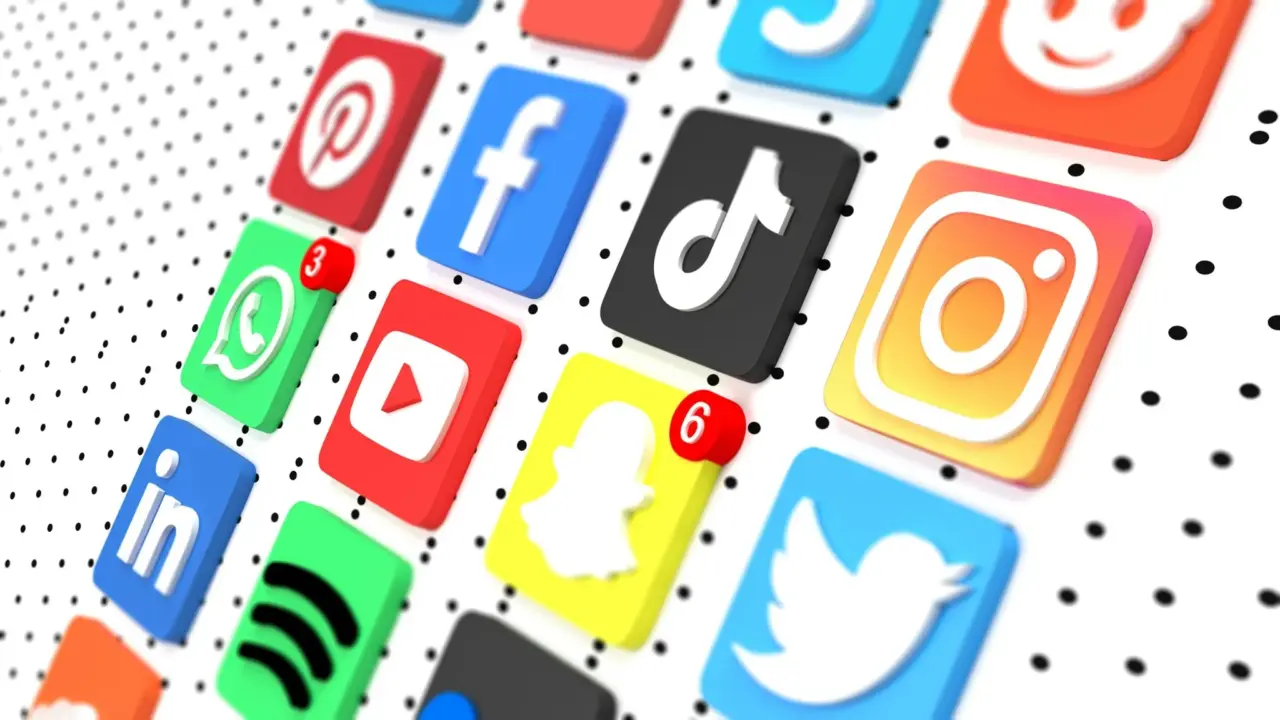
You can live without social media. The bigger challenge is that leaving it now means stepping away from a whole set of systems that help with news, casual connections, entertainment, self-expression, recommendations, and daily coordination.
That is why the question feels more complicated than it did ten years ago. It is not just, “Can I quit Instagram, TikTok, or X?” but, “What do I lose if I stop using the feed-driven internet?” The real issue is not that social media is impossible to leave, but that platforms have become skilled at making themselves seem essential.
Many public debates frame this as a moral issue, saying social media is either harmful or helpful for everyone. The reality is less extreme and more practical.
Research shows some people feel better after stepping away, especially from certain platforms or habits, while other studies find mixed results. The way these platforms work helps explain why leaving can feel both freeing and confusing.
If you wonder whether you can live without social media, the honest answer is yes, but it is not as simple as just quitting. You will need to find new ways to fill the roles social media used to play.
Social media is not just “social” anymore
Quitting social media feels harder now because it is no longer just one thing. It covers messaging, entertainment, staying aware of what others are doing, discovering new content, news, search, and self-presentation all at once.
According to the Reuters Institute’s Digital News Report 2025 executive summary, 54% of people in the United States now get news from social media and video networks, surpassing TV news at 50% for the first time.
This matters because leaving social media is not just a lifestyle change—it also affects how many people find out what is happening in the world.
That is why the modern version of “Can I live without social media?” is really two questions.
First: can you live without the endless feed, the algorithmic pull, the attention fragmentation, and the social comparison?
Second: can you live without the functions social media has absorbed, especially news, event awareness, and casual contact with acquaintances? The first answer is usually yes. The second requires planning.
Why it feels so hard to leave: the tech is built to learn your attention
Social media feels hard to leave not just because people enjoy gossip or distraction, but because recommendation systems are designed to keep learning from your behavior.
Google’s paper Deep Neural Networks for YouTube Recommendations explains that YouTube’s system helps “more than a billion users” find personalized content. The challenge is handling huge amounts of content, responding to recent user actions, and guessing what people want from imperfect signals.
The paper says these models learn about one billion parameters from hundreds of billions of examples. This is not just a simple feature—it is large-scale behavioral adaptation.
Although that paper focuses on YouTube, the same idea applies to other feed-based platforms. These systems do more than show you your friends’ posts—they constantly predict what will keep your attention at this moment.
That is why leaving social media can feel harder than quitting a basic communication tool. You are not just leaving a place for updates; you are leaving a system that has learned your habits and is very good at giving you content you are likely to watch, click, or react to.
This explains why people who quit one platform often end up using another. The habit is not just about liking Instagram or TikTok. It is often about being used to endless, personalized streams of content. The type of app might change, but the way it draws you in can stay the same.
What happens when people actually stop?
The best evidence on this topic does not come from opinion articles. It comes from actual experiments.
In the paper The Welfare Effects of Social Media, Hunt Allcott, Luca Braghieri, Sarah Eichmeyer, and Matthew Gentzkow ran a randomized experiment in which people deactivated Facebook for the four weeks before the 2018 U.S. midterm election.
They found that deactivation reduced online activity, increased offline activities such as socializing with family and friends, reduced both factual news knowledge and political polarization, increased subjective well-being, and led to a persistent reduction in Facebook use even after the experiment ended.
That is one of the clearest pieces of evidence that, for at least some users, stepping away can improve how they feel and how they spend their time.
But that does not mean quitting social media produces a universal glow-up.
In a newer NBER paper, The Effect of Deactivating Facebook and Instagram on Emotional State, the same research line found that Facebook and Instagram deactivation often produced substitution rather than pure abstinence.
The paper reports that Facebook and Instagram deactivation increased time spent on Twitter, Snapchat, TikTok, YouTube, browsers, and other social apps by a few minutes per day.
Facebook deactivation reduced total app use by an estimated 9 minutes per day, but Instagram deactivation had a small and insignificant effect on total app usage.
The same study found that deactivation improved the emotional state index by 0.060 standard deviations for Facebook and 0.041 standard deviations for Instagram. The message is not “social media does nothing.” It is “the benefits of leaving one platform can be weakened if you simply migrate your attention elsewhere.”
This is an important reality check. Many people do not truly want to leave the world of feeds. They just want a break from a certain platform or a particularly tiring way of using it.
Often, people end up finding a replacement. If you delete Facebook but spend that time on TikTok, YouTube Shorts, or another endless-scroll app, the change might not be as big as you hoped.
Why the research on “quitting” is mixed
This is where the discussion often gets too simple. Some people claim quitting social media always improves well-being, while others say the worries are overblown. Research shows a more realistic answer: the effects are different for everyone, and context is important.
A useful recent overview is Social media interventions to improve well-being, a 2025 review by Amy Skeggs and Amy Orben.
The paper says that one widely researched intervention, “digital detoxing,” has shown mixed support, with studies finding both positive and negative effects on well-being.
It notes that some experimental studies found that limiting social media use to 10 minutes per day or 30 minutes per day improved outcomes such as depression symptoms and loneliness, and that a randomized controlled trial with youth found that limiting use to 1 hour per day reduced anxiety and depression symptoms.
But the same review also says a recent meta-analysis found that the overall effect of detox or reduction interventions on mental-health outcomes “was not different from zero.”
This might seem confusing, but it is actually useful. It shows that simply telling people to leave social media is not a one-size-fits-all solution. Things like the platform, your age, your reasons for using it, your mental state, and what you do instead all matter.
Someone who mostly uses social media for endless scrolling might benefit more from quitting than someone who uses it for community or professional networking.
Replacing social media with sleep, walks, phone calls, or better news habits will feel different than just switching to another high-stimulation app.
Especially “with the things going around”: what happens to news and awareness?
This is probably the most practical issue. Many people stay on social media not because they enjoy posting, but because it is the quickest way to find out what is happening.
Whether it is political unrest, a natural disaster, a celebrity death, a campus event, or breaking news, social media often shares it before traditional news sources.
That convenience is real. The Reuters Institute executive summary highlights how important social and video platforms have become for getting news.
But using social media for news means depending on feeds designed for engagement, not always for accuracy or balance. These systems mix eyewitness accounts, opinions, jokes, fear, outrage, repetition, and misinformation in one place. It is fast, but not always calm or clear.
So, if you leave social media, you might lose some of that background awareness. You could hear about events later or miss viral conversations. You might feel a bit out of the loop at first.
But that does not mean you will be uninformed. It just means you need to build new habits, like subscribing to news, reading newsletters, using RSS, listening to podcasts, joining trusted group chats, or going directly to a few news sources you trust.
The tradeoff is usually between speed and control. Social media is faster, but direct sources often give you better context.
Can you leave social media and still have a social life?
Usually yes, but it is important to separate social media from digital communication.
Many people do not actually need the public or algorithm-driven parts of social media. What matters most is staying in touch—through direct messages, group chats, event invites, and sharing photos.
These things can often continue outside the feed, using iMessage, WhatsApp, Signal, Telegram, Discord, Slack, email, or even regular texting. The feed can make it seem like connecting and posting are the same, but they are not.
You can keep most of your important relationships while cutting back or even leaving behind the parts of the internet focused on metrics and algorithms. This is not just a research finding, but a practical point: deactivating changes the stream, but not your ability to communicate.
What people often miss after leaving is not close friendships, but “ambient intimacy”—the low-level sense of knowing what acquaintances, old classmates, or distant relatives are doing.
This can matter, and it is one reason some people come back. Social media is especially good at keeping weak ties alive. Whether that is important depends on your situation.
For some, losing that background connection feels peaceful. For others, it feels like their social world has gotten smaller.
The real question is not “Can I live without it?” It is “What do I want instead?”
By now, the most honest answer is clear. Yes, you can live without social media. But success usually depends on finding replacements for what it used to do, not just deleting the apps.
If you want better focus, you need alternatives that do not just repeat the endless-feed experience. If you want a better mood, you might need less scrolling, more sleep, more time offline, or more meaningful activities.
If you want to stay informed without getting caught up in the feed, you need to build intentional news habits. If you want to stay connected, look for ways to keep relationships strong without getting pulled back into algorithm-driven platforms.
Technology helps explain why this is important. These platforms are not just neutral bulletin boards.
They are recommendation systems designed to be fresh, predict your behavior, and respond to engagement signals. They are very good at filling spare moments, grabbing your attention, and making checking them feel necessary.
That is why leaving can feel like a real change in your mental habits, not just a change in software.
You are stepping away from a system that has learned how to keep you engaged.
So, can you live without social media?
Yes, you can. But the more accurate conclusion is that it is easier to live without the feed itself than without the features the feed has taken over.
If you leave social media and do not replace it with anything, you might feel disconnected, less informed, or less social. But if you leave and replace it on purpose—with messaging, direct news sources, niche communities, and offline routines—the experience can be very different.
The evidence shows that some people feel better, some notice little change, and some mainly realize how much they relied on platforms they no longer trust.
This might be the most useful tech explanation. Social media is not hard to leave because people suddenly need feeds. It is hard because platforms have combined many services, and recommendation systems make that bundle feel necessary.
Once you break the bundle into parts like communication, news, entertainment, identity, and habit, the question feels less overwhelming.
You might not need social media as much as you think. What you may really need are better alternatives.