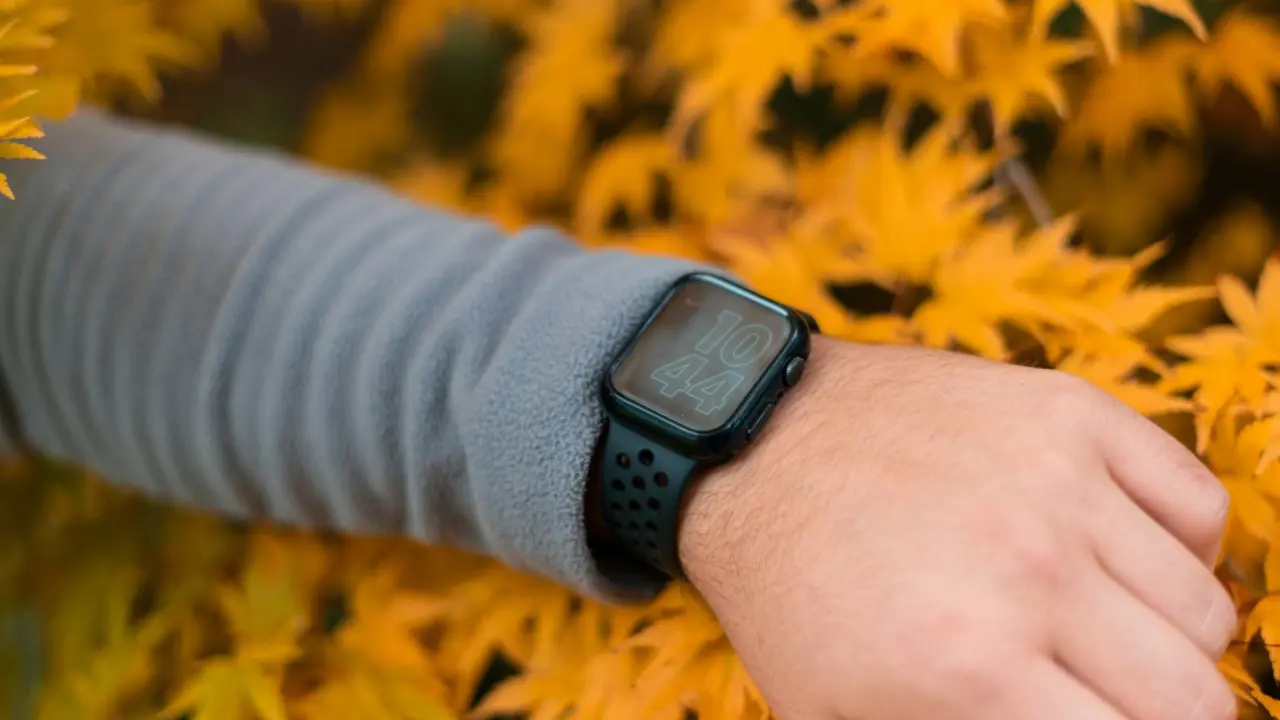
Child smartwatches are sold around a simple promise: give children more independence without giving up the ability to reach them. GPS location, calling and emergency alerts can reassure parents while letting younger children move through school, activities and public spaces without a full smartphone.
But the same device also creates data about where a child goes, how active they are and, depending on the product, who they communicate with. New research suggests the important question is what children learn when tracking becomes part of ordinary care.
A September 2026 study in the International Journal of Child-Computer Interaction examined 12 co-design sessions involving 12 parents and 15 children aged 7 to 14. Families associated child-oriented wearables with care, safety and connectivity, but the researchers also found that routine use could normalize “datafication” and “dataveillance” without children necessarily understanding how data was collected or shared.
Safety and surveillance arrive in the same device
For many parents, location tracking is experienced as reassurance rather than surveillance.
A study in Surveillance & Society, based on 112 parents of children aged 5 to 18, found that parents described tracking technologies as useful for child wellbeing, family management and logistics, while other respondents viewed them as potentially conflicting with children’s independence and choice.
That ambivalence helps explain why smartwatches can become normalized quickly. The technology arrives as a watch that can call home, send an SOS alert and show whether a child reached school.
The 2026 child-wearables study found that location tracking and continuous connectivity were associated with overlapping family values of care and safety. But children did not always understand wearable features as forms of data that could be accessed and shared.
Two children who already owned wearables learned during the research sessions that their parents could see their location in real time. Their surprise illustrated a broader finding: familiarity with a wearable did not necessarily mean understanding its underlying data practices.
Parents become gatekeepers, monitors and mentors
A separate 2026 study in Children & Society examined smartwatch use through interviews with 17 parents and nine children aged 6 to 12 in China.
Researchers identified three dominant parental roles: gatekeepers, monitors and mentors. Although children wore the watches, parents typically bought them and integrated them into family routines. The study found that parental mediation was generally top-down within its sample, even while parents recognized the importance of developing children’s autonomy.
This is different from conventional parental controls.
A GPS-enabled smartwatch can mediate physical movement by showing whether a child left school, reached a friend’s house or took a different route home. The device therefore becomes part communication tool, part safety product and part family-governance system.
That gives designers unusual power over family relationships. Decisions about location history, geofencing, notification frequency and parental access do not merely determine what a screen displays. They can influence how much independence a child experiences.
Children do not automatically reject tracking
The picture is more complicated than children simply resisting surveillance.
A May 2026 open-access study in the Journal of Computer-Mediated Communication conducted 21 focus groups with 147 young people aged 13 to 16 in Belgium.
Researchers found that digital location tracking was generally accepted when three implicit boundaries were respected: access stayed with close and trusted people, tracking remained non-continuous, and it confirmed ordinary whereabouts rather than uncovering unexpected information.
Young people negotiated those boundaries through humor, revoking location access and circumvention.
The distinction between “available location” and “continuous checking” is important for product design. A family may agree that a parent can confirm a child arrived safely while the child may object to being watched throughout the day.
That means location sharing is not simply an on-or-off privacy decision. It is a relationship with rules about who can look, when they can look and why.
Security raises the stakes further
Family rules cannot solve every risk.
A peer-reviewed 2020 security analysis examined six children’s smartwatches and their associated applications and backend platforms. Researchers reported severe weaknesses in the tested products, including risks involving sensitive-data disclosure, complete watch takeover and remote monitoring.
That study is several years old and does not establish that current 2026 devices contain the same vulnerabilities. But it highlights why security standards matter unusually strongly in this category.
A child-tracking product may handle real-time location and private communications. Authentication, authorization, encryption and backend security are therefore central to the product’s safety promise rather than secondary technical features.
Tracking can become normal before children understand it
The September 2026 study found that normalization was reinforced when wearables were introduced as expressions of care without sustained conversations about data.
Children were generally comfortable sharing some information, particularly location, but were more selective about information they considered personal. Researchers found that structured discussion exposed differences between what parents believed they should access and what children wanted to keep private.
The authors recommend that future designs prioritize family co-use, prompt meaningful discussions about tracking and make data practices more transparent. They also suggest giving children more agency over what information is tracked and shared.
One practical approach would be notifying children when their location is accessed through a linked parent application. Another is making setup a shared decision about which metrics should be monitored and why.
That would make the child a participant in the privacy model rather than simply the person being monitored.
The product challenge is balancing reassurance with autonomy
None of this means child smartwatches are inherently harmful. The research repeatedly shows why families value them: safety, connection and reassurance can coexist with greater independence.
The more useful question for builders is what kind of tracking relationship the product creates.
Features that increase parental reassurance can reduce a child’s informational autonomy. Features that make location checks effortless can also make them habitual. A product marketed around safety can therefore normalize continuous data collection before children fully understand what is happening.
A child smartwatch can tell parents where their child is. A better-designed one may also teach the child who can see that information, when it is being accessed and how those boundaries can change as they grow older.
That difference matters because children are not only learning how to use wearable technology. They are also learning what level of surveillance should feel normal.