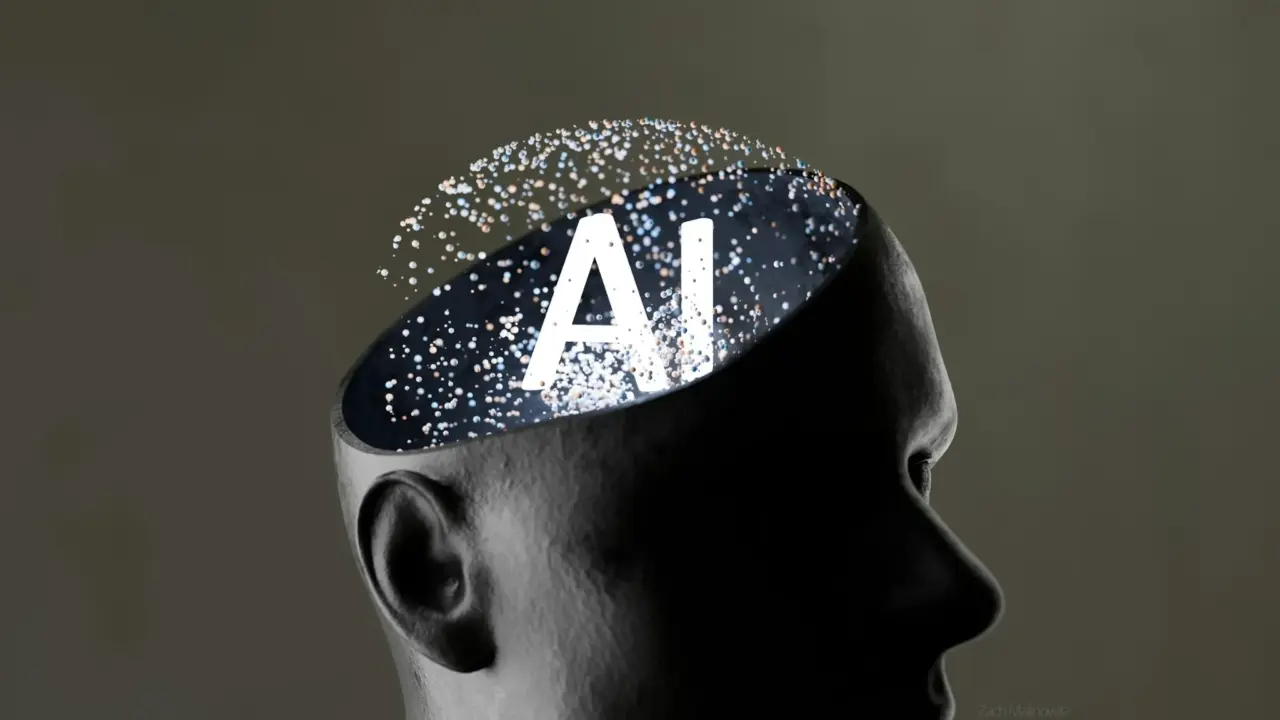
For most people, artificial intelligence doesn’t arrive with a dramatic takeover. It shows up as everyday convenience. Maybe a video appears just when you’re bored, or a shopping app guesses what you want before you finish typing.
Social feeds can feel oddly in tune with your mood. This is how AI works in daily life, and in some ways, it’s more unsettling. Its biggest impact isn’t obvious. It’s subtle. AI becomes part of the tools we use every day and slowly changes the digital world around us.
This is why we should be cautious about saying that “AI controls our minds.” Artificial intelligence doesn’t take over our thoughts. Instead, it shapes the environment where we think.
It influences which stories we see first, which opinions seem normal, which products stand out, and which feelings get repeated. So, AI doesn’t control us directly. It sets the stage for our attention, mood, and choices.
The Power No One Quite Notices
Most discussions about AI focus on obvious tools like chatbots, image generators, and voice assistants. But for most people, the more important kind of AI is the one they don’t notice. It works behind the scenes in ranking systems, recommendation engines, ad targeting, search results, and content feeds.
NIST describes AI as a machine-based system that can make predictions, recommendations, or decisions that affect real or virtual environments. This last part is important. AI isn’t just making content anymore. It’s deciding what we see, when we see it, and in what order.
This is where it gets personal. Most people don’t wake up planning for a machine to shape their views. They just unlock their phones. The feed starts scrolling.
One video leads to another. Headlines get a bit more emotional each time. Recommendations appear not because they’re the best or most balanced, but because the system knows they’ll keep you watching. What looks like neutral delivery is actually careful selection.
Recommendation systems were created to solve a real problem: there’s just too much information online, and people need help sorting it out. That’s why they seem helpful.
One open-access review says recommender systems filter, prioritize and efficiently deliver relevant information, giving users personalized content in a world full of choices. Looked at this way, recommendation systems aren’t automatically bad. Without some filtering, digital life would be overwhelming.
The problem starts when filtering turns into steering behavior. Once a system learns what keeps someone engaged, it stops acting like a simple librarian and starts acting more like an editor of behavior.
A survey on digital nudging and recommender systems explains that automated recommendations influence which information is easy to find and shape decisions through selection and ranking. Simply put, AI doesn’t have to force a choice to influence it. It just needs to make some options easier to notice, reach, and accept.
When Convenience Becomes Guidance
Modern AI systems are powerful not because they read minds, but because they spot patterns. They watch what people click, how long they pause, what they skip, what they replay, what they search late at night, and what words get a reaction. Over time, these systems get very good at tracking habits. They don’t truly know a person, but they can get surprisingly good at guessing what someone will do next.
That predictive ability is what makes AI feel intuitive, even intimate. A system that correctly guesses what someone wants to watch, buy, or read can feel helpful, almost friendly. But prediction can quietly turn into steering.
A study from National Library of Medicine shared that if a platform learns that outrage keeps users engaged longer than nuance, it has every incentive to keep serving content that produces outrage. If uncertainty makes people keep scrolling, uncertainty becomes useful. If one worldview repeatedly triggers engagement, the system may continue offering more of it, not because it is true or healthy, but because it performs.
This is why digital life can seem wide open but actually become narrow. Someone might have access to the whole internet, but still get stuck in a loop of similar suggestions. One click leads to ten more just like it.
A small interest can turn into a deep tunnel. A feed that once felt open starts to match a person’s frustrations, cravings, fears, and wants. The system isn’t reading your mind; it’s following the patterns your behavior leaves behind.
The Battle for Human Attention
The easiest way to understand AI’s power is to start with attention. If a system gets good at capturing attention, it gains influence over more than just screen time. It starts to shape mood, memory, and perception.
What someone sees again and again starts to feel familiar. What feels familiar can start to feel normal. What feels normal can shape belief. None of this is magical. It’s psychological. But AI makes it stronger because it can optimize in real time for millions of people at once.
This is why there’s a thin line between personalization and persuasion.
At its best, personalization cuts down on clutter and helps people find what matters to them. At its worst, it figures out which emotions get the biggest reaction and keeps triggering them, because keeping users engaged is the goal.
Another study from National Library of Medicine, reveals that the technology doesn’t need a political agenda to have political or emotional effects. All it needs is a goal, a feedback loop, and enough user data to keep getting better at its predictions.
These effects are often most obvious in politics, but they aren’t limited to that area. A 2023 open-access study on algorithmic curation and polarization found that seeing arguments from like-minded people increased polarization more than seeing opposing views.
The study also found that algorithmic selection had only small direct effects on changing attitudes. That might sound minor, but it’s important. The main concern with algorithmic systems isn’t that they brainwash people instantly. It’s that they slowly change the environment where beliefs are formed.
A feed doesn’t have to tell someone what to think. It just needs to make some ideas seem easier to find than others. It can boost certainty, reward strong emotions, and make it easier to keep going without stopping to think. When this happens slowly, many people feel like their opinions are their own, not shaped by a carefully designed stream.
The Architecture of Subtle Persuasion
It is tempting to discuss AI influence only in terms of elections, propaganda, or misinformation. But that would miss how broad the phenomenon really is. The same logic appears in shopping apps, music platforms, dating services, education tools, productivity software, and wellness products.
The branding changes, but the structure remains familiar: the system learns behavior, predicts what the user is likely to do, and reorganizes the experience to make that behavior more likely to happen again. What the product presents as convenience often doubles as behavioral guidance.
This is why digital nudging is so important. A nudge doesn’t force you to do something. It just changes your path. It affects what you see, what feels like the default, what comes up first, and what seems like the easiest choice. Online, this could be a highlighted product, an autoplay video, a pre-selected option, or a ranked list that quietly favors one result. You still have choices, but the setup has already been shaped.
When you look at it this way, many everyday digital experiences don’t seem neutral anymore.
A shopping site that puts one product at the top isn’t just sorting information—it’s making that option feel more important or urgent. A video platform that keeps playing similar clips isn’t just saving you time—it’s giving you fewer chances to stop and think. A social platform that keeps showing provocative content isn’t just reflecting what people talk about—it’s creating a stream designed to keep you emotionally involved.
The Problem With What We Cannot See
One reason algorithmic influence works so well is that people often can’t see it happening. It’s not because they’re careless, but because the systems are hard to understand. That’s why explainable AI is now a big topic—many automated systems act like black boxes. They give results, but it’s hard for regular users to see how those results were made.
A briefing from the European Data Protection Supervisor says that this lack of clarity can hide bias, mistakes, or even made-up results, and that explainability helps people see how AI makes decisions.
This lack of transparency creates a strange feeling of control.
People are the ones clicking, after all. But the choices around those clicks have already been shaped by automated ranking, timing, and presentation. People still have control, but it’s not in a neutral setting.
That’s why it’s so hard to describe how digital influence works today. Users aren’t powerless, but they’re not making choices in a space free from machine influence either.
More surprising still, awareness does not always solve the problem.
One recent study on algorithmic awareness found that knowing algorithms are involved can actually increase compliance, especially when users are browsing with a specific goal in mind.
Awareness, in other words, can make people feel more confident in the system rather than more resistant to it. That is one of the more unsettling findings in this space. The presence of awareness is not the same thing as independence.
This helps explain why algorithmic systems become normal so fast. People aren’t always being manipulated against their will. Often, they go along with the system because it’s helpful, easy, and efficient.
The real issue isn’t that AI forces people to do things. It’s that AI works so well with what people already want that it’s hard to tell where help ends and influence begins.
When Optimization Finds Human Weakness
The risks become easier to see when optimized systems meet weak points in human psychology.
Emotionally intense content tends to travel well. Novel content often feels more compelling than familiar truth. Uncertainty can keep people engaged longer than resolution.
AI did not invent these tendencies, but AI systems can exploit them at scale because they are designed to detect what performs and then repeat it.
A clear example comes from MIT’s major study on false news. The results were striking: false stories spread “farther, faster, deeper, and more broadly than the truth,” and were 70% more likely to be retweeted than true ones. Even after removing bots, people were still spreading the false stories.
The point isn’t that algorithms alone cause misinformation. It’s that digital systems designed to reward engagement work in a world where new and emotional content often beats out accuracy.
This is the uncomfortable truth at the heart of the story. AI doesn’t always have to create problems from nothing. Sometimes it just finds what people already react to and makes it bigger.
A system built for clicks might end up spreading inflammatory or misleading content—not because it believes in it, but because it knows it gets attention. AI can be technically impressive while still causing real harm in society.
The same logic appears in profiling and fairness.
Systems often rely on proxy signals that users do not realize are being used to classify or steer them. A person may assume they are seeing content because of a conscious preference, when in reality the platform is reacting to a far more granular behavioral profile assembled from indirect cues.
Influence becomes harder to recognize when it is built from correlations rather than explicit instructions.
Living Inside a Curated Reality
So what does this mean for users? They’re not helpless, but they’re not unaffected either. The best response isn’t panic—it’s learning.
People need better ways to talk about what AI systems really do in daily life.
They rank, filter, predict, nudge, and optimize based on what we do. As these systems get more advanced, they stop feeling like outside influences and start to seem like the normal way the digital world works. That’s why we need to pay attention to them.
Building a healthier digital culture will take more than just personal discipline. It will need transparency, accountability, and systems that don’t treat our emotions as things to be exploited.
Better explanations would help, as would interfaces that show why certain recommendations appear and who benefits from them. Knowing how the machine works doesn’t erase its influence, but it does make it easier to question.
The bigger question isn’t whether AI will someday control the human mind. In a quieter and more practical way, it’s already shaping the information around us.
The real question is whether users, designers, regulators, and publishers are willing to admit how much influence has already been handed over to invisible systems built to predict and direct attention.
What looks like a personalized internet is often a managed one. And the more natural that management feels, the more important it is to understand it.
In the end, the most powerful technologies are often the ones we hardly notice. They don’t appear as obvious tools of persuasion. They look like helpers, shortcuts, or simple conveniences. But when a system decides what gets our attention, it shapes much more than just what’s on the screen. It starts to influence how we think every day.
The future of AI isn’t just about what machines can create. It’s about how quietly they can shape the world we think we move through freely.