
Given the spread of technological advancements, operational excellence is transforming and evolving. It now involves applying AI and other digital tools to improve agility while protecting human-centricity. In this interview, Maimoon Saleem, Pathways Operations Manager at Amazon, provides insights into how AI intersects with Lean principles, its benefits to operations, and metrics to track to capture the transformation’s success.
- How do you define operational excellence today?
Operations excellence is more than cutting costs or streamlining manual workflows. It is about applying innovative technologies that make the process more agile and human-centric, such as AI, that transform the experience for both internal and external customers. Additionally, this excellence is defined by how proactively a company can adjust to changes and solve issues, how it uses technologies to optimise and continuously improve work, and how successfully new tools assist people while not replacing them.
- Can you explain how Lean management principles intertwine with AI to achieve operational excellence?
Lean management and AI complement each other, although they might initially seem the opposite. The first focuses on workflow improvement. Similarly, AI helps achieve this improvement faster by accelerating workflows and making decision-making more precise by learning from past data. For example, Lean might identify inefficiencies in a supply chain, whereas AI can predict future bottlenecks and instantly create an action plan to avoid them. The main thing that makes AI unique is that it recognises patterns humans might overlook.
- What are some areas within operations where you believe AI can significantly improve efficiency?
AI is beneficial in many areas, but most importantly, it is helpful in warehouse automation, supply chain management and quality control.
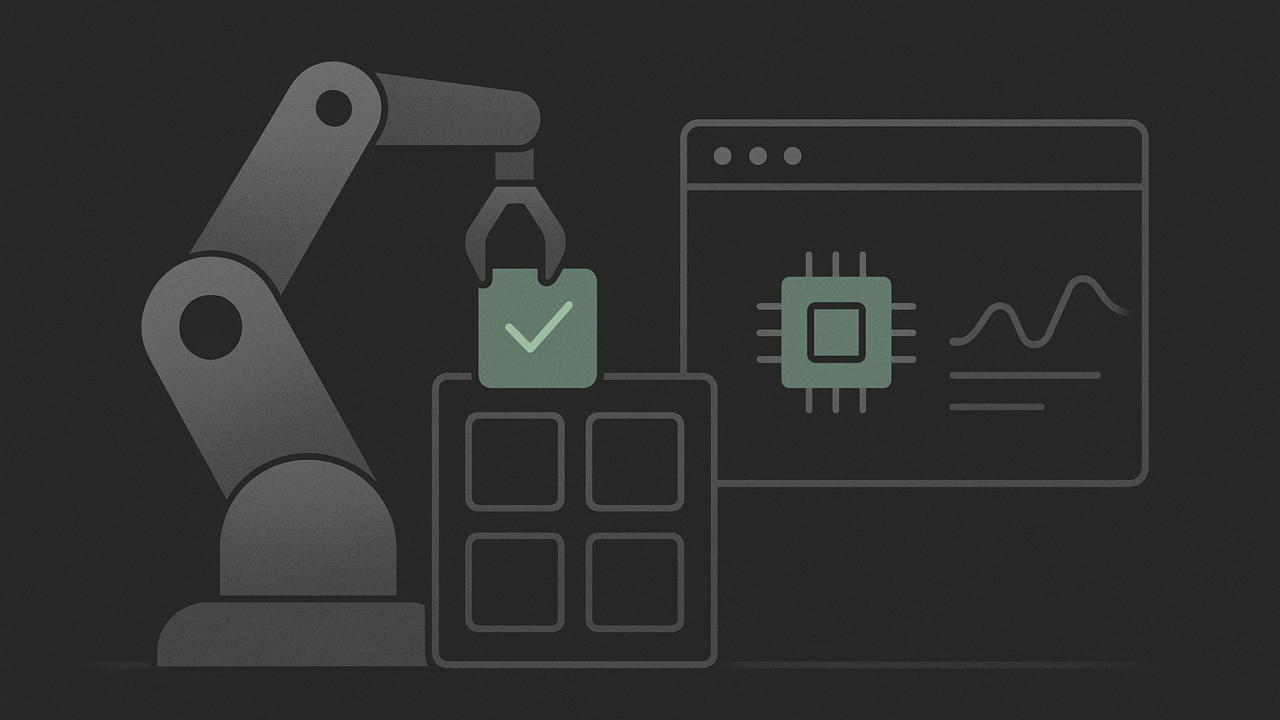
In warehouse automation, autonomous robots can navigate obstacles and transport goods from one point to another, offering great flexibility and freeing human workers to perform more value-adding tasks—supply chain optimisation benefits from AI’s ability to predict demand and manage inventory in real-time. AI-enabled forecasting and inventory management can help balance stock levels and minimise shortages and excess inventory, for instance, by adjusting warehouse orders based on retail sales trends. In procurement, digital twins can help supplier negotiations and make trading fairer by providing a cost analysis due to labour rate, material cost and tariff changes.
In quality control, computer vision can automate defect detection. This tool reduces human errors and helps spot errors by learning from past data. For instance, it could identify damaged or incorrect items in returned packages before restocking or refunding.
- What issues might organisations have when moving from traditional Lean practices to AI integration?
Organisations moving from traditional Lean practices to AI-integrated approaches might have different issues. The most common are, in my opinion, cultural resistance, over-reliance on technology, and incompatibility with legacy systems.
First, employees might fear job displacement with new technologies and uncertainty about workplace AI usage regulations. Second, excessive dependence on technology can undermine human judgment and lead to errors if trusted uncritically. Third, legacy systems (outdated and not designed for interoperability) might not be compatible with modern AI tools, complicating implementation. I suggest that companies upskill employees on AI via training, which can help successfully integrate and implement specific use cases of AI into operations.
- Can you share some examples of companies that have successfully applied AI to their operational strategies and the outcomes they have achieved?
Several large international companies have successfully embedded AI into their operational strategies. For instance, Amazon uses AI for warehouse automation, personalised website recommendations, and demand prediction, which is especially helpful for peak seasons. Similarly, Zara uses AI to analyse fashion trends and optimise inventory. Finally, Siemens applies the technology for predictive maintenance across its factories to reduce production delays. There is a clear trend: the number of companies using AI in their work is rising every day.
- What new metrics should organisations consider when measuring the impact of AI on operational excellence?
One of the most important ways to measure AI’s impact is by looking at how it improves the quality of decisions—something we call AI-driven decision accuracy. It is not just about doing things faster; it’s about doing them better. For instance, AI can help reduce errors in forecasts or improve how accurately we catch issues in maintenance before they become real problems. That is the kind of value AI should be adding.
But building a good model is not enough. AI systems must be monitored to ensure they’re still performing well. Data changes, business environments shift, and if we are not paying attention, models can quietly lose their edge. That is why model performance stability is so important. Checking this criterion helps ensure AI continues to deliver real value rather than quietly slipping into irrelevance.
Then there is the human side of things. Human-AI collaboration efficiency looks at how smoothly people can work with AI tools. Are those tools helping employees save time or make better decisions? Are they intuitive and valuable, or frustrating and confusing? AI works best when it complements human judgment—not when it tries to replace it entirely.
Trust is another significant factor. People are far more likely to use AI systems if they understand why a recommendation was made. That is where AI explainability and trust metrics come in. If a model gives excellent results but feels like a black box, it might never gain traction. Measuring explainability—through thresholds or user feedback—can help ensure people feel comfortable relying on the system.
It is also worth looking at automation yield, a way of understanding how much of what we try to automate with AI works. If we are automating customer service tickets, for example, how many are entirely handled by AI without human input? That tells us a lot about how effective and scalable our AI is.
Lastly, there is time for insight or action. This measures how quickly AI can turn data into something useful—a recommendation, a decision, or an alert. If AI helps reduce analysis time from hours to minutes, that can dramatically speed up a team’s reaction time, which is a significant win in any fast-paced operation.