A new United Nations-backed scientific assessment says artificial intelligence could deliver enormous global benefits, but warns that the technology is advancing faster than governments and scientists can fully understand, manage and regulate its risks.
40 leading scientists and experts in a U.N. independent scientific panel found that AI offers huge potential benefits to countries and people around the world, while also posing big risks.
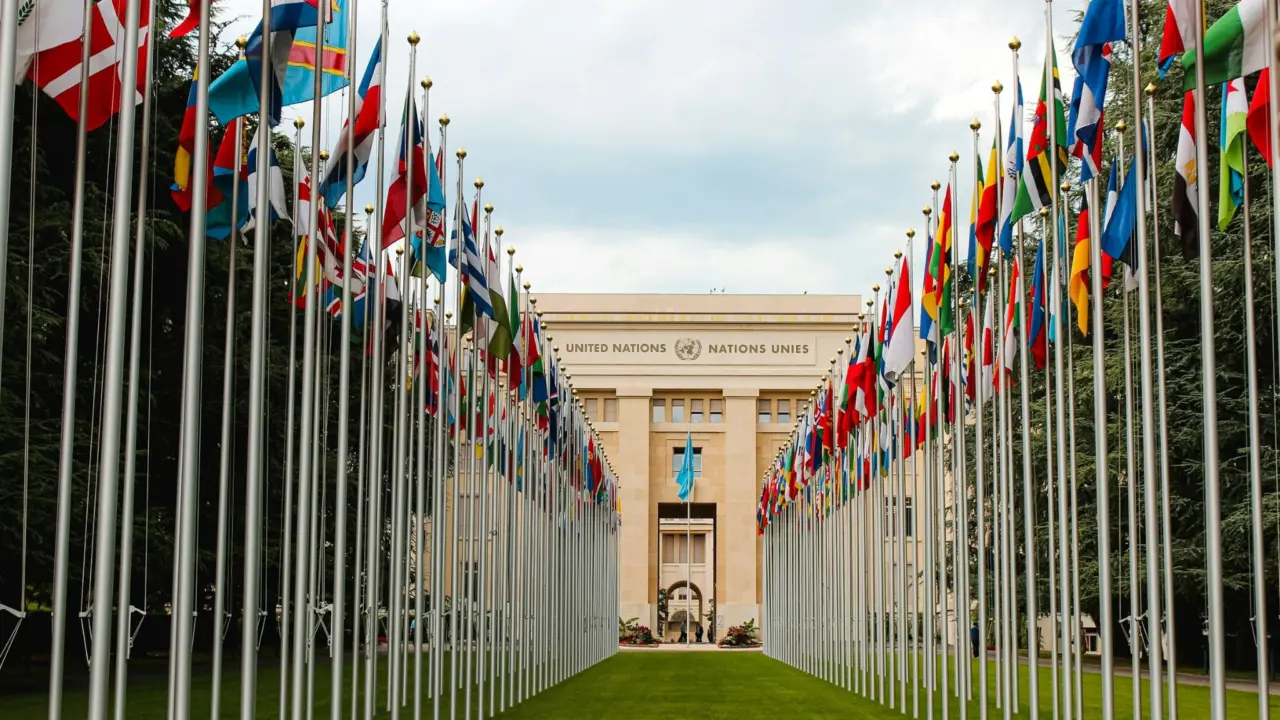
First Global Scientific Assessment Heads to Geneva
The report is an early version of a broader U.N. assessment.
Reuters reported that the preliminary report will be presented to governments at the first U.N. Global Dialogue on AI governance in Geneva on July 6 and 7, with a fuller report planned next year.
The Business Times said the report is aimed at delivering the first global and independent scientific assessment of AI opportunities, risks and impacts.
The panel is designed to be independent from governments and companies. The panel is composed of 40 scientists and experts from around the world and has a mandate to document scientific evidence and knowledge gaps for policy decisions.
Benefits Are Large, but Not Automatic
The report does not dismiss AI’s upside.
Global Banking & Finance Review reported that AI already demonstrates expert-level reasoning in mathematics and science and is accelerating drug and vaccine development.
Still, the panel warned that progress does not automatically translate into shared gains. AI is a “general-purpose technology with large positive potential, but gains are not automatic”. The panel raised doubts over whether AI’s productivity gains will be shared across the global economy.
Risks Include Deception, Cyberattacks and Social Harm
The report highlights concerns around more capable and autonomous AI systems. Panel co-chair Yoshua Bengio said growing evidence of deceptive AI behavior means science cannot guarantee AI will not cause catastrophic harm, either on its own or through malicious users.
Cybersecurity risks are also rising. Cybersecurity risks are expected to dramatically increase with agentic systems, with as much as 84% of documented attacks on widely deployed coding agents having been successful. AI could be exploited for fraud, cyberattacks and biological threats.
Unequal Access Could Widen Global Gaps
The report also warned that AI development is concentrated. The U.S. accounts for 75% of the computing power among the world’s top 500 AI supercomputers, while China accounts for 15%. Over a billion people now use conversational AI weekly, but adoption in developing countries still lags.
Language access remains another gap. Although more than 7,000 languages are spoken worldwide, current AI models are trained for only a small fraction of them. Machine translation errors in some languages can affect health diagnoses and treatment decisions.
Guterres Calls for Faster Governance
U.N. Secretary-General António Guterres urged governments not to wait. Guterres said, “The world cannot govern what it cannot understand,” and adding that “the potential is great, but the risks are real and the cost of waiting is rising”. Guterres urged governments to act swiftly as the panel called for stronger global action.
The message is not that AI should stop. It is that the world needs better evidence, stronger safety testing and broader participation in governance before the technology becomes too powerful for institutions to understand or control.