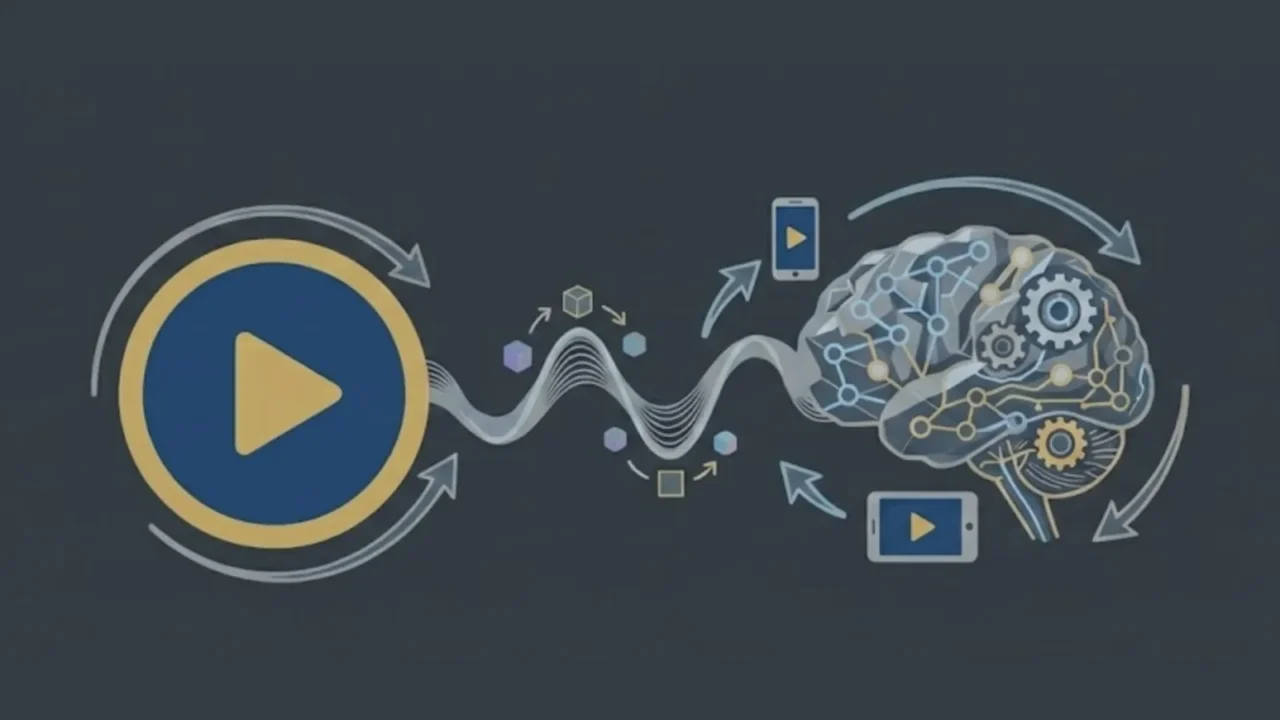

The intersection of pervasive sensors and more powerful silicon is pushing artificial-intelligence workloads from remote data centers to the devices creating the data itself. Researchers estimate the worldwide Edge AI market at about USD 21 billion in 2024 and project over USD 140 billion by 2034, suggesting a 21 percent compound annual growth rate. That path portends more than a fleeting trend; it promises a structural shift in how organizations will design, protect, and run intelligent systems in the decade ahead.
Silicon manufacturers are already competing for the shift. AMD chief technology officer Mark Papermaster recently told a press briefing that “the majority of AI inference will be running directly on phones and laptops before 2030,” on the grounds that ongoing model optimization and power-efficient accelerators are shifting the cost-performance balances to the edge. When a hardware executive whose firm lives and dies by data-center GPUs predicts a future ruled by on-device inference, it’s time for developers to get proficient in the toolchain of Edge AI.
What We Mean by “Edge AI”
Edge AI refers to running trained machine-learning models on or close to the devices capturing raw data: microcontrollers, smart cameras, gateways, or on-premises servers, instead of in a central cloud. A factory robot sorting surface defects down an assembly line, a traffic camera optimizing light timing in real-time, or a wearable ECG patch identifying arrhythmias locally all match the pattern. By integrating sensing, inference, and action in the same physical location, Edge AI enables real-time response, reduces bandwidth, and maintains local control over sensitive information.
Four elements make the pattern possible. First are the IoT endpoints: sensors, cameras, microphones, spectrometers, and other embedded devices that harvest signals from the physical world. Second are edge gateways or servers, which aggregate data from groups of limited nodes and offer a more capable CPU, GPU, NPU, or TPU when workloads overwhelm a bare microcontroller. Third is the optimized model, typically pruned, quantized, or distilled into a form that can fit easily within megabytes of RAM. TensorFlow Lite, ONNX Runtime, PyTorch Mobile, and TinyML are a few frameworks that automate much of that slimming procedure. Edge-computing platforms, like AWS IoT Greengrass, Azure IoT Edge, open-source Balena, K3s, or NVIDIA Jetson’s stack, provide orchestration, observability, and over-the-air updates for fleets that may be in the tens of thousands.
Why Bother? The Strategic Payoffs
Latency is the headline advantage. Cutting the 100–200 milliseconds of round-trip cloud latency to single-digit milliseconds can be the difference between a collision and a safe autonomous maneuver, between a jerky augmented-reality overlay and a smooth one. Bandwidth efficiency is a close second; in a smart-surveillance installation, processing frames locally and sending up incidents only reduces upstream traffic by more than 90 percent. Privacy-by-design is a natural consequence because raw biometric, industrial, or medical data never leaves premises, making compliance with GDPR, HIPAA, and emerging privacy legislation simpler. Resilience is also improved: a weather station on a mountaintop or an oil rig in the middle of the ocean keeps operating when the backhaul link is severed. Operational expenditure falls finally: lower cloud bills, fewer egress fees, and delayed network upgrades add up quickly at scale.
The Obstacles: Hardware, Models, Operations, and Security
Edge deployments do not inherit any of the spacious racks or power budgets that cloud clusters take for granted. The majority of IoT nodes run with kilobytes to megabytes of SRAM, an ARM Cortex-M or minimal Cortex-A CPU, and very constrained battery or PoE envelopes. Engineers therefore lean hard on model optimization. The TensorFlow Model Optimization Toolkit, for example, shows that post-training quantization can shrink models by up to 75 percent and slash inference latency without catastrophic accuracy loss. Pruning eliminates entire neurons or channels, pruning up to 90 percent of parameters; knowledge distillation trains a small “student” network to mimic a large “teacher.”
But constructing a small model is merely the starting point. Model-lifecycle management gets prickly when there are thousands of cameras or pumps distributed across continents. OTA pipelines need to deploy cryptographically signed containers, validate integrity, and roll back automatically should accuracy fall or power usage surge. Blue-green or A/B deployment patterns, a long-time staple of web services, move lock, stock, and barrel to the edge so that new models first validate themselves on a small canary cohort prior to graduating to the fleet.
The attack surface increases since intelligence is no longer limited to locked server rooms. Devices mounted in public spaces can be stolen or probed. Attackers can reverse-engineer firmware, swap out SD cards, or inject adversarial examples that bewilder vision models with a benign sticker. Defenses start with secure-boot chains that refuse unsigned code, hardware root-of-trust modules that store keys, encrypted file systems, and, to protect especially sensitive weights, Trusted Execution Environments such as ARM TrustZone, which run critical code in an isolated enclave even when the primary operating system is breached.
A Hands-On Example: Raspberry Pi Smart Surveillance
Consider a security integrator in need of an internet-free human intruder detection perimeter camera. The customer demands off-the-shelf hardware, real-time alerts, and unbreakable privacy.
Hardware and Software Stack
A 4 GB Raspberry Pi 4 and the official Camera Module V3 do the essentials; an extra Coral USB accelerator can be installed afterwards to add more bandwidth. Having flashed the most recent 64-bit Raspberry Pi OS, install dependencies:

Model Choice
A COCO-dataset-trained pre-quantized MobileNetV2-SSD object-detection network takes approximately five megabytes of memory and executes with ease on the Pi.

Real-Time Inference Loop
The following Python code grabs frames, resizes to 300×300 pixels, sends them to the TensorFlow Lite interpreter, and draws a bounding box whenever class 0 (“person”) is over a 0.5 confidence threshold. Without a bare Pi, the loop processes 5–7 FPS; attaching a Coral TPU pushes throughput to more than 30 FPS.

Running the script demonstrates the central promise of Edge AI: no Wi-Fi and no cloud endpoint in sight, the camera detects a human shape in real-time and captures an alert, proof that low-cost hardware can deliver useful, privacy-sensitive intelligence at the point of capture.
Operational Best Practices
Optimize before you deploy
Quantize down to int8, strip off dead weights via pruning, and retrain briefly to recapture accuracy. The result is generally a one-quarter-size version of the original and a multiple of speed faster on ARM processors.
Choose fit-for-purpose silicon
Vibration or audio classification on a battery-powered sensor may blissfully coexist on an STM32 MCU with TinyML, but multi-class object detection in 4K video may need a Jetson Xavier or Apple-class NPU. Power budget, thermal envelope, and target frame rate all come into the bill of materials.
Build security into the hardware root
Encrypt model files both in transit and at rest. Sign firmware images. Permit anti-rollback fuses so the attacker cannot reinstall a vulnerable OS. When health telemetry or facial embeddings are concerned, run the inference within a TEE so that even the root can’t look at the tensors.
Automate the fleet
Containerize the application such that the same OCI image runs on all edge nodes. Roll out progressively and monitor health checks; if CPU usage or accuracy decreases, the orchestrator should roll back automatically to the last version. Send telemetry, CPU, memory, inference latency, false-positive rate, to a centralized dashboard for continuous monitoring.
Looking Forward
As 5G becomes ubiquitous and NPUs tailored to specific tasks find their way into laptops, smartphones, and eventually thermostats, the distinction between “cloud AI” and “edge AI” will disappear. The cloud will remain vital for training massive foundation models, but inference on a daily basis, from language translation on a phone to predictive maintenance on a gearbox, will be local, latency-free, and subscription-free. Market observers now forecast five-to-seven-fold revenue growth of edge-AI this decade, a forecast which aligns with Papermaster’s on-device-first vision and the steady progression of toolchains like TensorFlow Lite, ONNX Runtime, and TinyML.
Conclusion
Edge AI is no longer a novelty in experiments; it is a viable solution to the latency, bandwidth, and privacy constraints that cloud-based architectures struggle to meet. From the point of view of the end user, systems are instantaneous; from the point of view of the operator, data is king; from the point of view of the CFO, cloud bills are smaller. The Raspberry Pi surveillance proof-of-concept shows that even modest hardware, coupled with aggressive model optimization and sound DevOps hygiene, can deliver production-quality intelligence. Companies that master these tools today will be prepared for a world where the edge is the native habitat of machine learning and the cloud is merely its long-term memory.