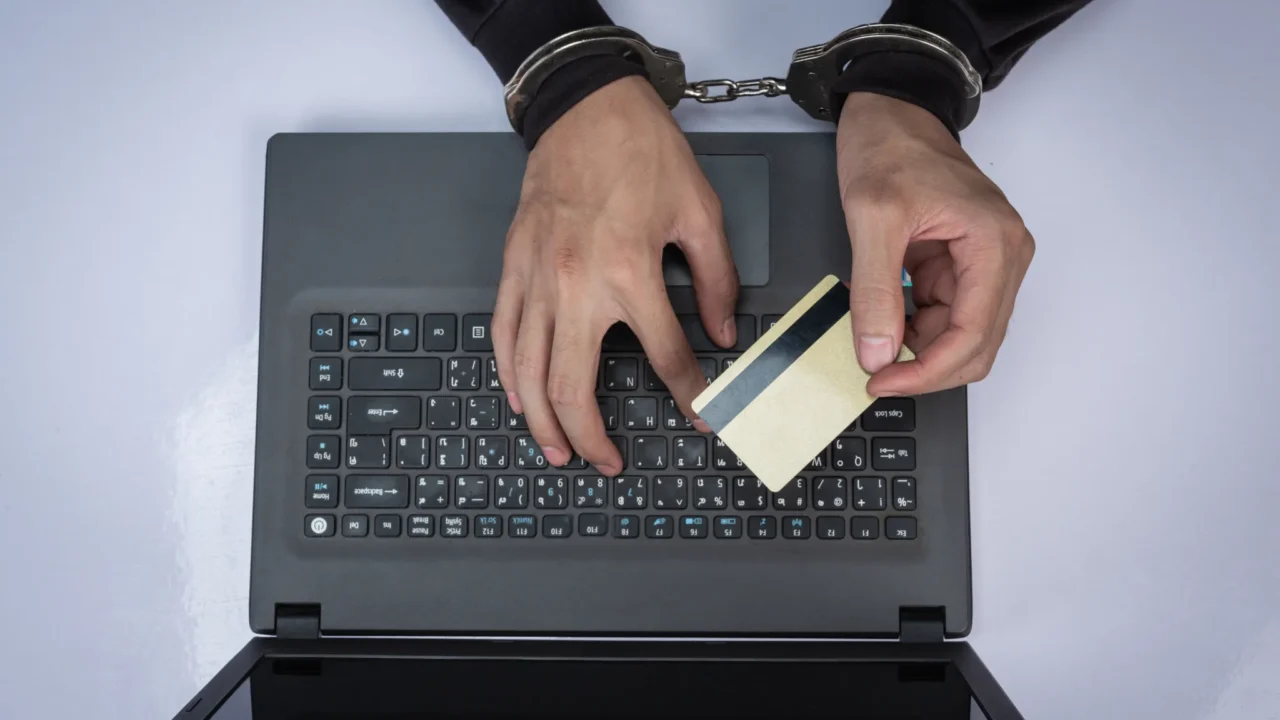
Imagine a person stays at a hotel and, upon returning home, initiates a chargeback claiming the transaction was fraudulent. They get a refund for their stay because the hotel can’t prove they received the service. This is what we call friendly fraud.
In 2021, this was the biggest cyber security problem, costing billions of dollars annually. Cybersource and the Merchant Risk Council presented the 2021 Global Fraud Report, which conveyed transparent and unbiased research based on a survey of merchants worldwide about their eCommerce fraud experiences and mitigation practices. They found the following:
Globally, friendly fraud was the most common type of attack experienced by merchants, with an estimated 1.2% of their accepted eCommerce orders eventually turning out to be friendly fraud. This issue was a greater concern for merchants in Latin America and Asia, given the higher percentage of accepted orders that turned out to be fraudulent.
Why is Friendly Fraud So Widely Spread
The main problem is that 80% of merchants usually had a formal approach for combating friendly fraud. Among those with formal strategies, most adopted a multi-pronged approach using a range of specific tactics, including:
– Checking customer purchase and order histories;
– Verifying billing addresses;
– Requiring Card Verification Values codes;
– Making policies clear on the website;
– Filing formal disputes with financial institutions;
– Reviewing and analysing non-fraud chargebacks and declines;
– Requiring a signature on delivery;
– Working with providers to prevent or identify fraudulent transactions;
– Notifying customers before processing their payment;
– Monitoring and analysing transaction data for unusual activity;
– Blacklisting customers who file chargebacks;
– Notifying customers after processing their payment;
– Notifying customers when orders are processed or delivered;
– Prioritising certain types or categories of chargebacks to fight.
Besides the formal approach to protection, the problem continues to persist also because friendly fraud can be influenced by non-criminal motives. People tend to forget what they have booked or bought. Sometimes users do not fully understand the product terms of use or let their children place orders for goods and services they do not really need. Purchases made by an impulse is another case when shoppers may require a chargeback as after thinking it over they regret buying another pair of shoes or a fancy bag.
What Damage it Can Bring
One major consequence is financial losses. When a customer disputes a charge, the business loses the payment and must cover fees and administrative costs. This is particularly harmful to small businesses that might struggle to absorb these losses.
Reputation damage is another issue. If customers feel a business isn’t handling disputes well, they might leave negative reviews online, hurting the business’s image and discouraging future sales.
Chargeback penalties from credit card companies and payment processors can occur if a business has too many chargebacks. These penalties can include higher fees or even the termination of their account, leading to revenue loss and the need for alternative payment solutions. Payment systems penalise banks for having too many chargebacks from their clients. The maximum number is determined by the payment system, but it is usually a significant number, such as 100 chargebacks per month from a single company.
Due to these penalties, a bank may disable the payment processing services (acquiring) for a company with a high number of chargebacks. Therefore, it is better not to risk your acquiring services and to avoid payment cancellations through the bank.
Time and resources are also drained by friendly fraud. Businesses must spend time gathering evidence, communicating with customers, and handling chargebacks or refund requests, which diverts resources from other important activities.
Lastly, fraud prevention costs add up. Businesses need to invest in technology, software, and staff training to prevent and detect fraudulent transactions, which can be expensive.
When Chargeback is Legitimate
I cannot but mention that there are cases when customers can get the refund legitimately. Refund rules are regulated by payment systems. While their wording may vary, the essence remains the same.
A customer can get their money back if there are payment issues, such as:
– The company charged twice.
– The company charged more than stated.
– The company refused to refund the money.
– The company charged in a different currency than indicated in the order.
– The company refunded less money than promised.
We should not forget about problems with the order as they can also be grounds for a chargeback. For example, the customer did not receive the paid order or the product turned out to be counterfeit, despite the company promising an original. There are also cases when a product or service does not match the specifications listed in the order and the customer received something different from what they ordered.
Additionally, money will be refunded in the following cases:
– A fraudster used the card information to make a purchase.
– The payment was made without the customer’s permission, such as a child using a parent’s card to pay for an online game.
Friendly Fraud Prevention Strategies
Though friendly fraud is widely spread and hard to eliminate, there strategies that can help minimise the risks:
- Identity Verification: Use digital footprinting, device fingerprinting, and real-time checks to confirm customer identities;
- Record Keeping: Maintain detailed and meticulous records to support chargeback recovery disputes;
- Pattern Detection: Identify and monitor suspicious behaviour patterns that may indicate potential fraud;
- Customer Monitoring: Track and flag repeat offenders of refund and other fraudulent requests;
- Evidence Provision: Provide substantial evidence to customers, banks, and payment processors to demonstrate due diligence;
- Custom Rules: Set up tailored rules to identify and flag potential fraud patterns;
- Machine Learning: Employ machine learning to suggest rules based on previously observed fraud attempts.
How to Protect Oneself from Chargebacks
I have listed some of the ways to protect from friendly fraud and though there are no methods that guarantee 100% protection they should still be employed. Besides, there are ways to prevent chargebacks, too. Let us mention some of them.
First of all, clearly describe what your company is selling, the terms of sale, what is included in the order, its specifications, and the delivery conditions. Common reasons customers seek refunds include inaccuracies regarding delivery timelines, costs, and conditions. For example, the order may state that delivery is free, but the customer later finds out they need to pay the courier in cash.
Then try to ensure you have confirmation that you have fulfilled your obligations correctly. In case of disputes, you will have evidence ready for the banks. Acceptable forms of evidence may be:
- The customer’s signature on a receipt confirming that they received and reviewed the order, verifying that everything is in order.
- An email detailing the order that you send to the customer, asking them to confirm their order.
- A contract or screenshot from your website that shows the customer was aware of the order terms and agreed to them.
And finally, it is crucial to clearly state how customers can contact you regarding any issues with their orders, and organise your operations to respond quickly to customer complaints. Once a customer feels they cannot resolve an issue with your company, they will turn to their bank.
Chargeback Win Rates: Industry and Company Specifics
Though the average win rate of merchants against chargebacks is around 40%, what should be noted here is that this number may vary greatly due to the diversity of factors, like industry, company size, efficiency of its Chargeback Prevention strategy, efficiency of its dispute strategy, among others. To proceed deeper in the subject matter, therefore, let’s go through some relevant research and metrics.
Industry-specific Win Rates
They are in use with alarmingly low win rates, often as small as 20-30% in the travel and hospitality sectors. Much of this has to do with their services often being intangible, and providing concrete evidence as to a delivered service may be rather challenging.
With this, typical retail win rates are at average levels, bracketed from 40 to 50%, though it might vary slightly from the specificity of the retail segment.
Coupled with subscriptions, digitised products and services have enabled some companies to achieve win rates well over 60%. The ability to prove delivery or usage for their goods is typically the hallmark. Other examples of high-risk businesses, like adult entertainment and gambling, are often most burdened by low win rates because of the by-nature business and potential risk of fraudulent transactions.
Company-Specific Win Rates
- Small businesses: It can be difficult to achieve large win rates if the small business has many constraints and does not really understand how to handle chargebacks.
- Fraud Large Enterprises: Winnable cases of fraud are more frequent in larger dedicated teams for fraud prevention, most of whom maximise the latest technologies.
- Chargeback Management Solutions: Companies utilising a dedicated chargeback management solution or service will often claim to have win rates higher, some even in the 70–80% bracket.
Sources and Analytics
This statistic is both sensitive and varies among different businesses, so it is hard to collect precise data on chargeback win rates. However, some highly-reputable sources give important insights both on general tendencies in the industry and on single company performances:
According to Midigator, a chargeback management platform, their clients’ average win rates across different industries are between 65% and 80%.
Another company that offers a fraud prevention and chargeback management solution is Kount, which states that its merchant clients have an average win rate of 40% to 85%.
Chargebacks911 is a chargeback management firm. They are known to have reduced chargeback losses for clients by 83% and provided a win rate of 90% with their representation cases.
These numbers should be treated carefully, however; they may get biassed because of the specific customer base and methodologies that each of these merchant providers employs. They do indicate a range of the potential extent to which good practice in chargeback management can significantly improve win rates.
Conclusion
Although the win rate in general chargebacks may sound somewhat bleak, that really does not represent a dead-end statistic. Proper investment in full-scale fraud prevention, understanding of the industry-specific patterns, and possibly the employment of chargeback management services would seriously raise a business’s chances of winning disputes and, by extension, protecting revenue sources.