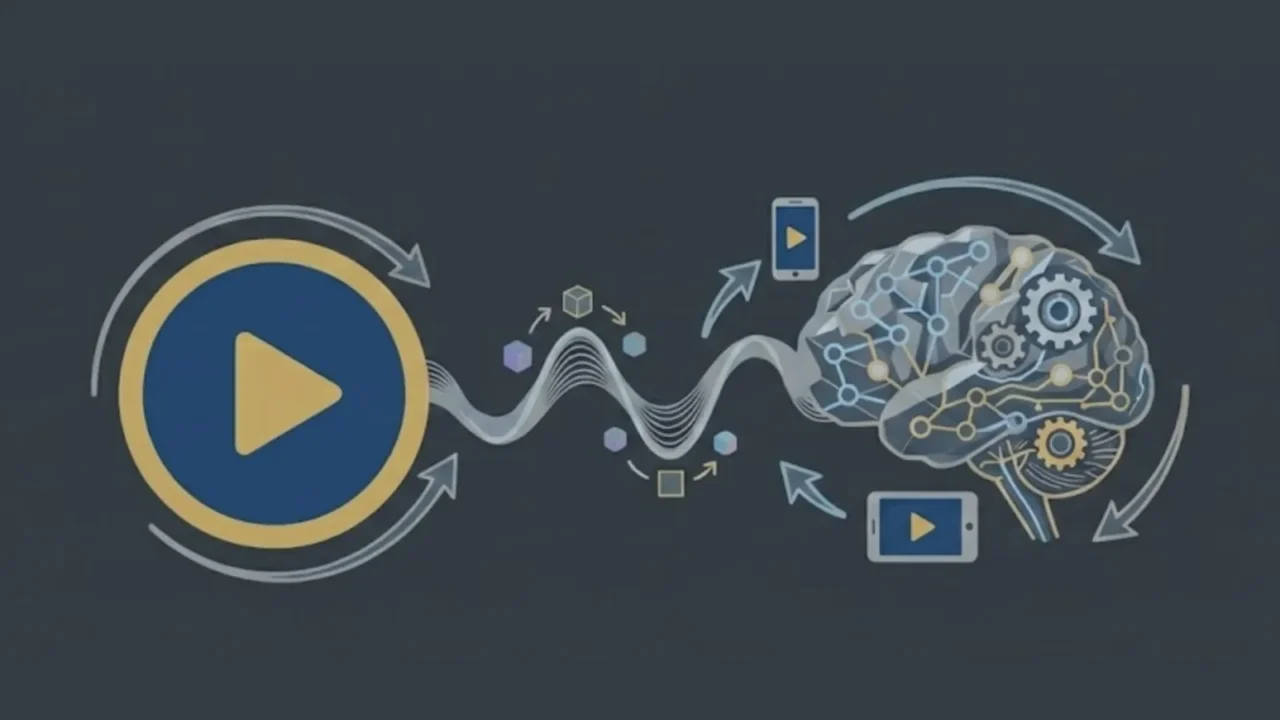

The GenAI Stack is a set of tools and partners that seamlessly combine generative AI with traditional software to redefine possibilities across the digital world. There are 4 layers in this stack: AI models, inference infrastructure, backend logic, and user interfaces; all the components interplay to make sure AI applications are effective and at the same time user-friendly for seamless interactions and increased productivity. Comprising four distinct layers, this stack provides a comprehensive approach to harnessing the power of AI.
How any GenAI Stack is built:
1. The Implementation Layer
Involves consulting partners who assist businesses in identifying optimal GenAI use cases and developing effective strategies for solution implementation.
2. The Application Layer
Features user-friendly AI tools designed to cater to a diverse audience, from non-technical users seeking straightforward solutions to technical professionals looking for enhancements in their workflows.
Provides easy-to-use interfaces to the end-user through natural language processing and tries to make the access of these interfaces as convenient as possible. It is also essential for improving productivity, as users can tune tasks without much technical expertise. This also facilitates enterprise adoption by making many thousands of employees work seamlessly with AI tools for everyday tasks, transforming the efficiency and creativity of the workplace.
3. The Model Layer
The core models of this layer are the LLMs, which have been trained on large datasets to understand and generate human-like text. As a consequence, these models have been able to revolutionize natural language processing in that AI systems are able to operate more naturally and by context.
LLMs are trained with techniques such as unsupervised learning, where the model itself learns patterns and relationships from data without explicit programming. In this manner, they could go beyond capturing the subtlety and complexity of human languages to be even better positioned in understanding queries and responding in a more natural and intuitive way.
LLM development and operation are technically sophisticated. Data scientists, machine learning engineers, and AI researchers create, train, and optimize these models. Among the more advanced techniques are transfer learning—where pre-trained models are fine-tuned on particular tasks—and continual learning, where models are capable of self-improving on an ongoing basis.
Technical experts working on this layer also put a lot of effort into bringing LLMs into many AI applications, ensuring such integration is smooth and high-performance. They work on the creation of APIs, frameworks, and tools that would allow other developers to tap into the power of LLMs within their projects.
The LLM model layers drive numerous applications in artificial intelligence, most of which are highly powered and service-laden. These LLMs help to provide support for chatbots, virtual assistants, content generation, and language translation, among many other applications.
In this regard, AI applications can support more natural and contextual interaction, making the experience much more intuitive and satisfying for users. As AI continues to evolve further as a field, the role of the Model Layer in shaping the future for intelligent systems is only going to keep getting stronger.
4. The Infrastructure Layer
The foundational layer is the cloud infrastructure and computing power for extended, scalable cloud architecture on which AI applications are based. In large corporations, such collaborations are already quite entrenched and power a significant number of an organization’s existing software stacks today.
This layer provides the cloud infrastructure and compute resources required to support the massive, scalable architecture of AI applications. Also, it provides extensive services on the cloud and computing power, which enables running complex models of AI and applications. Large companies mostly have established partnerships with cloud providers, using their existing software stacks and infrastructure.
The Infrastructure Layer of GenAI has three key elements:
Define GenAI Strategy: A full-fledged strategy is defined, recognizing strategic partnerships and impactful use-cases attuned to the client’s needs.
Implement AI Solutions: This phase follows with the actual implementation of AI solutions, oriented toward solving explicit challenges that the client has been going through.
Upskill and Onboard: Crucially, training in, and onboarding of new GenAI tools for all employees, into their effective adoption and use within companies.
Key players in the layer: Amazon Web Services, Microsoft Azure, Google Cloud, Salesforce, Oracle.
For better understanding, I would like to explore Onova’s GenAI stack as a proper example. I believe it is really meant to make digital transformation easy for enterprises.
AI Models: Core models that produce human-like text and images.
Inference Infrastructure: Powerful servers that process data and deliver quick responses.
Backend Logic: Orchestrates content generation and connects to other tools like knowledge bases and analytics.
User Interface: Makes the design user-friendly such that the AI system can interact with it easily and intuitively.
How to upskill employees to use GenAI?
The more companies are taking up and integrating GenAI into their workflows, the more critical it is for employees to have relevant skill sets to handle these tools. Here are some key skills that companies should focus on developing in their workforce:
First and foremost, employees must acquire the skill of asking the right questions. It requires making a delicate balance between prompt engineering, understanding the business needs to be solved, and keeping up with the rapidly changing capabilities and limitations of GenAI. When employees can master this, they will have the capability to elicit more accurate and useful responses from GenAI models.
An employee has to build the capacity for filtering bad answers, which would identify unstated assumptions, and make a critical evaluation of the relevance and usefulness of what ‘AI generates’. The question that helps guide employees through this process is: “Is this a useful answer? “.
Another important competency in this area would be data hygiene. Employees should be trained to maintain data in structured formats, such as PDF, text, CSV, or Excel files. This includes proper heading, alignment of rows and columns, and basic data cleaning practices. This ensures that GenAI models can synthesize effectively and summarize whatever is provided.
Finally, risks regarding bias and accuracy in AI-generated content should be shared with employees. They should know that sometimes AI models can return wrong or even biased results because there are flaws in the training data used to train such algorithms. Caution and critical thinking are required when AI-generated content has to be used for business-critical work.
The GenAI application stack for operations across the industries
GenAI applications improve operations across companies with a range of special instruments. Tools such as Jasper, Writer.com, Byword for SEO, Adobe Firefly, and Midjourney are at hand to help teams generate first-class content for sales, marketing, and more.
Solutions such as Wondercraft, Vidyo, Descript, and ElevenLabs provide teams with the opportunity to turn long-form content into engaging formats like podcasts or videos.
AI-powered spreadsheet tools like Numerous.ai and Equals drive seamless workflows in finance, accounting, and R&D for founders and teams.
Solutions like Chatbase enable customer support teams to provide efficient AI-powered support to clients.
Gamma and Tome are among a new class of platforms that enable the R&D, Sales, Marketing, and Product teams to create visually stunning presentations and slides.
Vowel, Metaview, Poised, and a raft of other AI-driven solutions power productivity from meeting recording and transcribing to interview summarization and personal communication coaching across all functions.
Popular GenAI Models
Gemini by Google DeepMind is a very powerful, multimodal AI model optimized for various tasks in processing text, code, audio, and video. It has available sizes: Ultra, Pro, and Nano, and is devised for complex reasoning with efficiency across devices.
On the other hand, OpenAI’s ChatGPT is a master of human-like conversations and task assistance, Cohere’s Command specializes in understanding complex commands, and Meta’s LLama is recognized for its versatility and large knowledge base.
It is for this very reason that knowing these four core strata that make up the Generative AI stack is important in being able to realize all the potential from it. From the foundational infrastructure that underpins data processing and model training down through the pragmatic implementation, which brings AI applications to life, each layer plays a necessary role in the overall ecosystem.
The further discovery and development of these technologies, the more ways to solve problems creatively and efficiently. Join the GenAI Revolution so you can unlock new possibilities for your projects and initiatives.