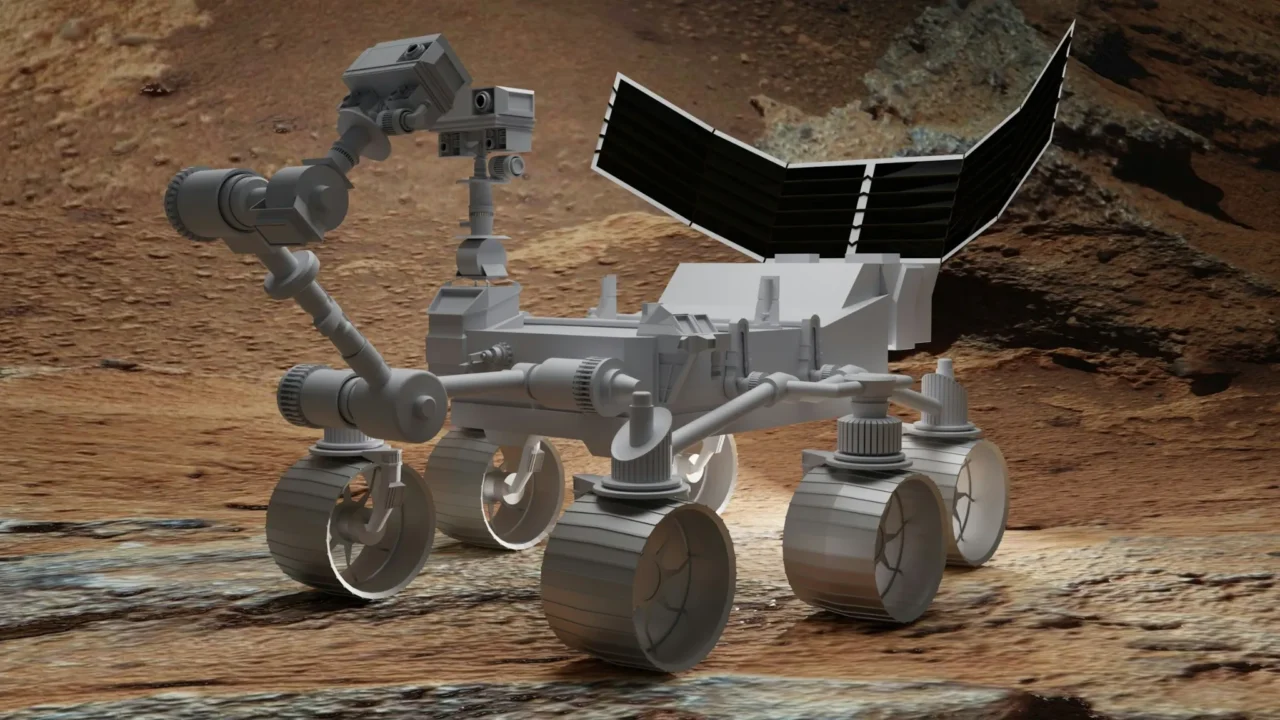
For the first time, NASA let artificial intelligence plan driving routes for its Perseverance rover. This marked an important test of AI navigation on another planet. Over two days in December 2025, the rover followed these AI-generated routes and traveled about 456 meters on Mars.
The demonstration showed how AI can help plan rover movement using orbital imagery and terrain data, reducing the need for detailed route mapping by engineers on Earth.
How rover driving usually works
Universe Today reported that the time delay between Earth and Mars is a big factor in planning rover routes. Since commands cannot be sent in real time, rover drivers review images and elevation maps to plan a driving path before sending instructions.
Usually, engineers set up a series of waypoints less than 100 meters (about 330 feet) apart. The plan is sent through NASA’s Deep Space Network, then relayed to Mars orbiters, and finally passed to Perseverance. The rover can also get direct signals from Earth as a backup, but this method is slower.
This careful process keeps the rover safe, but it takes a lot of time to plan each move.
AI planned the route using orbital data
For the recent test, the AI system looked at high-resolution images from the Mars Reconnaissance Orbiter’s HiRISE camera and digital elevation models. The system, based on Anthropic’s Claude AI, identified terrain hazards such as sand traps, rocky outcrops, bedrock, and boulder fields.
The AI then created a safe path using waypoints that avoided these obstacles. After the route was set, Perseverance’s onboard auto-navigation system carried out the drive.
This rover is more independent than earlier Mars vehicles. It can process images and driving plans while moving, so it can adjust its path within the AI-generated route as it goes.
Two days of AI-assisted movement
The Perseverance carried out the AI-planned drives on two separate days, traveling a combined distance of about 456 meters. The routes were reviewed before execution but were generated by the AI rather than mapped step-by-step by human planners.
ScienceAlert reported that this test is one of the first times generative AI has helped plan real rover navigation on another planet. Instead of plotting every turn by hand, engineers let the system suggest a route based on the terrain. The role focused on planning the path rather than directly controlling the rover’s motors. After the waypoints were produced, Perseverance’s existing autonomous navigation system handled the driving.
A step toward more independent exploration
The test shows how artificial intelligence could help future planetary missions, especially when communication delays make real-time control hard. By finding safe paths and creating routes, AI could make things easier for mission teams and help rovers travel more efficiently.
NASA has used automated navigation before, but this new test adds something extra by letting AI help plan the routes. The trial is an early example of how advanced AI tools could support future exploration of Mars and other worlds.