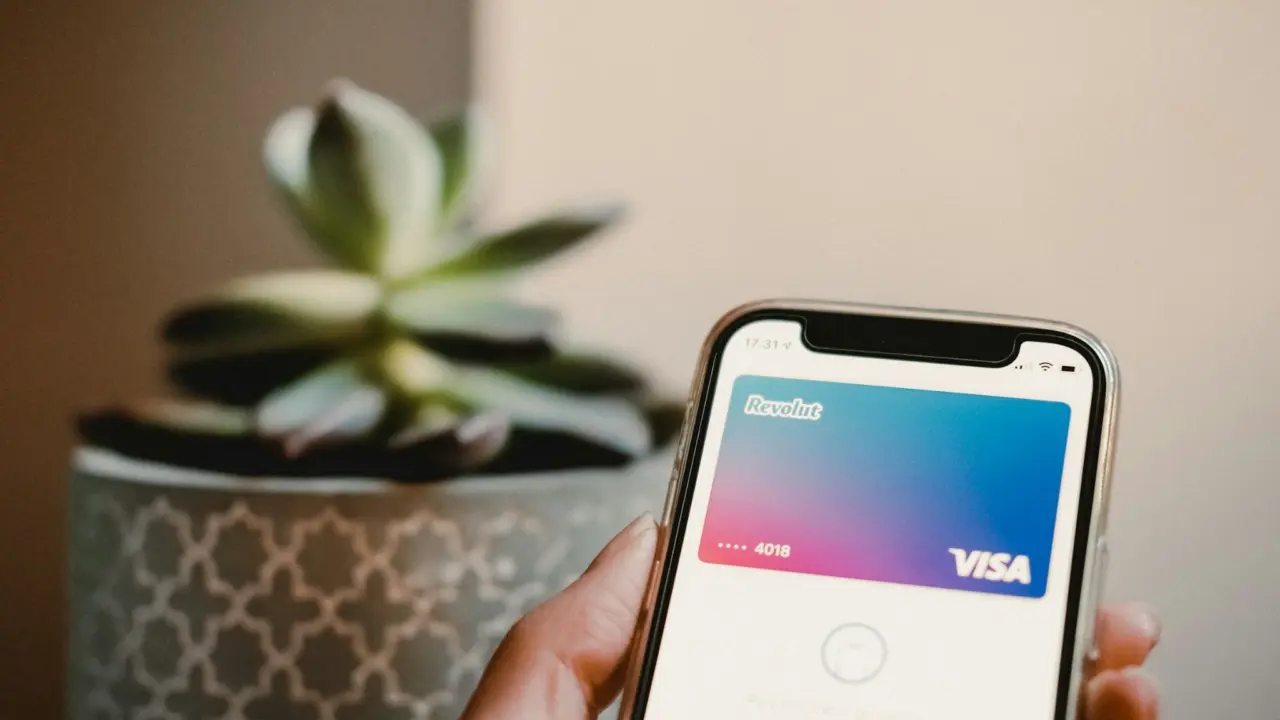
Revolut has begun testing facial-recognition payments in London, allowing opted-in customers to authorize an in-store transaction by looking at a checkout terminal instead of presenting a card or phone.
The fintech launched Revolut Pay with Smile on September 24 at selected Kiss the Hippo coffee shops in Bloomsbury, Chelsea and Soho, with the initial pilot running through September 26.
Revolut describes it as the UK’s first in-store facial-recognition checkout system, while independent reporting from RTÉ confirmed that customers make payments through the company’s new Revolut Register terminal.
A face becomes the payment credential
The system builds on identity information Revolut already collects.
Customers must actively opt in through their Revolut app. At checkout, the terminal performs a facial identity check against the verification completed when the customer originally signed up for Revolut. If the match succeeds, an account-to-account payment is authorized.
Revolut says users are not enrolled by default, can withdraw consent, and that facial-recognition data is encrypted end-to-end. The company also says personal biometric data is not stored by participating merchants.
That architecture matters because biometric payments introduce a different trust model from cards.
A stolen card can be cancelled and replaced. A face cannot.
Security therefore depends not simply on whether facial matching works, but on how biometric templates are generated, encrypted, transmitted and separated from merchant systems.
Revolut is tying identity, payments and merchant hardware together
Pay with Smile is also part of a broader merchant push.
The feature operates through Revolut Register, the company’s two-screen point-of-sale platform for hospitality businesses. Revolut is offering merchants 0% processing fees on Pay with Smile transactions during the launch.
The Paypers notes that the system effectively connects Revolut’s customer identity verification, merchant hardware and account-to-account payments in one checkout flow.
That integration is strategically important.
Payment companies traditionally depend on separate layers for merchant terminals, payment credentials and identity. Revolut already knows verified customers through its banking relationship, giving it an existing identity layer that can be reused at checkout.
Convenience creates a new privacy threshold
The human-impact question is whether people will consider this convenient or intrusive.
Using facial recognition to unlock a banking app is relatively private: the interaction usually occurs on a device the user controls. Facial checkout moves the same technology into a public environment where cameras and payment infrastructure become part of the physical store.
Revolut has attempted to make participation explicit through opt-in enrollment. But broader adoption would still require customers to become comfortable with their biometric identity functioning as a payment interface.
That could change how product teams think about checkout.
Contactless cards removed the PIN for many transactions. Digital wallets moved credentials into phones and watches. Facial payments attempt to remove the device itself.
The result is arguably the most frictionless payment interface yet—but also one where the distinction between identifying a person and charging a person becomes increasingly thin.
For fintech builders, Revolut’s London pilot offers an early test of whether consumers value that trade-off enough to make biometric payments normal rather than novel.