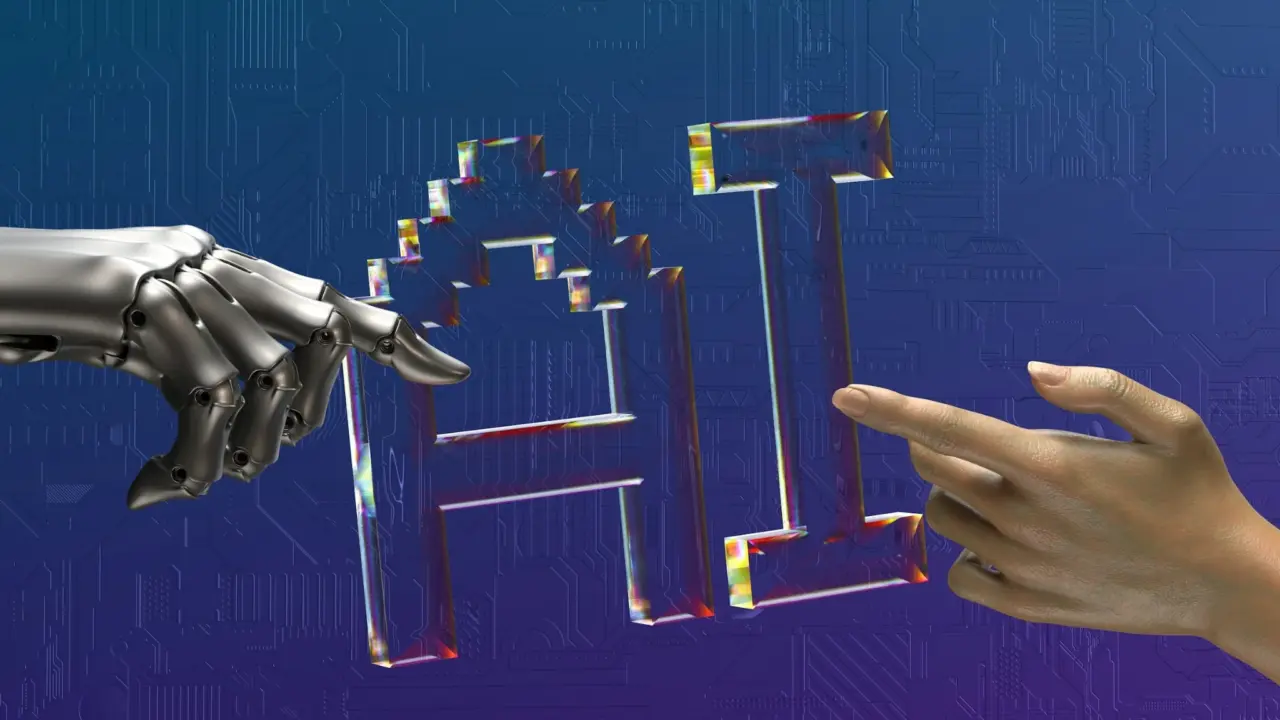
A person asks an AI assistant to rewrite an email, adds “please,” then types “thank you” when the result arrives. There is no colleague on the other side waiting to feel appreciated. Yet the exchange can feel impolite without those familiar words.
It may be tempting to describe this as people mistaking software for a person. Research suggests something subtler: human conversation comes with learned habits of cooperation, and conversational interfaces invite people to use them even when they know the system is artificial.
The questions for designers extend beyond manners. The words a chatbot uses can shape perceptions of warmth and trust, but those impressions do not establish that its answers are correct.
Politeness Is Not One Fixed Behavior
In a 2026 study published in Corpus Pragmatics, Christine Elsweiler, Anna Ziegner and David Elsweiler examined 30 user–agent conversations drawn from an existing cooking-information dataset.
They identified four interaction styles: “Hyperpolite,” “Polite and engaged,” “Engagement-seeking” and “Hyperefficient.” Some people expressed appreciation and maintained conversational exchanges; others used short, task-focused instructions.
The researchers found no statistically significant differences by age or gender in these patterns. With only 30 conversations, the analysis establishes useful categories rather than population-wide prevalence.
That variation matters because politeness can serve different purposes. A user may say “please” out of habit, to soften a request, or simply because the interface resembles a chat. Someone who types a blunt command may be prioritizing efficiency rather than expressing hostility.
People Become Less Formal as a Conversation Continues
Teddy Lazebnik, Lior Zalmanson and Osnat Mokryn reached an interesting result in a 2025 experiment published in Proceedings of the ACM on Human-Computer Interaction.
Their controlled study involved 1,684 participants completing two sequential text-based tasks with AI. Participants saw either no avatar, a robot icon or a human face.
Politeness declined across successive prompts, with a brief increase when participants began the second task. It declined faster than in a separate benchmark of human-to-human interactions. A human-like avatar was associated with more sustained polite language.
The researchers observed that politeness changed with task complexity as well. Participants became less formal while completing a straightforward scenario than during a more demanding task.
This suggests that the interface and the work itself shape language. A familiar face can encourage social behavior, while repeated exchanges can turn conversation into brisk instruction.
The results do not mean that users believed the AI was conscious. The experiment measured language and interface responses, not a definitive belief that a machine has feelings.
When the Chatbot Says Please Back
Politeness also travels in the other direction. A chatbot that uses warm phrasing may appear more helpful or human-like, but the effect depends on who reads it.
In research published in Young Consumers in 2026, Tilen Pigac studied 300 participants in Hong Kong and the United States across Gen Z, Millennial and Gen X groups.
Polite AI replies increased perceived warmth and human-likeness primarily among Gen Z participants. The researchers found no comparable interaction effect for perceived helpfulness.
The distinction is important: language that feels welcoming does not necessarily make an answer more useful. A model can sound approachable while failing at the task.
A separate Scientific Reports study interviewed 28 people in Pakistan and China about chatbot customer service. Participants described natural dialogue, polite tone and empathy as contributors to emotional trust, but repeatedly stressed accuracy, consistency and responsiveness.
Some also disliked overly polished or excessively human-like language. That qualitative research cannot tell us how common such reactions are globally; it shows how trust depends on more than friendliness.
The Risk of Mistaking Manners for Reliability
The problem becomes sharper when AI gets something wrong. In a 2026 International Journal of Information Management experiment, researchers Hayeon Kim and Sang Woo Lee randomly assigned 369 chatbot users to response conditions varying apologies versus gratitude and whether responsibility for an error was attributed internally or externally.
Apologizing and accepting responsibility produced the highest user satisfaction under the study conditions. The researchers also found that satisfaction helped explain greater tolerance of hallucinations. That can be valuable when a system acknowledges an error, but it raises a design question: can a convincing apology make users too forgiving of inaccurate information?
The finding does not establish that apologies make false claims safe or that a chatbot can meaningfully feel remorse. It shows how social cues influence reactions to mistakes.
There is another subtle point for product teams: a social cue can be effective without being universally welcome. A formal apology may fit a banking support interaction, while the same wording could interrupt a quick coding exchange. Researchers’ findings make context and user expectations essential to evaluating interface tone.
Designing for Respect Without Pretending to Be Human
For builders, a conversational system should acknowledge errors clearly, offer corrections and explain uncertainty. Polite language can help make that exchange comfortable, but it cannot substitute for accurate information or appropriate human escalation.
There is no need to ban “please” and “thank you” from prompts. Nor should designers assume everyone wants an endlessly cheerful, human-like companion. The studies instead support adaptable communication styles that reflect the user’s purpose and preserve the distinction between social ease and machine reliability.
Perhaps the more revealing question is not why people thank chatbots. It is what developers should do once they recognize how easily ordinary conversational habits can become signals of trust.