
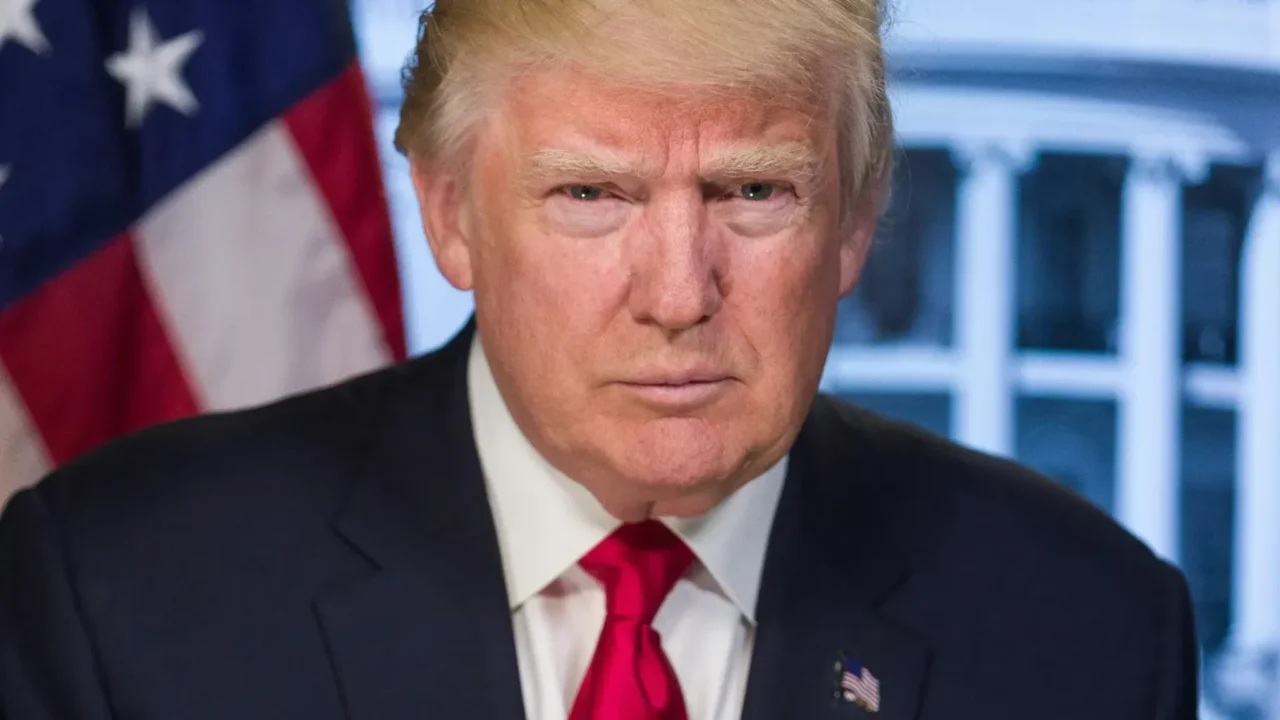
US President Donald Trump has threatened to impose substantial penalties on American technology companies building data centers overseas, introducing fresh uncertainty for the global expansion of artificial intelligence infrastructure.
Speaking at a White House news conference on November 20, following his trip to Asia, Trump said companies constructing data centers outside the United States could face a “tremendous tax.”
The president linked the proposed penalties to competition with China, arguing that keeping computing infrastructure on American soil would help preserve the country’s technological advantage.
However, Trump provided no specific tax rate, enforcement mechanism or implementation timeline. According to the Associated Press, he acknowledged that he had not yet informed his administration’s officials about the plan.
The announcement therefore remains a policy proposal rather than an enacted restriction.
White House Targets Overseas Computing Investment
Trump’s remarks signal a potentially significant change for American technology companies operating internationally.
According to The Wall Street Journal, the president wants more computing infrastructure constructed domestically as Washington seeks to compete with China’s rapidly advancing AI capabilities.
The proposal could complicate investment decisions for companies whose operations extend beyond US borders.
Reuters identified Equinix and Digital Realty among American data-center developers operating facilities internationally.
Overseas infrastructure serves practical purposes beyond geographic expansion. Positioning servers closer to customers can reduce latency for applications requiring rapid responses, including financial transactions and cloud-based services.
Long-distance data transfers can also increase operating costs.
For global cloud providers, a potential penalty on overseas development could introduce additional considerations into infrastructure planning, although the proposal’s scope remains undefined.
China Competition Drives the Proposal
The announcement follows Washington’s broader efforts to restrict China’s access to advanced American computing technology.
According to Reuters, the US Commerce Department moved earlier in the week to restrict advanced AI chip exports to several Southeast Asian countries.
The measures address concerns that Chinese companies could access computing capabilities through third-country infrastructure despite existing restrictions on direct chip sales.
However, Trump’s proposed data-center penalties appear broader than controls targeting specific advanced processors or destinations.
The president has not clarified whether restrictions would apply to all international computing investments or particular facilities considered sensitive to US national-security interests.
Energy Demand Creates a Domestic Challenge
Encouraging companies to build more data centers in the United States would also intensify existing infrastructure pressures.
The International Energy Agency’s 2026 assessment estimates that global data-center electricity consumption could increase from 485 terawatt-hours in 2025 to approximately 950 terawatt-hours by 2030.
The agency also identified growing constraints involving electricity supply, grid connections and advanced computing components.
Meanwhile, the Associated Press reported that Trump urged American communities to welcome data-center investments while negotiating financial benefits from developers.
His remarks come amid public concerns about rising electricity costs and infrastructure strain.
The US Senate also approved bipartisan energy-permitting legislation on November 19, aimed at accelerating power infrastructure development and addressing data centers’ responsibility for electricity-related costs. The measure still requires House consideration.
Global AI Investment Faces New Uncertainty
For AI developers, cloud providers and investors, the proposal raises questions about where future computing capacity can be built economically.
An overseas penalty could influence infrastructure costs, regional availability and the deployment strategies of companies serving international customers.
Yet without formal rules, its commercial consequences remain uncertain.
The central challenge is whether Washington can encourage domestic computing investment while accommodating the global infrastructure requirements of an increasingly international AI industry.