
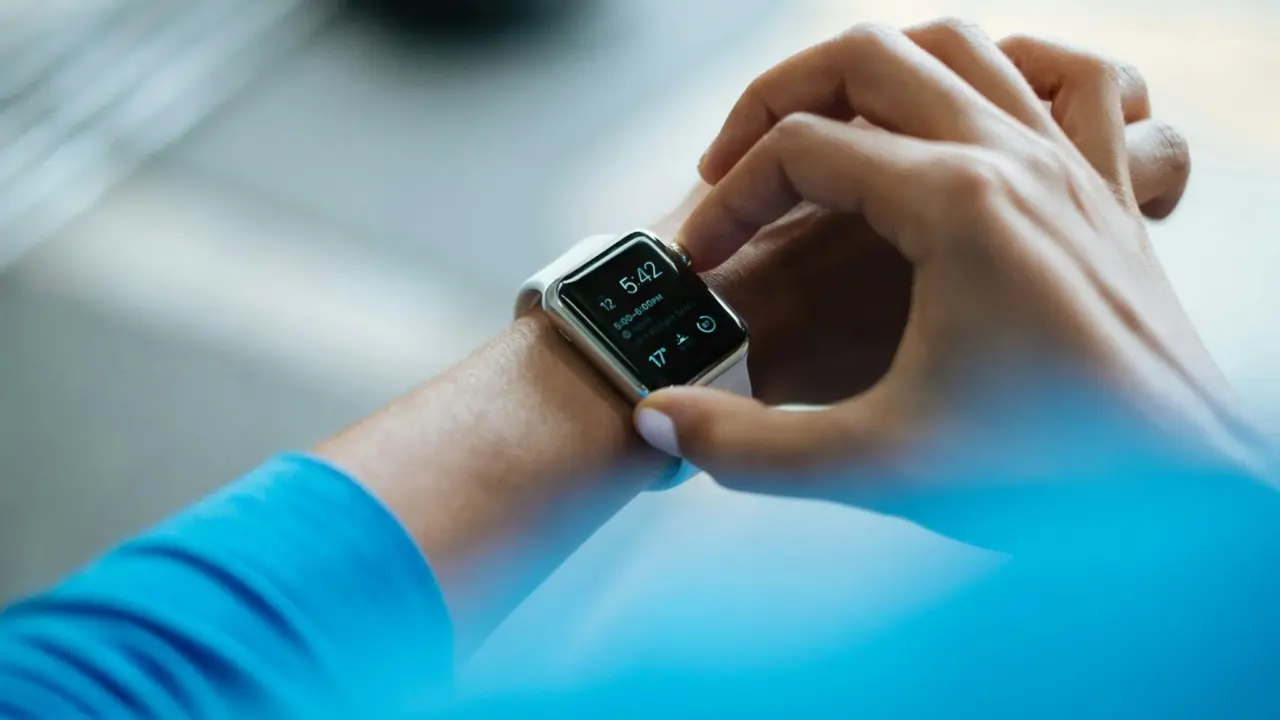
A smartwatch can flag an irregular pulse, a smart ring can detect a temperature shift, and motion sensors can record patterns associated with neurological conditions. These tools are moving beyond step counting because they collect information throughout the day and night, including periods when a patient is far from a clinic.
Their advantage is continuous observation. Yet accuracy can vary with the sensor, activity, device placement, user characteristics, and the algorithm interpreting the signal.
How Wearables Build an Early-Warning Picture
Many wrist devices measure pulse through photoplethysmography, or PPG, while others add motion, temperature, sleep, and respiratory data.
A 2024 study in npj Digital Medicine examined wearable measurements including heart rate, heart-rate variability, peripheral temperature, breathing rate, activity, and sleep. Looking at several signals together may be more useful than treating one unusual reading as proof of illness.
The researchers also reported that wearable algorithms must deal with differences among users, sensor interference, inaccurate self-reports, and outside factors that change normal physiology. These limitations make wearables more suitable for screening and monitoring than for delivering a stand-alone diagnosis.
Heart-Rhythm Alerts Show Value and Uncertainty
Atrial fibrillation is an irregular heart rhythm that may appear only occasionally. Repeated wrist monitoring may therefore help capture an episode and prompt confirmatory testing.
The Apple Heart Study enrolled 419,297 participants, of whom 2,161, or 0.52%, received an irregular-pulse notification during a median of 117 days. Among 450 notified participants who returned usable electrocardiogram patches, atrial fibrillation was detected in 34%. When another alert occurred while the ECG patch was being worn, the positive predictive value was 84%.
The Fitbit Heart Study included 455,699 participants and recorded irregular heart-rhythm detections in 4,728 people, or about 1%. Of 1,057 participants who later returned an analyzable ECG patch, 340 had atrial fibrillation. Repeat alerts recorded during ECG monitoring produced a positive predictive value of 98.2%.
These findings do not mean smartwatches identify every case. Positive predictive value shows how often an alert matched the condition during confirmation; it does not show whether the device found all affected users. An alert should lead to medical evaluation rather than self-diagnosis.
Infection Detection Relies on Personal Baselines
Illness can alter several signals at once, including resting pulse, temperature, breathing, activity, and sleep. Wearables may detect this disruption before infection is confirmed.
The 2024 npj Digital Medicine study analyzed more than 1.3 million hours of Oura Ring data from over 8,000 participants. After correcting baseline information and inaccurate labels, the model recognized COVID-19-related physiological changes an average of 4.1 days before a reported positive test, compared with 3.5 days using the conventional method.
The corrected model achieved an area under the receiver operating characteristic curve of 0.777, with 66% sensitivity at 75% specificity. This indicates useful predictive ability, but some infections would still be missed while some healthy users would receive warnings.
The researchers identified alcohol or caffeine intake, physical exertion, individual physiology, incorrect device placement, sensor noise, and delayed reporting as factors that can distort results. They also noted that configuring an algorithm to warn earlier can increase false positives.
Movement Data May Reveal Neurological Changes
The 12-month WATCH-PD study followed 82 people with early, untreated Parkinson’s disease and 50 age-matched controls using research sensors, smartphones, and smartwatches in clinics and at home. Measurements involving arm swing, tremor duration, and finger tapping differed significantly between the Parkinson’s and control groups.
However, the digital measures did not consistently match traditional clinical assessments across all features. Wearable data may therefore add information about disease patterns without replacing neurological examination.
Accuracy Changes From One Measurement to Another
A systematic review of 158 studies covering nine commercial brands found that heart-rate and step-count measurements were generally more accurate in controlled conditions, although results differed across devices and manufacturers.
Apple Watch heart-rate readings were within 3% of the reference value in 71% of comparisons, compared with 51% for Fitbit and 49% for Garmin. Energy-expenditure estimates were less dependable, with no brand staying within 3% of the reference value in more than 13% of comparisons.
Exercise can further reduce reliability. A study comparing six consumer and research-grade devices found that average absolute heart-rate error during physical activity was 30% higher than during rest. The researchers explained that repetitive wrist motion can interfere with optical sensing because the device may confuse rhythmic movement with pulse signals.
Possible differences across skin tones also need more evidence. A review of 10 studies involving 469 participants found that four reported lower heart-rate accuracy among darker-skinned users, four found no significant effect, and two produced mixed results. The authors called for larger studies using more objective skin-tone measurements.
Useful Signals, Not Medical Verdicts
Wearables can document intermittent events and reveal changes over time. Still, an unusual heart alert, oxygen reading, temperature shift, or sleep score may reflect illness, exercise, stress, poor sensor contact, medication, alcohol, or ordinary biological variation.
The safest approach is to treat wearable data as an early signal. Users can save recurring readings, record symptoms, and share the information with a qualified healthcare professional. Chest pain, fainting, breathing difficulty, sudden weakness, or confusion require immediate medical attention regardless of what a device displays.
Wearable health monitoring needs stronger clinical validation, fairer performance, and clearer explanations of what each metric can prove. These devices can reveal warning patterns, but accuracy still depends on the measurement, activity, user, device, and algorithm.