
The digital euro is moving closer to something people could actually use rather than simply debate.
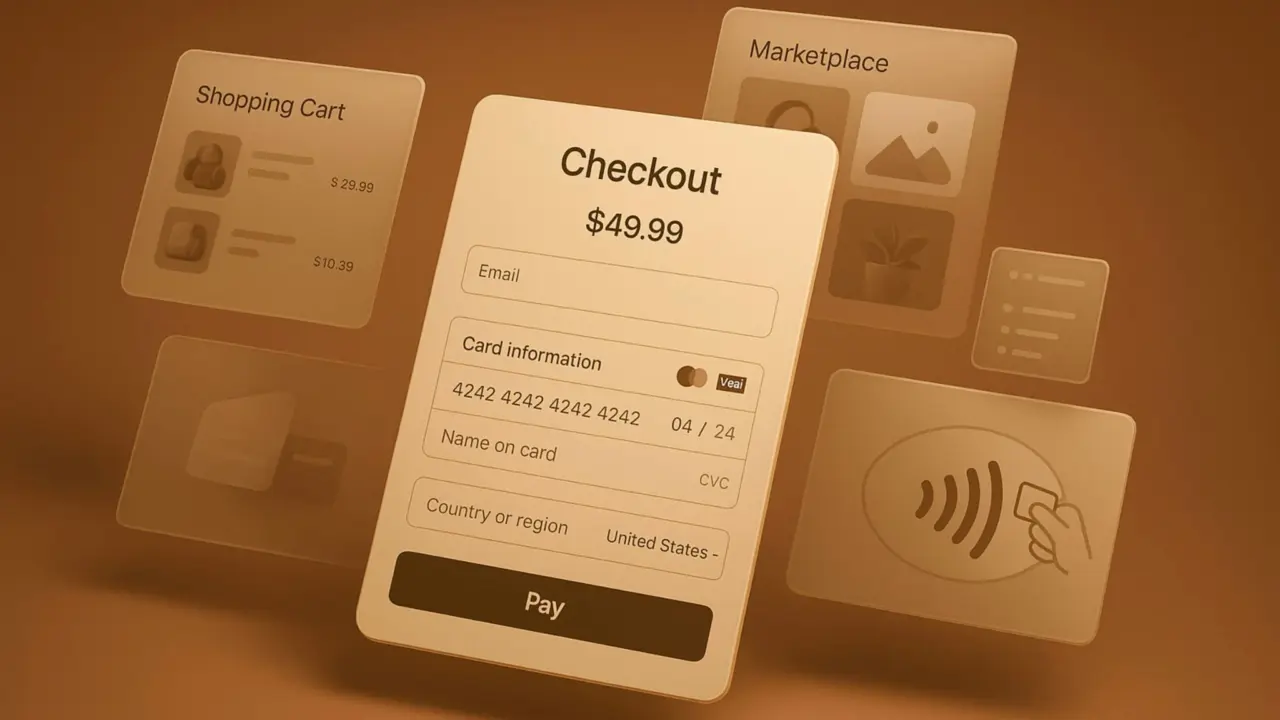
The European Central Bank is preparing a 12-month pilot beginning in the second half of 2027, where participants will test a beta version of the digital euro in situations designed to resemble ordinary payments. The ECB says the pilot will include 36 payment service providers, selected merchants and staff from 19 national central banks, with transactions ranging from person-to-person transfers to payments in cafeterias, physical shops, e-commerce sites and mobile commerce.
More than 50 payment companies applied. Reuters reported that the selected group includes Deutsche Bank, UniCredit and Revolut, illustrating how traditional banks and newer digital-finance companies are being brought into the same experiment.
The beta currency will not yet be legal tender. But the exercise marks an important change in the project: Europe is beginning to test how central-bank money might work inside the same everyday environments currently dominated by cards, banking apps and private payment networks.
Digital money would no longer mean only commercial bank money
A digital euro would look familiar on a phone, but the money underneath it would be fundamentally different from the balance displayed in a conventional banking application.
The Council of the European Union explains that the digital euro would be public money issued by the ECB rather than private bank money issued by commercial banks. Users would still access it through a digital wallet provided by a bank or another intermediary, but the underlying money would be a direct central-bank liability, like physical euro cash.
That distinction is central to the project.
Cash currently gives ordinary people direct access to central-bank money. Most digital payments do not. Instead, card transactions and banking apps move claims on commercial banks through private payment networks.
The digital euro is intended to carry some of cash’s characteristics into that digital environment.
The European Parliament’s 2026 position describes it as a secure, private and free-to-use means of payment operating both online and offline. Parliament backed negotiations in July by 416 votes to 169, with 22 abstentions.
Offline payments are the technically difficult part
One of the digital euro’s most unusual features is the ability to make payments without an internet connection.
The European Commission says offline payments would involve instant transfers between physically close devices, with the payer and payee verifying the transfer directly. Users would store a limited amount of digital euros locally on their devices, similar to carrying a limited amount of physical cash.
That could allow payments when mobile networks fail or when internet connectivity is unavailable.
But offline digital money creates a technical problem cash does not have: double spending.
In an online payment system, a central ledger can immediately check whether the same funds have already been spent. Offline devices cannot continuously ask that central database.
Research from the Bank for International Settlements notes that offline CBDC designs must balance security, privacy, resilience, inclusion and risk management, and that very few offline solutions are currently working at scale in live environments.
A 2025 peer-reviewed study on offline CBDCs similarly describes preventing double spending as a central technical challenge and proposes secure hardware and monotonic counters to prevent the same digital currency from being spent twice while completely offline.
This is why offline digital money is considerably harder than simply building another mobile wallet.
Privacy could become the digital euro’s biggest differentiator
Offline payments are also where the digital euro could most closely resemble cash from a privacy perspective.
The ECB says that for offline transactions, only the payer and payee would know the personal transaction details. The Eurosystem would not be able to directly link individual users to their transactions, while anti-money-laundering checks would occur when money is loaded into or removed from the offline wallet.
The technical challenge is preserving that privacy without creating an easy mechanism for fraud.
An expert study commissioned through the European Data Protection Board examined whether the proposed offline digital euro could be both cash-like, anonymous and resistant to double spending. The report emphasizes that architecture choices will determine whether those privacy promises can actually survive implementation.
Research suggests privacy could also affect whether people want to use central-bank digital money at all. A randomized study involving more than 3,500 participants found that stronger privacy protection and information explaining those privacy protections could increase willingness to use a CBDC by as much as 64% for privacy-sensitive purchases.
Privacy, therefore, is not merely a compliance feature. It could determine adoption.
Europe also wants more control over its payment infrastructure
The digital euro project has another purpose: reducing dependence on payment infrastructure controlled outside Europe.
The Council notes that many euro-area digital payments currently rely on systems operated outside the EU, meaning payment flows, fees and transaction data can pass through non-European providers.
That puts the digital euro into the same broader European debate as cloud sovereignty, semiconductor supply and domestic AI infrastructure.
It does not mean Visa, Mastercard, Apple Pay, Google Pay or banking applications disappear. The proposed digital euro is explicitly designed to coexist with private payment methods.
The difference is that Europeans could have another digital payment rail backed directly by the Eurosystem.
The next test is whether people actually want to use it
The ECB is currently recruiting additional e-commerce and mobile-commerce merchants for the pilot, with applications open until October 27, 2026. Those merchants will help test digital euro payment experiences for online and mobile platforms before operational testing begins in 2027.
The legislative process is still unfinished. ECB Executive Board member Piero Cipollone said on October 6 that trilogue negotiations are under way and that, if legislation is completed in 2026, the Eurosystem aims to be ready for a potential first issuance in 2029.
That makes the coming pilot more consequential than another fintech experiment.
Europe is testing whether cash can acquire the convenience of a smartphone without losing its status as public money, its resilience when networks fail, or much of its privacy.
For users, the digital euro may eventually feel like just another button inside a wallet.
For the technology industry, what sits behind that button would be something much bigger: a new public payment infrastructure competing for a place inside everyday digital life.