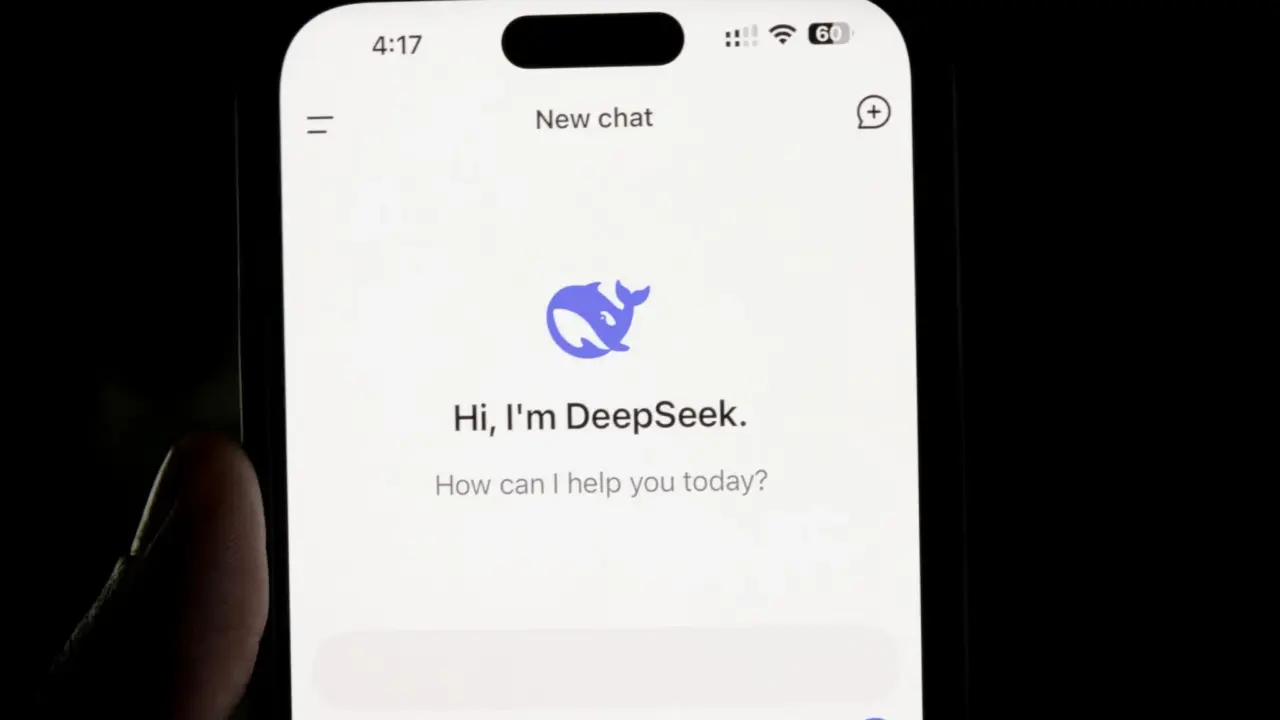
Chinese artificial intelligence startup DeepSeek is turning a temporary discount into a permanent pricing strategy, cutting the cost of its flagship V4-Pro model by 75% as competition intensifies in the AI model market.
DeepSeek said on Saturday that it will make permanent a 75% price cut on its flagship V4-Pro artificial intelligence model, keeping prices at a quarter of their original level.
The move makes permanent a discount promotion that had been scheduled to end on May 31, 2026, positioning DeepSeek more aggressively as a lower-cost option for AI users.
DeepSeek lowers API pricing for developers
The biggest change is in the price developers and companies pay to use V4-Pro through DeepSeek’s API.
Reuters reported that DeepSeek cut V4-Pro API costs to between 0.025 yuan and 6 yuan per million tokens, or about $0.0035 to $0.83, depending on usage type. Before the cut, the range was 0.1 yuan to 24 yuan per million tokens. A token is a unit of text processed by an AI model.
Engadget gave the same price shift in U.S. dollar terms, reporting that DeepSeek V4-Pro now costs between $0.003625 and $0.87 per one million tokens, compared with the previous range of $0.0145 to $3.48 per million tokens.
This matters because token costs can add up quickly for developers building AI agents, enterprise tools, coding assistants, search systems, and customer support products.
A steep price cut can make it cheaper for companies to test and scale AI applications that process large amounts of text.
A push to be the low-cost AI option
DeepSeek is leaning into being the “cost-effective” choice for AI agents, especially for enterprise accounts or power users that process millions of tokens in a day. DeepSeek’s lower pricing presents a cheaper alternative to popular models such as OpenAI’s GPT-5 and Google’s Gemini 3.5 Flash.
The move comes about a month after DeepSeek released its V4 models, including the Pro and Flash versions. DeepSeek promoted the release around the “era of cost-effective 1M context length,” referring to AI models that can handle very long inputs such as large documents, codebases, or multi-step agent tasks.
Huawei chips remain part of the pricing story
DeepSeek did not disclose whether the permanent price cut was connected to increased supply of Huawei’s Ascend 950 chips, which DeepSeek used to maximize V4’s performance.
The chip supply question is important because China’s AI sector has been shaped by U.S. export controls. Huawei’s AI chip sales have benefited from U.S. rules preventing Nvidia from selling its most advanced semiconductors in China, although separate export limits on chipmaking equipment have made it harder for Huawei to scale Ascend production.
When DeepSeek launched V4 last month, the company explained that the Pro version would cost up to 12 times more than the less powerful Flash version because of “constraints in high-end compute capacity.”
DeepSeek also said Pro pricing was expected to fall sharply once Huawei Ascend 950 supernodes launched in large quantities in the second half of the year.
Rivals may feel more pricing pressure
The permanent discount could increase pressure on other AI model providers.
DeepSeek’s price undercutting might provoke competitors such as Anthropic, which previously accused the Chinese company of “distillation attacks” that allegedly learned improperly from Claude’s more capable AI models.
The bigger issue is that AI competition is no longer only about benchmark scores. For many developers and companies, price is becoming just as important as performance.
If cheaper models are good enough for everyday enterprise workloads, AI buyers may become more willing to switch or use multiple providers.
Cheaper AI could speed up adoption
DeepSeek’s permanent 75% price cut shows how quickly the AI market is moving from premium experimentation to cost-sensitive deployment.
For developers, the lower V4-Pro pricing could reduce the cost of building AI agents and high-volume applications. For competitors, it raises the question of whether expensive model access can remain sustainable as lower-cost Chinese AI models become more attractive.
For the broader AI market, DeepSeek’s move signals that the next phase of competition may be shaped not only by who builds the smartest model, but by who can make powerful AI cheap enough to use at scale.