Marc Lore, who started Jet.com and now leads the food-tech company Wonder, believes artificial intelligence could soon make starting a restaurant as easy as typing a prompt.
Lore spoke at The Wall Street Journal’s Future of Everything conference about Wonder Create, a project that would let food entrepreneurs, creators, influencers, and others design and launch a virtual restaurant brand using AI.
The goal is not to help people open traditional restaurants with leases, kitchen construction, and hiring staff. Instead, Lore wants people to create restaurant concepts that run on Wonder’s network of tech-enabled kitchens. Wonder now has 120 of these locations and plans to expand to 400 next year.
A ‘Shopify’ moment for food brands
According to TechCrunch, Lore compared the system to a “Shopify front-end with an AI prompt.” Users would type in the kind of restaurant they want, and the AI would create the brand name, description, images, pricing, nutrition details, and recipes. If the user approves, the virtual restaurant could launch across Wonder’s locations.
This model could interest more than just chefs. Lore sees possible uses for mega-influencers, micro-influencers, personal trainers, nonprofits, and entertainment companies that want to build food brands for their audiences. In his view, the restaurant is less a fixed business and more like a programmable product for consumers.
Robotic kitchens behind the promise
This technology relies on Wonder’s automated kitchens.
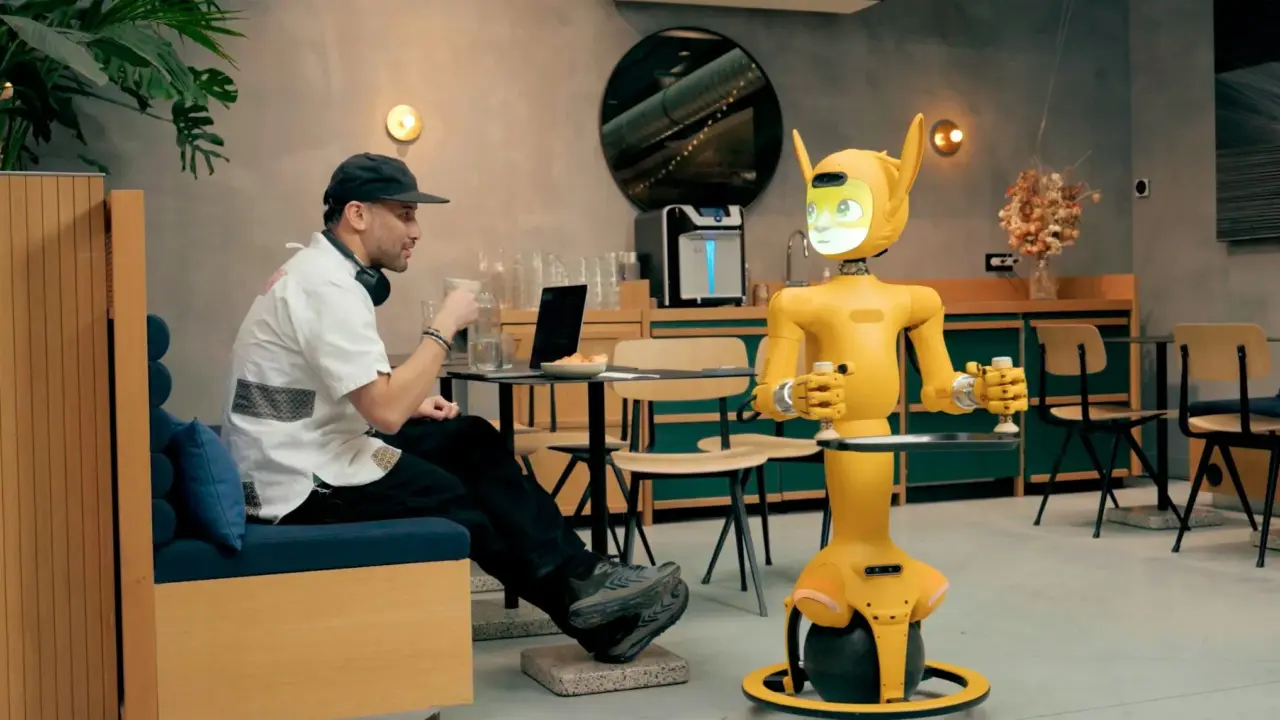
TechCrunch calls these locations “programmable cooking platforms” that can run many restaurant brands from the same all-electric kitchen. Lore said the kitchens use a library of 700 ingredients, a staff of up to 12 people, conveyors, robotic arms, and other cooking technology.
Wonder has also been expanding through acquisitions.
The company recently bought Spice Robotics, maker of an automatic bowl-making machine previously used by Sweetgreen, and plans to offer an “infinite sauce machine” next year that can make about 80% of sauces found in online recipes.
The Tech Buzz reported that the company has also acquired Grubhub, with its 250 million deliveries per year, and Blue Apron, while buying restaurant brands such as New York’s Blue Ribbon Fried Chicken for $6.5 million in February.
Scale is the real ambition
Lore’s main point is that automation can greatly boost kitchen productivity without needing to cut staff. He said Wonder can handle about 7 million orders with 12 people and aims for 20 million orders from 2,500 square feet with the same number of staff. By 2035, Lore wants to have 1,000 unique restaurants running from that same space.
Streamline described this idea as a way to break down traditional barriers in the food business. They argue that AI and robotic automation could let entrepreneurs start virtual restaurant brands without the big costs of leases, kitchen equipment, and inventory systems. The concept also separates the restaurant “brand” from the physical kitchen, with central hubs handling cooking and delivery.
Ghost kitchen lessons still loom
The model is ambitious but comes with risks. Ghost kitchens made similar promises in the early 2020s, but many operators had to scale back or close after facing problems with customer loyalty and consistency. The report also mentioned MrBeast Burger as an example of quality-control issues when food is made in many different kitchens.
Wonder’s bet is that standardized, increasingly robotic kitchens can solve those consistency problems. Still, Lore acknowledged limits: Wonder’s system cannot yet handle tasks such as tossing pizza dough or rolling sushi, so the company is focusing on foods like burgers, wings, fried chicken and bowls.
For now, Lore’s vision is not to replace every restaurant, but to turn food brands into products that work more like software.
If Wonder can solve the economic and consistency challenges, AI might not make everyone a restaurateur overnight, but it could make starting a food concept much easier than ever before.