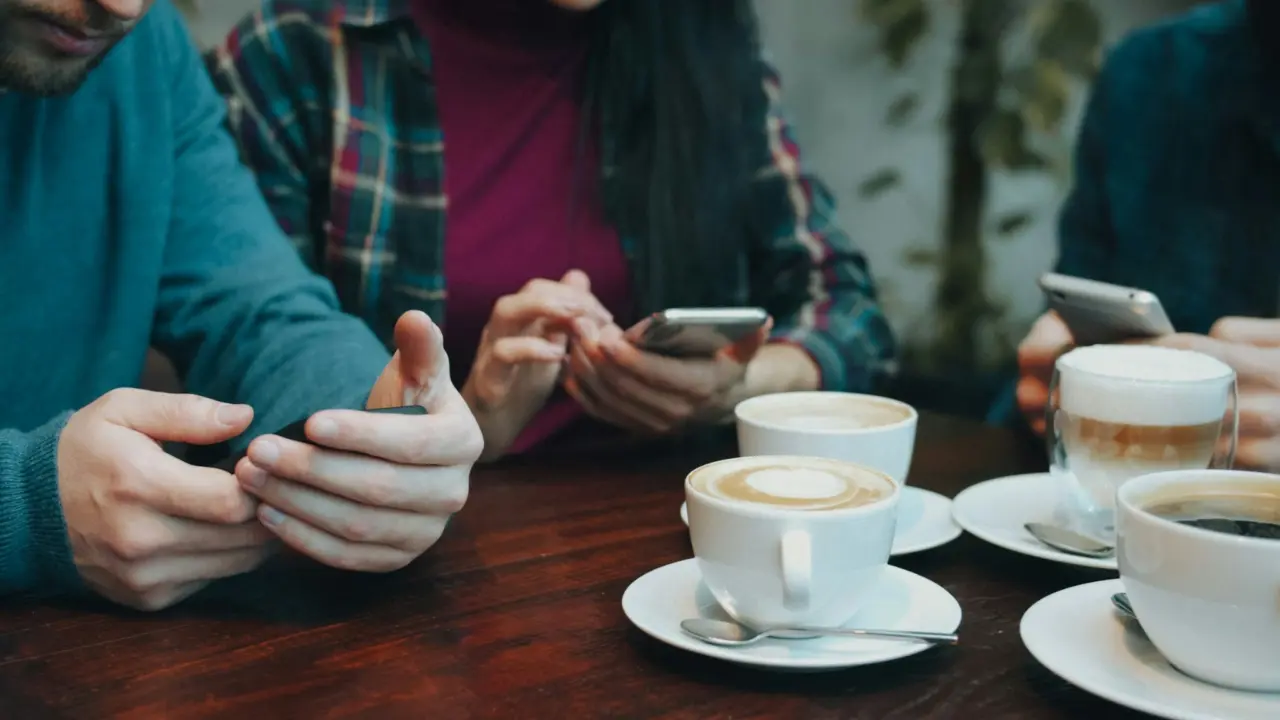
A privacy warning might tell you that an app collects more data than you would like. But if a friend says, “I use it—it’s good,” that social reassurance can change the calculation.
New research suggests that choosing an app is not simply a contest between convenience and privacy. People also use signals from other people to decide whether unfamiliar technology feels safe enough to trust.
A 2026 study in Acta Psychologica found that participants were more likely to report downloading or sharing data with apps when those apps were recommended by friends, compared with recommendations from a social-media platform or apps discovered while browsing. Importantly, participants still paid attention to privacy ratings. Social influence did not make privacy irrelevant—it became another force competing with it.
For app developers and platforms, that distinction matters. Users may understand a privacy warning perfectly well and still decide that the endorsement of someone they trust makes the risk acceptable.
Friends changed decisions even when privacy ratings were visible
Researchers Jennifer Klütsch, Annika Kreuder, Luise Haehn, Ida Kuck, Christian Böffel, Ulrich Frick and Sabine J. Schlittmeier conducted two experimental vignette studies examining privacy trade-offs during app adoption.
The first study involved 500 participants aged 16 to 29. Participants viewed fictional apps with either high or low privacy ratings and were told that the app had either been recommended by friends or suggested through a social-media platform.
As expected, apps with high privacy ratings were more likely to be downloaded than apps with low privacy ratings. But friend recommendations independently increased download probability: the recommendation effect was b = 12.53, with a 95% confidence interval from 7.47 to 17.59.
The effect was particularly strong among highly rated apps. However, the researchers also found a friend-recommendation effect among apps with low privacy ratings, meaning a poor privacy signal did not eliminate the influence of social endorsement.
The second experiment expanded the age range. It involved 148 participants aged 18 to 69, who evaluated fictional cooking apps carrying high or low privacy ratings. Some were presented as recommendations from friends; others were discovered while browsing.
Again, friend recommendations produced a higher probability of personal-data disclosure. Participants were asked about sharing information including their city, search terms, gender, browsing information, family status, education and hobbies.
Privacy ratings still mattered strongly. But so did the person effectively saying, “You should try this.”
Social information can change how risky something feels
Why should another person’s behavior affect a privacy decision?
One explanation is that people rarely evaluate digital risks with complete information. A privacy rating describes one dimension of an app, but a recommendation provides a different kind of evidence: someone familiar and trusted has already used it and apparently found the outcome acceptable.
The Acta Psychologica researchers link the effect to social influence and present bias. Their findings suggest that users can value recommendations from friends as immediate social benefits that compete with longer-term privacy risks.
The psychology extends beyond app stores.
A separate 2026 Frontiers in Psychology experiment randomly assigned 1,276 participants to different information-disclosure conditions. Researchers found that participants would mimic the disclosure behavior (or abstention from it) of a majority, showing that knowledge about other people’s behavior can influence whether someone reveals sensitive information.
That study dealt with disclosure rather than app installation, but the behavioral mechanism is relevant: what other people appear willing to reveal can become information about what feels normal or safe.
Peer behavior does not always make privacy decisions safer
Social influence can work in either direction.
An open-access 2025 study in the Journal of Economic Psychology examined how people decide whether to provide personal information when their decisions can also affect other people’s privacy. The large-scale experiment found that, on average, peer effects increased participants’ willingness to provide personal data, while encouraging participants to reflect on appropriate social behavior showed greater potential for reducing harmful data sharing.
That creates an important distinction between social proof and privacy knowledge.
If many friends use an application, users may infer that the product is trustworthy. But popularity does not establish how much information the app collects, whether data are shared with third parties, how long information is retained or what happens if the company changes its business model.
Social reassurance can therefore answer a different question—“Do people like me use this?”—while feeling as though it answered “Is this safe?”
Privacy information still works when people actually use it
The findings should not be interpreted as evidence that privacy labels are pointless.
The opposite may be closer to the truth.
Another experiment published in Computers in Human Behavior examined 209 German-speaking participants using a two-stage privacy intervention. Between 48.81% and 64.13% of participants across the experimental conditions chose to view additional data-protection information. Once participants engaged with it, the subsequent privacy information was considered a particularly important decision criterion.
The 2026 Acta Psychologica study similarly found that privacy indicators supported privacy decisions at the app-download stage. Higher privacy ratings consistently pushed participants toward more privacy-favorable choices.
The problem, then, is not necessarily that users ignore privacy. It is that privacy exists inside a larger decision environment filled with competing signals.
Younger and resigned users may be especially vulnerable
The second Acta Psychologica experiment identified two additional factors.
Participants aged 18 to 29 showed a higher probability of data disclosure than participants over 29, with a coefficient of 8.48. Users reporting greater privacy resignation—the sense that protecting privacy is difficult or futile—also showed a higher probability of sharing data, with a coefficient of 7.18.
That suggests warnings alone may be insufficient for users who believe meaningful control over their information is already beyond reach.
An interface can provide technically accurate privacy information while leaving users psychologically unconvinced that acting on it will make much difference.
App stores could use social influence for privacy instead
There is another lesson for product designers.
If social cues can weaken privacy-preserving decisions, they might also be designed to strengthen them.
The Acta Psychologica researchers suggest approaches including social reporting systems for privacy-invasive practices and social-norm nudges highlighting privacy-preserving choices.
Instead of displaying only stars, downloads and reviews, an app marketplace could make privacy behavior more socially visible: whether users frequently revoke permissions, report excessive tracking or choose privacy-protective settings.
That would change what popularity means.
Today, app stores are highly effective at showing what other people download. They are far less effective at showing what those people discovered about privacy after installation.
For builders, the broader lesson is that trust does not come only from policies, permissions and labels. It also flows through relationships.
People may know an app wants their data and still install it because someone they trust has already crossed that line.
The challenge for privacy design is therefore not merely making risks visible. It is ensuring those signals remain meaningful when social trust is pulling the user in the opposite direction.