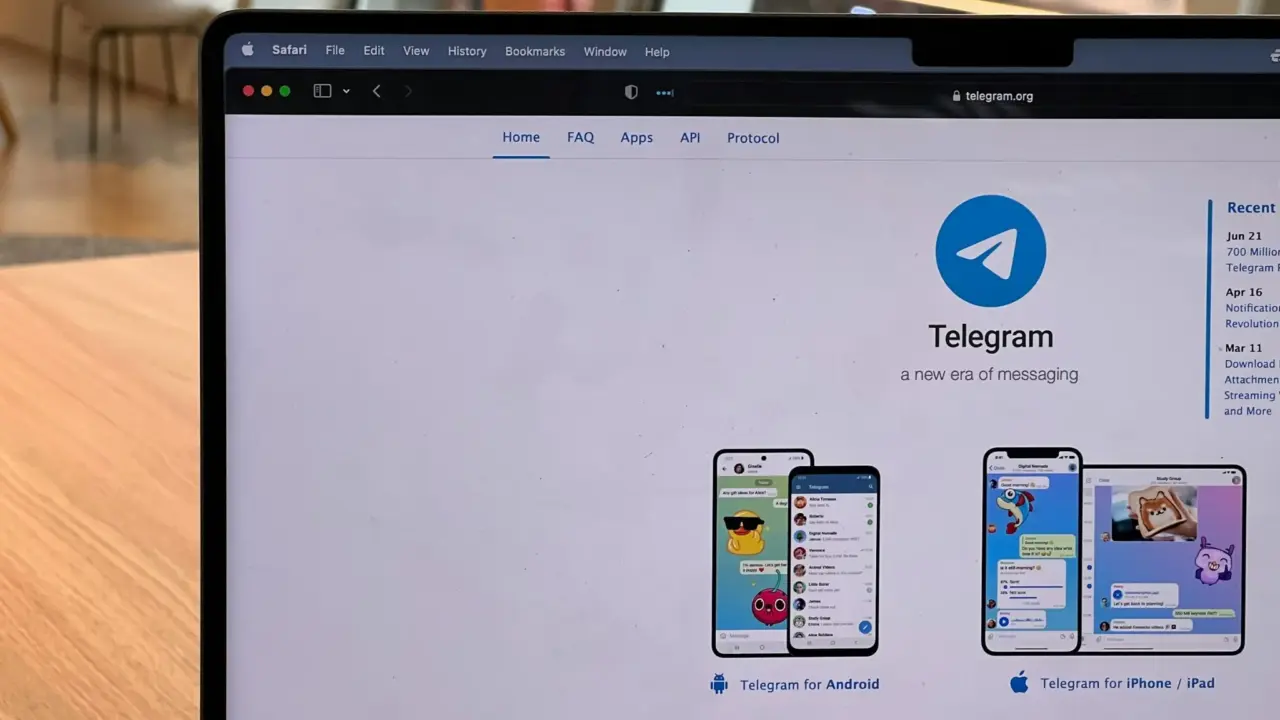
India is “proactively monitoring” Telegram groups and channels over concerns that the messaging app is being used for illegal content, cyber fraud, and exam-related misinformation.
An Indian investigation found Telegram was being used extensively to share child sexual abuse material and carry out financial scams, while the government report said India is “proactively monitoring” groups on the messaging app. The scrutiny comes after India defended a one-week ban on Telegram linked to allegations that a question paper for the country’s medical school exam had been leaked.
Government Cites Cyber Fraud and Illegal Content
The 35-page report was prepared by the Home Ministry’s Cybercrime Coordination Centre and submitted in court as part of the government’s defence of the temporary Telegram ban.
Reuters reported that the report was submitted after Telegram was accused of not doing enough to prevent misinformation in its channels, a charge the company denies.
The government’s concerns focused partly on Telegram’s privacy features. Indian authorities said Telegram allows users to interact without revealing a phone number, making identity detection difficult.
The report used strong language about criminal use of the platform. The government report as saying, Cyber criminals use Telegram to access closed groups/channels, while adding that India is proactively monitoring such Telegram groups and channels.
India Is Telegram’s Biggest Market
The pressure on Telegram is significant because India is the platform’s largest market by number of users. Telegram has more than 150 million users in India.
The government report also pointed to a large volume of complaints. India has received more than 688,000 complaints about Telegram being used as a medium for cyber fraud since 2023, with an estimated loss of about $750 million to Indian citizens. There were 1,556 complaints linked to Telegram between January and May this year, including reports of online harassment and child sexual abuse content.
Telegram disputed the scale of illegal content. Telegram argued in court that an internal review found illegal content represented less than 0.1% of content on its platform. Telegram and India’s Home Ministry did not respond to queries about the report.
Ban Raises Digital Rights Concerns
Beyond the illegal-content investigation, the Telegram case has raised concerns about platform-wide blocking as a regulatory tool.
Tech Policy Press shared that India’s mid-June 2026 emergency action against Telegram and its validation by the judiciary marked another step in the normalization of platform-level blocking.
India’s Ministry of Electronics and Information Technology issued an emergency blocking order on June 16 directing internet service providers to restrict access to Telegram until June 22, while disabling the platform’s message-editing feature until June 30. The same analysis said the order was tied to concerns over NEET-UG 2026 exam paper leaks, cheating networks, and misinformation campaigns allegedly operating across Telegram.
Telegram challenged the ban in court. Telegram argued a wholesale blockade affected over 150 million legitimate Indian users and that the company had already taken down more than 900 of the 1,300 specific URLs flagged by MeitY.
Wider Scrutiny Around Telegram
Telegram has faced criticism outside India as well. France launched a probe in 2024 into organized crime activity on the app, South Korea saw public outrage over sexually explicit deepfake images and videos found in Telegram chatrooms, and Spain temporarily suspended the app over copyright concerns.
Britain’s communications regulator opened an investigation into Telegram in April after evidence suggested child sexual abuse material was being shared on the platform.
India’s latest report therefore places Telegram at the center of two debates: how governments should respond to illegal content online, and whether blocking an entire platform is a proportionate way to solve content-specific harms.
For users, the case is not only about Telegram. It is about how far governments may go when a platform becomes difficult to police.