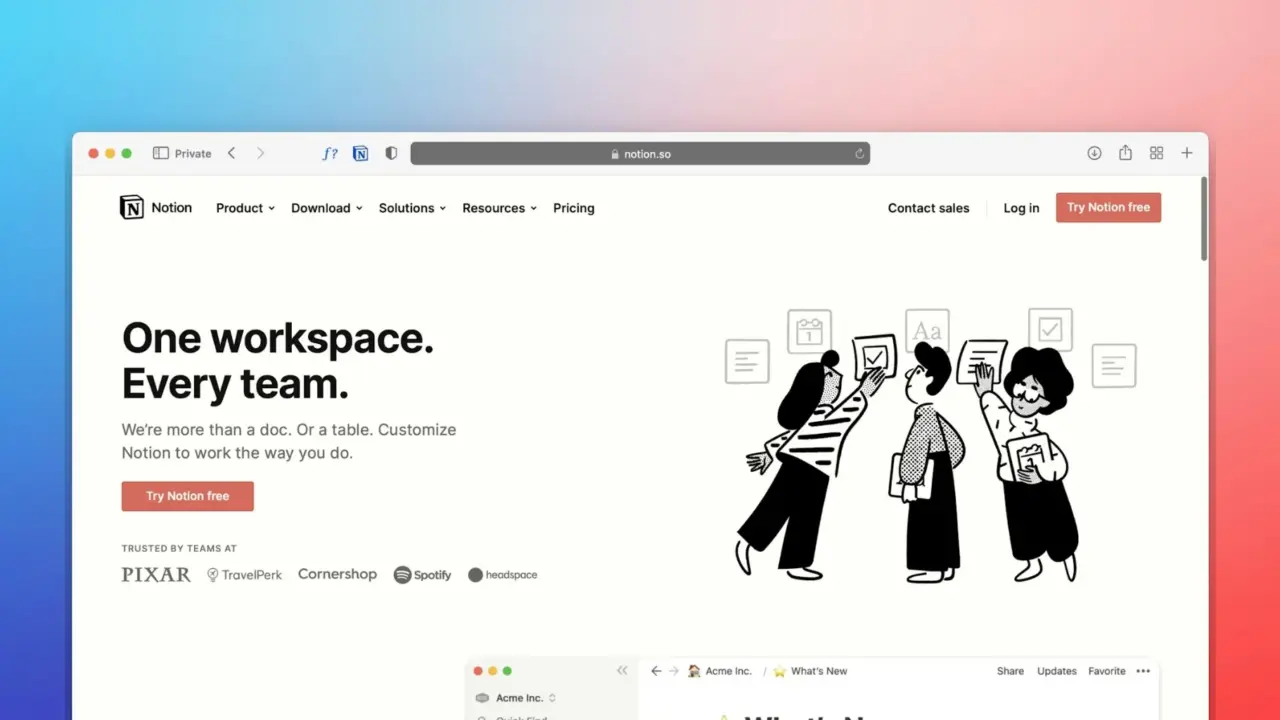
Notion is expanding its AI-powered productivity tools with a new developer platform that makes its workspace a central place for agents, external data, and custom code.
The company announced the platform during a livestreamed event, presenting Notion as more than just a note-taking app. Instead, it aims to be a platform where people and AI agents can work together across different tools and databases.
This change is part of a larger trend in enterprise software, as companies figure out where AI agents should fit into daily work.
Custom Agents get a bigger role
Notion introduced Custom Agents in February as AI teammates that could answer common questions, create status updates, and automate repetitive tasks. Since then, customers have created over 1 million agents, according to TechCrunch. However, the first version had some limitations. These agents could not connect to external data, use custom logic, or work easily with other agents companies already used.
The new developer platform is designed to remove these limits. Notion is adding Workers, a cloud-based environment where customers can run custom code in a secure setting.
This allows teams to sync data into Notion, build their own tools, and use webhooks to trigger actions without needing extra infrastructure.
External data and outside agents come into Notion
One of the main updates is database sync. TechCrunch explained that this new feature, powered by Workers, can pull data from any database with an API, such as Salesforce, Zendesk, and Postgres, and keep it up to date in Notion. Notion co-founder and CEO Ivan Zhao said users can now use their Notion database as a base for both workflows and agents.
Notion is also allowing agents built outside its platform to join in. Users will be able to chat with external AI agents, give them tasks, and track their progress just like Notion’s own custom agents. At launch, partner agents include Claude Code, Cursor, Codex, and Decagon, with more to come.
A bigger platform play
TechBuzz called this launch a strategic change that could turn Notion from a document storage tool into a flexible hub for AI assistants and automation. The article said Notion is not trying to compete with Microsoft or Google by building every AI feature itself. Instead, it is making a platform where developers can add specialized agents to Notion workspaces.
This strategy could help Notion compete with other workflow and productivity tools. The developer platform makes Notion seem less like a single app and more like core infrastructure for businesses that want to automate their work.
Notion is joining a busy market with competitors like Airtable, Coda, ServiceNow, Microsoft Teams, Slack, and Google Workspace, all of which are adding AI or automation features.
Developers become central to Notion’s AI future
This update also changes how Notion views developers. During the livestream, Zhao admitted that Notion “hasn’t been the most developer-focused platform,” but said that is now changing.
Developers and agents will use the new platform through the Notion CLI, which is available on Business and Enterprise plans. Workers will use the same credit system as Custom Agents and will be free to try until August.
The main question now is whether developers will create agents that teams trust. The strategy’s success depends on Notion attracting enough builders and on the agents being reliable for real work.
If that happens, Notion could become more than just a place for notes and tasks. It could turn into a control center where people, company data, and AI agents work together.