QR codes feel like a modern habit, but they were not originally made for restaurant menus, concert tickets, digital wallets, or identity checks. They began as an industrial solution to a very specific problem: tracking things faster and storing more information than old one-dimensional barcodes could handle.
The official DENSO WAVE development story says the QR Code system appeared in 1994 and was developed by engineers working for DENSO WAVE, with Masahiro Hara taking the lead in its development.
The QR code was created when manufacturing sites needed a code that could contain more information and still be read at high speed.
That origin explains why QR codes survived even when they looked uncool to many consumers. The technology was never just a marketing gimmick. It was a compact machine-readable bridge between physical objects and digital information.
The science behind the square
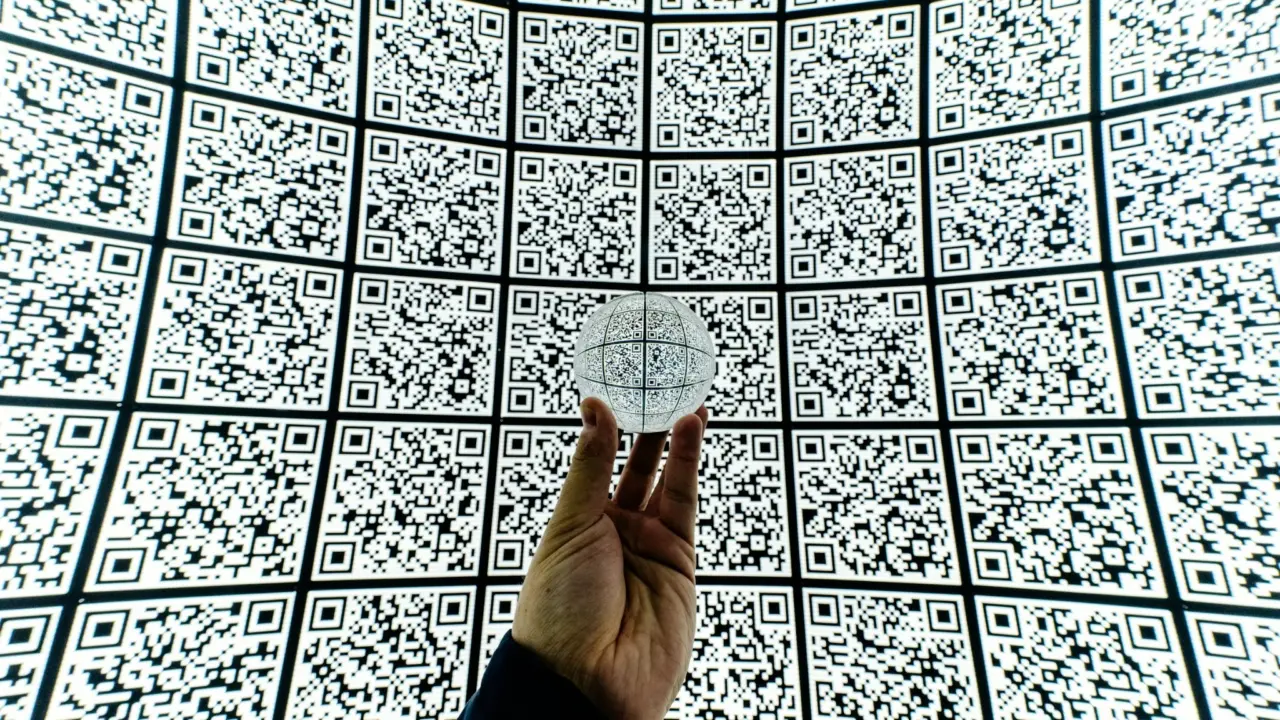
The reason QR codes work so well is not magic. It is information design. A QR code is a two-dimensional pattern that stores data horizontally and vertically, allowing it to hold more information than a traditional barcode.
The research paper “An Introduction to QR Code Technology” describes QR codes as two-dimensional matrix codes designed to store a large amount of data compared with one-dimensional barcodes and to be decoded at high speed using handheld devices.
QR codes are also built to survive imperfect real-world conditions. QR codes provide high data storage capacity, fast scanning, omnidirectional readability, and error correction.
That error correction is one reason a QR code may still scan even when part of it is scratched, covered, printed badly, or placed on a curved surface. A 2024 study on Reed-Solomon error correction explains that QR codes use Reed-Solomon codes to enhance resilience against failures.
This technical resilience made QR codes useful long before they became popular again. A barcode that only works in perfect conditions is limited. A code that can still work after damage, rotation, or imperfect scanning has much wider practical value.
The awkward years of QR codes
For many consumers, QR codes once felt like a failed technology. They appeared on posters, magazines, flyers, packaging, and advertisements, but scanning them was often inconvenient. Users needed a dedicated QR scanner app, the landing pages were not always mobile-friendly, and many campaigns gave people little reason to scan.
That changed when scanning became built into everyday smartphones. Apple Developer stated that iOS 11 provided built-in support to detect and handle QR codes through Camera and Safari.
This mattered because reducing friction is often more important than inventing a new feature. QR codes became more useful when users no longer had to install a separate scanner, open a special app, and hope the result was worth the effort.
Modern Android devices also made scanning more ordinary. Android’s official guide says Google Lens can recognize QR codes by simply pointing the camera at the code and displaying the associated information.
In other words, QR codes did not fully disappear. They waited for the camera, browser, and mobile payment ecosystem to catch up.
The pandemic comeback
The COVID-19 pandemic pushed QR codes from optional convenience into everyday infrastructure. Restaurants, shops, hospitals, transport systems, and public agencies needed contactless ways to share information, collect forms, verify records, and reduce physical handoffs.
A study on QR code mobile payment adoption during the pandemic found that QR code mobile payment gave consumers higher transaction efficiency and a contactless in-store experience that decreased infection risk.
Restaurants became one of the most visible examples. Instead of handing out printed menus, many businesses placed QR codes on tables so customers could open digital menus on their phones.
A post-pandemic study on QR code menus examined consumers’ intentions to use QR code menus using the Unified Theory of Acceptance and Use of Technology and rational choice theory.
That academic framing matters because QR menu adoption was never only about hygiene. It also involved usefulness, ease of use, habit, perceived value, and whether customers felt the technology improved or interrupted the dining experience.
Payments made QR codes practical
The real reason QR codes became powerful again is that they stopped being only informational. They became transactional.
A World Bank report on QR codes in payments explains that QR codes can be used in different payment use cases, including person-to-person, person-to-business, government-to-person, person-to-government, and business-to-business payments.
This flexibility matters because QR payments can be cheaper and easier to deploy than card terminals. A small merchant may not need expensive hardware if a printed code or phone screen can receive payment.
The Federal Reserve Bank of Kansas City reported that most mobile wallets in China use QR codes to transmit payment information in different ways, including merchant-presented codes that consumers scan and consumer-presented codes that merchants scan.
That two-way model helped QR codes become normal in retail, food stalls, transport, and peer-to-peer transfers. The code became a payment surface.
Tickets, documents, and identity checks
QR codes also spread because they are useful for controlled access. They can turn a phone into a ticket, a boarding pass, a check-in record, or a document verification tool.
Apple Support describes QR scanning through the iPhone or iPad camera as a way to quickly access websites, apps, tickets, and more.
Governments and travel systems have also used QR-like two-dimensional codes for verification. The ICAO guidance on Visible Digital Seals describes a visible digital seal as a cryptographically signed data structure containing document features, encoded as a two-dimensional barcode and printed on a document.
That kind of use shows why QR codes moved into identity and verification. A QR code can carry or point to structured information, while a digital signature can help determine whether the information was altered.
The pandemic made this more visible through health passes and vaccination certificates. A study on COVID-19 vaccination certificates noted that the EU used a digital certificate in the form of a QR code that was digitally signed and could be validated throughout EU countries.
Convenience created new risks
The same thing that makes QR codes convenient also makes them risky: users often cannot see where a code will take them before scanning. A square on a wall, receipt, table, or email can look harmless while hiding a malicious link.
A field study on phishing with malicious QR codes found that the COVID-19 pandemic enabled “quishing,” or phishing through malicious QR codes, because the codes became a convenient way to share URLs.
Researchers reported that 67% of participants were willing to sign up with Google or Facebook credentials in a simulated COVID-19 digital passport trial using a malicious QR code.
This does not mean QR codes are unsafe by default. It means users and organizations must treat them like links. A QR code is only as trustworthy as the destination behind it.
The comeback that became permanent
QR codes came back because they solved a simple modern problem: how to connect physical places, objects, and people to digital actions with almost no training.
They work on posters, tables, packages, receipts, screens, badges, tickets, IDs, and payment counters. They are cheap to print, easy to reproduce, fast to scan, and flexible enough to support information, transactions, authentication, and access.
Their return was not just nostalgia. It was timing. Smartphones became better scanners. Mobile payments became normal. Businesses needed contactless tools. Governments needed verifiable documents. Users became trained by repetition.
QR codes once looked like a dying marketing trick. Now they are part of the hidden infrastructure of everyday life. The square survived because it was never really about the square. It was about making the physical world clickable.