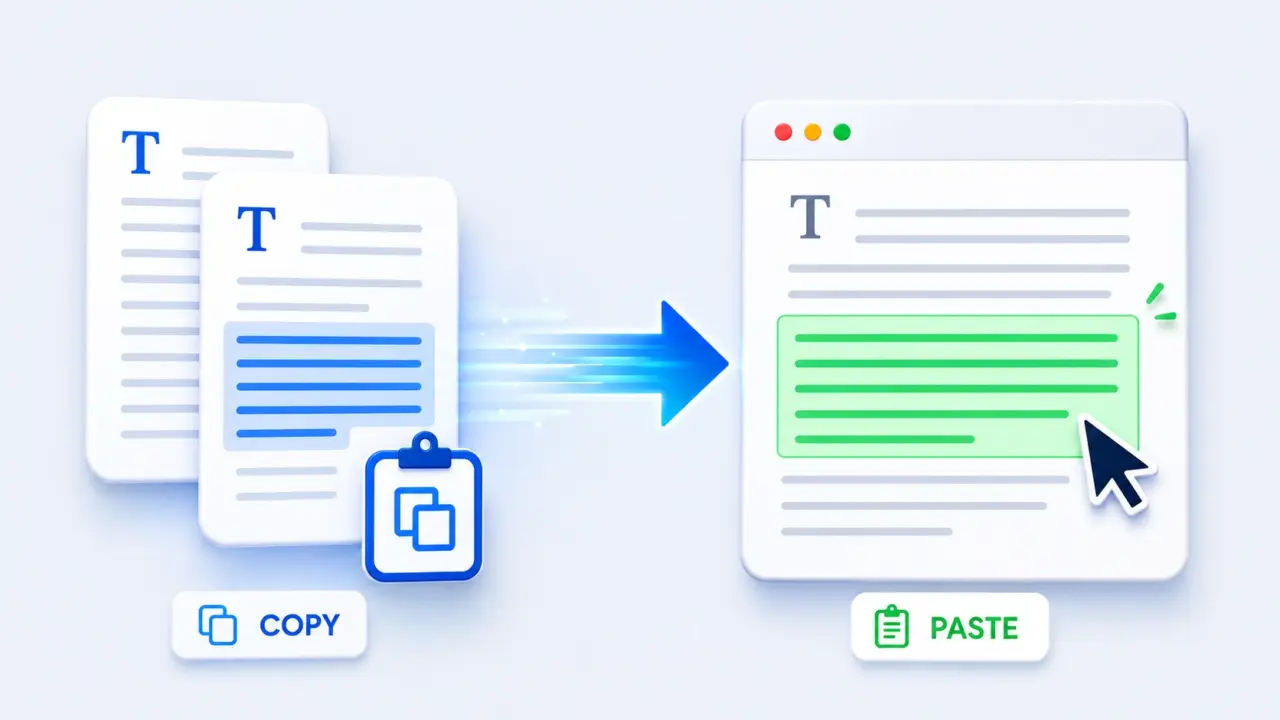
Copy-paste is now one of the most ordinary actions in digital life. Students use it to rearrange essays, office workers reuse text, programmers move code, and smartphone users transfer links or messages without thinking much about the command itself. But behind this simple habit is a major shift in software design: the effort to make computers easier for ordinary people to control.
The history of copy-paste is most closely associated with Larry Tesler, but it also includes Tim Mott, his collaborator on the Gypsy text editor at Xerox PARC. The original 1975 Xerox memo, “Gypsy: The Ginn Typescript System”, credited Larry Tesler of Xerox Palo Alto Research Center and Timothy Mott of Ginn and Company as authors, placing both names directly in the history of one of computing’s most influential editing systems.
Before software became friendly
Before modern graphical interfaces became common, editing text on computers often required users to remember commands, switch between modes, and think more like the machine than like a writer. This was not only a technical problem. It was also a cognitive problem because users had to remember the current state of the system before knowing what their next action would do.
Larry Tesler became known for opposing that kind of design. The Guardian noted that Tesler’s work focused on removing “modes,” where users had to switch between different states before typing or editing, because such systems could confuse non-expert users.
That belief became part of Tesler’s public identity. The Guardian also reported that Tesler used “Nomodes” as a car number plate and later as a website name, showing how strongly he believed that software should not force users to constantly track hidden system states.
Gypsy made editing feel more natural
The Gypsy editor mattered because it tried to make digital text editing simpler and more direct. The Xerox memo described Gypsy as a system used by both “highly trained operators” and “minimally trained editors,” with training ranging from “four hours to two days,” depending on the user’s background and goals.
That detail is important because Gypsy was not designed only for computer specialists. It was built around the idea that people with different levels of technical skill should still be able to work with digital text productively.
One of Gypsy’s clearest design choices was modeless editing. The Gypsy memo stated that there were no “modes” in Gypsy and explained that any key could be pressed at any time with the same meaning.
That principle changed the user experience. In modeless software, the same action behaves consistently. Users do not need to stop and ask, “What mode am I in right now?” They can focus on the document instead of the machine.
Why cut, copy, and paste felt intuitive
Cut, copy, and paste worked because they matched how people already understood editing in the physical world. Writers cut paragraphs, move sentences, duplicate notes, and rearrange drafts. The software command translated those familiar behaviors into digital form.
The Gypsy command summary described deleting text by selecting a target and pressing CUT, undoing the delete by pressing PASTE, moving text with CUT and PASTE, and copying text by selecting a source and target before pressing PASTE.
This was more than convenience. It changed the relationship between the user and the computer. Instead of typing abstract instructions, the user could select visible content and act on it directly.
That idea connects strongly with human-computer interaction research. Ben Shneiderman’s 1983 paper described direct manipulation interfaces as systems built around visible objects, physical actions or labeled button presses, rapid reversible operations, and immediately visible effects.
Copy-paste fits that model well. The user sees text, selects it, performs an action, and immediately sees the result. The command reduces the gap between intention and outcome.
The science of why copy-paste reduces frustration
Human-computer interaction research helps explain why copy-paste feels so natural. Edwin Hutchins, James Hollan, and Donald Norman wrote that direct manipulation feels direct partly because it reduces the “information processing distance” between the user’s intention and the machine’s facilities.
Copy-paste does exactly that. A user does not need to describe the operation in complex language. They simply decide that this sentence should move here, this paragraph should be duplicated, or this section should be removed.
Hutchins, Hollan, and Norman also explained that direct manipulation depends on interface representations that behave as if they are the objects themselves. In the case of copy-paste, highlighted text behaves almost like a physical object. It can be selected, moved, duplicated, removed, and restored.
This is why copy-paste feels natural even to users with little technical background. It gives digital content a sense of physicality. Text becomes something users can handle.
Copy-paste made users braver
One of the most underrated effects of copy-paste is that it made people less afraid of editing. Before flexible digital editing, changing a document could feel risky or permanent. With copy-paste, users could try different arrangements without starting from zero.
Shneiderman’s direct manipulation paper connected this type of interface design with reduced anxiety because users can see whether their actions are helping them reach their goals and can reverse or adjust actions when needed.
That is why copy-paste is not only a productivity feature. It is also a confidence feature. A writer can restructure an article. A student can move paragraphs. A designer can duplicate elements. A programmer can reuse code. The command makes experimentation feel safer.
This also explains why copy-paste became universal. It serves both beginners and experts. It saves time for experienced users, but it also teaches new users that computers can be forgiving.
From Xerox PARC to modern computing
Xerox PARC became famous for ideas that shaped personal computing, including graphical interfaces, windows, icons, mouse interaction, and networked workstations. The Guardian reported that Tesler demonstrated PARC’s graphical user interface to Apple co-founder Steve Jobs, a moment often connected to the later development of Apple’s Lisa and Macintosh computers.
The larger lesson is that software history is not only made by huge machines or famous product launches. Sometimes, it is changed by a small interaction that makes computers easier to understand.
The Nielsen Norman Group defines direct manipulation as an interaction style where users act on displayed objects through physical, incremental, and reversible actions whose effects are immediately visible on screen.
That definition explains why copy-paste has survived across desktops, laptops, phones, tablets, browsers, spreadsheets, design tools, and coding platforms. The devices changed, but the basic human need stayed the same: people want to move ideas around easily.
The legacy of Tesler and Mott
Larry Tesler is often remembered as the public face of cut, copy, and paste, but Tim Mott’s role in Gypsy also matters. The Xerox memo described Gypsy as a “joint effort” involving people from PARC, Ginn, and other Xerox locations, and identified Tesler, Mott, and Dan Swinehart as principal designers of the command language.
That collaborative detail is important because user-friendly software rarely comes from one person alone. It usually comes from teams who study how people think, test how people work, and refine tools until the technology feels almost invisible.
Copy-paste became powerful because it respected ordinary human behavior. People revise. People reuse. People change their minds. People make mistakes. Tesler and Mott’s work helped computers adapt to those habits instead of forcing users to adapt completely to the machine.
Today, copy-paste is so common that most users barely notice it. But that invisibility is exactly what makes it brilliant. The best software ideas often disappear into daily life because they work so naturally.
Copy-paste may look like a small command, but its impact is massive. It changed writing, editing, programming, office work, and digital communication by giving people a simple way to move thoughts from one place to another.