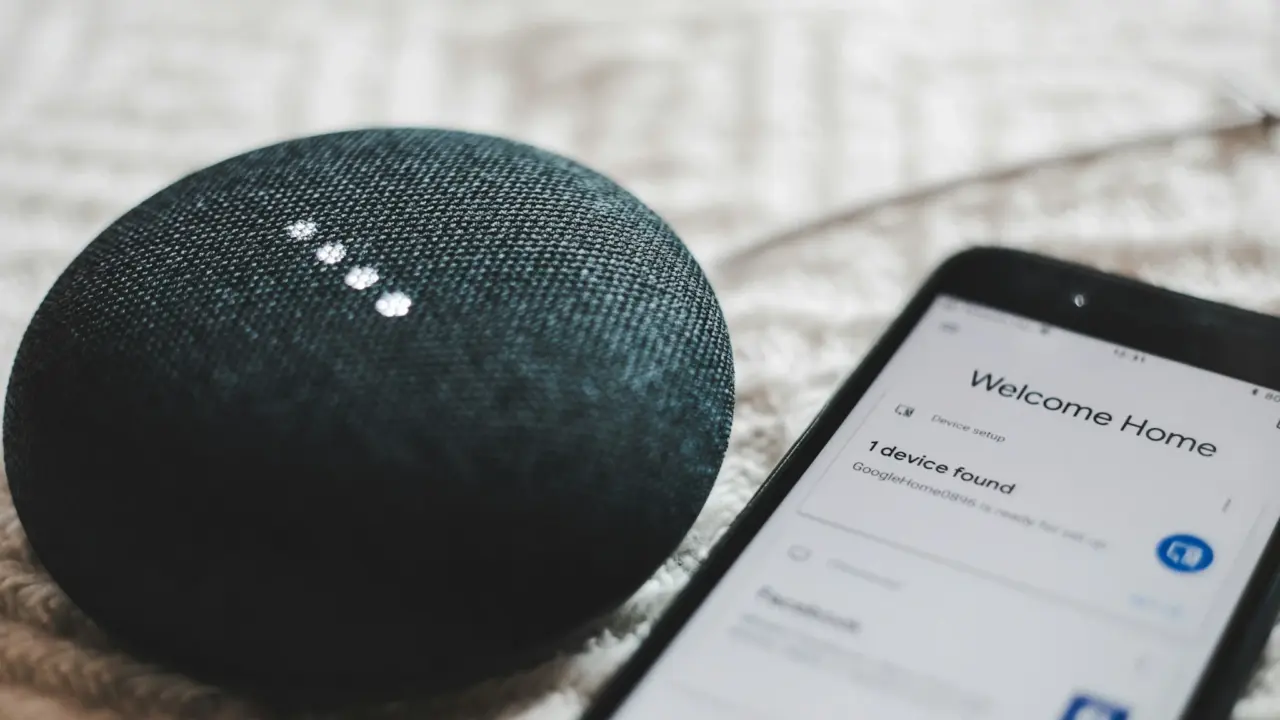
You are watching television when a smart speaker suddenly lights up. Someone says an ordinary sentence and your phone responds. You ask one thing, but the transcript on the screen contains words that never seemed to leave your mouth.
It can feel as though Siri, Alexa, Google Assistant, or another voice system simply invented part of the conversation. Technically, however, the device is not “hearing” in the human sense. It is making statistical decisions about sound—first deciding whether a particular pattern resembles its wake word and then estimating which sequence of words most likely produced the audio it received.
Both stages can be wrong.
A Voice Assistant Is Always Looking for One Special Sound
Hands-free voice assistants need a way to recognize that someone actually wants their attention. That is why phrases such as “Alexa” or “OK Google” function as wake words.
Google researchers explained that voice-activated devices commonly run a small keyword-spotting system locally to detect a trigger phrase before deciding which audio should be sent for additional speech recognition and processing. The researchers specifically identified false accepts, in which the device detects a keyword that was not actually spoken, and false rejects, in which it misses a genuine activation phrase.
This creates a fundamental engineering problem. If a wake-word detector is extremely strict, users may repeatedly say the assistant’s name without getting a response. If it becomes too permissive, ordinary speech can accidentally cross the recognition threshold.
The device therefore does not need to hear an acoustically perfect version of its name. It needs to receive enough sound features for its model to classify the audio as sufficiently similar to the pattern it learned.
Ordinary Words Can Sound Like Wake Words to a Machine
Humans interpret speech using vocabulary, meaning, conversational context, facial expressions, expectations, and years of experience. A lightweight wake-word detector has a much narrower job: distinguish a short target sound from everything else.
That difference explains why phrases that seem obviously unrelated to people can sometimes fool a machine.
Researchers studying the phenomenon they called “FakeWake” generated 965 fuzzy words capable of triggering eight popular English and Chinese smart speakers and found that particular phonetic features contributed to false acceptance by wake-word detectors.
In other words, two phrases do not have to mean the same thing—or even sound identical to a person—to create sufficiently similar acoustic patterns for the model.
A separate study tested 11 smart speakers from eight manufacturers using television programs, news broadcasts, and other everyday audio, finding hundreds of accidental triggers and ultimately publishing a dataset containing more than 1,000 verified triggering examples.
That helps explain one of the most familiar voice-assistant mysteries: the device that suddenly wakes while nobody in the room believes its name was spoken.
Television, Music and Background Conversations Make the Job Harder
Real homes are difficult acoustic environments. Multiple people speak at once. Televisions produce dialogue in the background. Music overlaps with conversation. Fans, air conditioners, traffic and kitchen appliances create additional noise.
Research specifically examining wake-word detection notes that music, television audio and background speech can accidentally activate voice assistants, making false alarms under noisy conditions a recognized technical problem.
Those sounds become mixed before reaching the microphone. The assistant must separate useful speech from reflections, competing voices and environmental noise while often operating several feet away from whoever is speaking.
Even sophisticated microphone arrays cannot reproduce the human brain’s ability to effortlessly understand every chaotic room. When part of a word is masked, the recognition system must work with incomplete acoustic evidence.
Sometimes it guesses incorrectly.
The Second Mistake Happens After the Assistant Wakes Up
False activation and mishearing are related but different problems.
First, keyword spotting decides whether the assistant should start listening for a command. After activation, automatic speech recognition, or ASR, attempts to turn the incoming sound into words.
USENIX Security researchers describe this common architecture as a two-stage process in which an on-device model initially identifies a keyword before another model verifies and processes the resulting voice sample.
Speech recognition does not simply match every sound to one fixed word. Modern systems consider competing possibilities and determine which transcription is most plausible based on acoustic evidence and learned language patterns.
That can produce a strange effect: the computer may return a perfectly ordinary sentence that is not exactly what was spoken.
A 2026 Association for Computational Linguistics study found that modern ASR language models can recover what they estimate to be the intended words rather than faithfully representing the pronunciation that physically occurred, a tendency the researcher called “intent bias.”
This behavior can make recognition more convenient when someone stumbles over a word. But it also explains why an assistant sometimes appears to insert or substitute words: the system is trying to infer the most probable linguistic interpretation of imperfect sound.
Accents and Voice Differences Can Change Accuracy
Speech recognition also performs differently depending on who is talking.
An ACL study comparing commercial and research speech-recognition systems found that performance for non-American English accents was considerably worse than for General American speech, with absolute performance gaps of roughly 2% to 12% depending on the recognizer and relative differences of about 16% to 49%.
Voice characteristics can matter as well.
A clinical study involving 30 people with voice disorders and 23 without them found recognition scores of roughly 69% to 71% for dysphonic speech across the tested Apple and Google systems, compared with about 92% to 94% for participants without voice disorders.
These findings illustrate why the same assistant may understand one household member almost perfectly while repeatedly misunderstanding another. Training data, pronunciation, pitch, speech disorders, microphone distance and surrounding noise can all change the acoustic signal presented to the model.
A Mistaken Wake-Up Can Become a Privacy Issue
An assistant accidentally responding can be funny. What happens after activation is more consequential.
USENIX researchers experimentally found that accidental activations could result in as much as a minute of speech being uploaded to the cloud in the systems they studied.
The larger study of 11 smart speakers similarly found that once a wake word was mistakenly recognized, potentially private audio could be transmitted for processing; in its examination of an Amazon Echo, even triggers later rejected by cloud verification resulted in roughly one to two seconds of audio being uploaded.
Manufacturers have developed additional verification systems precisely because the first detection is imperfect. Google researchers reported that adding contextual server-side recognition reduced their tested false-accept rate by 89% while increasing false rejects by only 0.15%.
The engineering challenge, however, never completely disappears. A device designed to respond instantly from across a noisy room must continuously make decisions from uncertain acoustic information.
Your Assistant Is Not Imagining Things—It Is Predicting Them
When a voice assistant responds to something nobody believes they said, the explanation is usually less mysterious than it feels.
A television line may resemble a wake word. Background noise may distort a syllable. An accent may move a sound away from what the recognition model encountered most often during training. After activation, the language model may choose a plausible word sequence that differs from the literal sounds.
The remarkable part is not that voice assistants occasionally make these mistakes. It is that they turn messy sound waves into useful commands as often as they do.
But their errors reveal something important about modern speech technology: what appears on the screen is not a perfect digital copy of what entered the microphone. It is the machine’s best prediction of what those sounds were likely to mean.
Sometimes that prediction includes words nobody actually said.