
For years, digital privacy was mostly explained through passwords. People were told to create stronger logins, avoid phishing emails, turn on two-factor authentication, and stop reusing the same credentials across apps. That advice still matters, but the next major privacy fight is moving somewhere more personal: location data.
A stolen password can expose an account. Precise location data can expose a life.
It can show where a person sleeps, works, worships, studies, protests, receives medical care, meets friends, or spends quiet hours alone. It can reveal habits that users never typed into a search bar and never posted on social media. This is why location data is becoming one of the most sensitive forms of personal information in the digital economy.
Massachusetts Pushes Location Privacy Into Law
The issue is no longer only theoretical. TechCrunch reported that Massachusetts voted to pass a new privacy rights bill expected to ban companies and startups from selling people’s precise location data across the state. The law would block the sharing or sale of sensitive information without a user’s explicit consent, including biometrics, health data, genetic information, fingerprints, precise geolocation data, religion, immigration status, and sexual orientation.
That grouping is important. Massachusetts is treating precise location data like other deeply sensitive markers of identity. It is not just another advertising signal. It sits beside health data, biometrics, religion, immigration status, and sexual orientation because location can help reveal all of them.
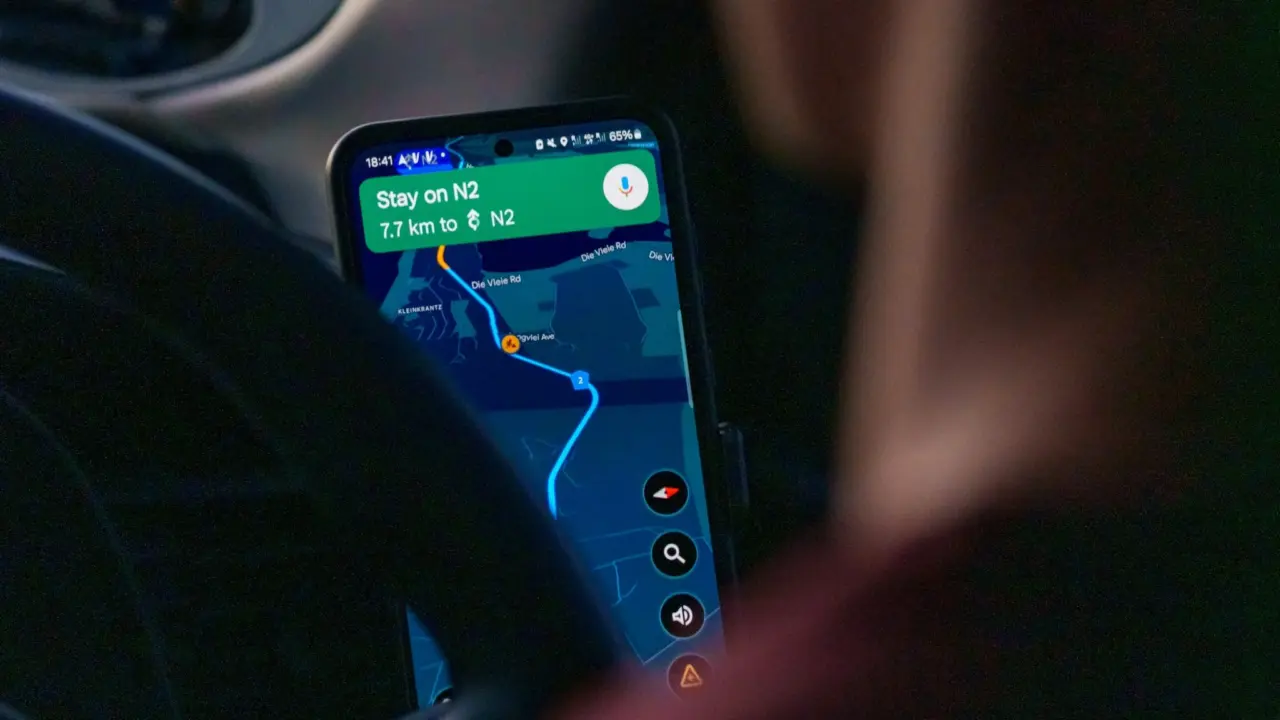
The law reflects a broader concern: people may think they are sharing location with one app for navigation, weather, delivery, ride-hailing, dating, shopping, or fitness tracking. But once that data enters advertising systems or broker networks, users often lose sight of where it goes next.
Location Data Is Personal Because Movement Is Unique
The scientific reason location data is so revealing is that human movement is highly individual. A 2013 study in Scientific Reports analyzed 15 months of human mobility data for 1.5 million individuals and found that human mobility traces are “highly unique”. Further, four spatio-temporal points were enough to uniquely identify 95% of individuals in a dataset where location was specified hourly and at the spatial resolution of carrier antennas.
That finding explains why “anonymous” location data can be misleading. A dataset may remove names, phone numbers, or email addresses, but a person’s repeated pattern of movement can still act like a fingerprint. Home at night, workplace in the morning, gym after office hours, school drop-off, clinic visit, religious service, and weekend routine can create a trail that points back to one person.
This is different from many other types of personal information. A password can be changed. A credit card can be replaced. But a person’s movement pattern is tied to daily life. You cannot easily change where you live, where you work, who you visit, or which places matter to you.
The Data Broker Problem Made Location Privacy Urgent
The danger grows when location data is collected, packaged, and sold. The Federal Trade Commission said in its Kochava lawsuit that geolocation data from hundreds of millions of mobile devices could be used to identify people and trace their movements. The FTC also said Kochava’s data could reveal visits to reproductive health clinics, places of worship, homeless and domestic violence shelters, and addiction recovery facilities.
That is what makes precise location data different from ordinary app analytics. It can turn everyday movement into a map of vulnerability. A visit to a clinic may reveal a medical condition. A stop at a shelter may reveal danger at home. A recurring visit to a place of worship may reveal faith. A trip to a protest site may reveal political activity.
The FTC’s later cases show that regulators are increasingly treating location data as a serious consumer protection issue. In December 2024, the FTC said it would prohibit Mobilewalla from selling sensitive location data, including data that reveals the identity of an individual’s private home. The FTC also said Gravy Analytics and Venntel unlawfully sold location data tracking consumers to sensitive locations, and described the case as its fifth action challenging unfair handling of consumers’ sensitive location data by data aggregators.
Those enforcement actions suggest that location privacy is no longer a fringe digital rights issue. It is becoming a mainstream regulatory concern.
The Risk Is Not Only Surveillance, but Inference
Location data does not need to directly say something about a person to reveal it. It can imply it. If someone regularly visits a cancer center, an immigration lawyer, a union office, a mental health clinic, or a religious site, the location history itself can create a profile.
This is why location data is powerful for advertisers, data brokers, insurers, political campaigns, investigators, and potentially malicious actors. It does not only answer “Where is this person?” It can suggest “What does this person care about?” “What are they afraid of?” “Who do they meet?” and “What might they be hiding?”
Research on mobility traces also shows why repeated collection is especially risky. A paper on predictive differentially private mechanisms for mobility traces said GPS-enabled handheld devices give location-based applications access to accurate and real-time location information, raising serious privacy concerns for millions of users. The same paper explained that repeated use creates a problem because applying privacy noise independently can lead to a quick loss of privacy due to correlations in the location trace.
In plain terms, one location point may not say everything. But a pattern can say a lot. The more frequently an app collects location, the easier it becomes to understand a user’s routine.
Consent Is Often Too Weak to Carry the Burden
Most people technically “agree” to location sharing through app permissions, but that does not mean they understand the full data chain. A user may allow location access because a map app needs it, a food delivery app requires it, or a weather app asks for local forecasts. The permission screen rarely explains every downstream advertising partner, analytics provider, data broker, or resale possibility.
That is why laws like the Massachusetts bill matter. They shift the question from “Did the user tap allow?” to “Should this data be sold at all without explicit consent?” For sensitive information, especially precise geolocation, that difference is crucial.
Privacy rules built around long notices and broad consent are weak in a world where data moves invisibly. People cannot meaningfully control location privacy if they do not know who receives their data, how long it is kept, whether it is combined with other data, and whether it can be resold.
The Future of Privacy Will Be About Where We Go
The location privacy fight is really about the boundary between convenience and exposure. Location services make modern life easier. They help users navigate cities, find nearby restaurants, track deliveries, recover lost devices, check traffic, share safety updates, and use ride-hailing apps. The problem is not location technology itself. The problem is treating precise movement data as a commodity.
Passwords protect accounts. Location data reveals behavior. That is why the privacy debate is changing.
The next wave of privacy protections will not only ask whether companies can secure databases or stop hackers. It will ask whether companies should be allowed to collect, infer, package, sell, and monetize the map of a person’s life.
Massachusetts’ proposed ban on the sale of precise location data shows where the conversation is heading. The most sensitive thing on a phone may no longer be the password saved inside it. It may be the silent record of everywhere its owner has been.