
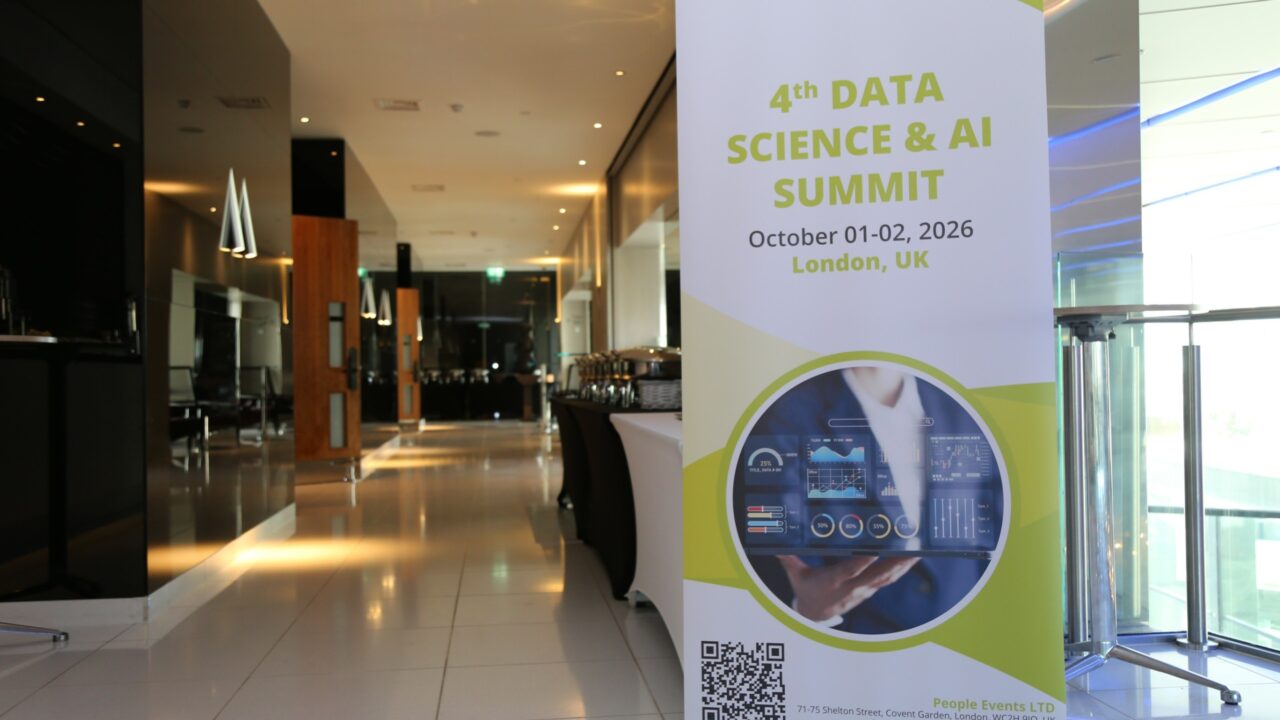
The two-day Data Science Week programme connected agentic workflows and AI governance to the harder question confronting technology leaders: what makes deployment reliable and financially worthwhile?
LONDON, 1–2 October 2026 — The 4th Data Science & AI Summit brought enterprise adoption into focus at the Radisson Blu Hotel in Canary Wharf, with a programme spanning ten themed sessions, technical presentations and keynotes.
Organised by The People Events under the banner “From Data to Decisions, Powered by AI,” the conference placed a familiar industry tension at its centre: deploying AI is increasingly common, but demonstrating returns remains difficult. In its August 2026 global AI survey, McKinsey reported that 44% of respondents said AI was scaling across their enterprises, while just 37% attributed a positive contribution to operating earnings (EBIT). Those are survey responses, not results measured at the summit, but they explain the urgency behind its agenda.
The Boardroom Wants Outcomes, Not Demonstrations
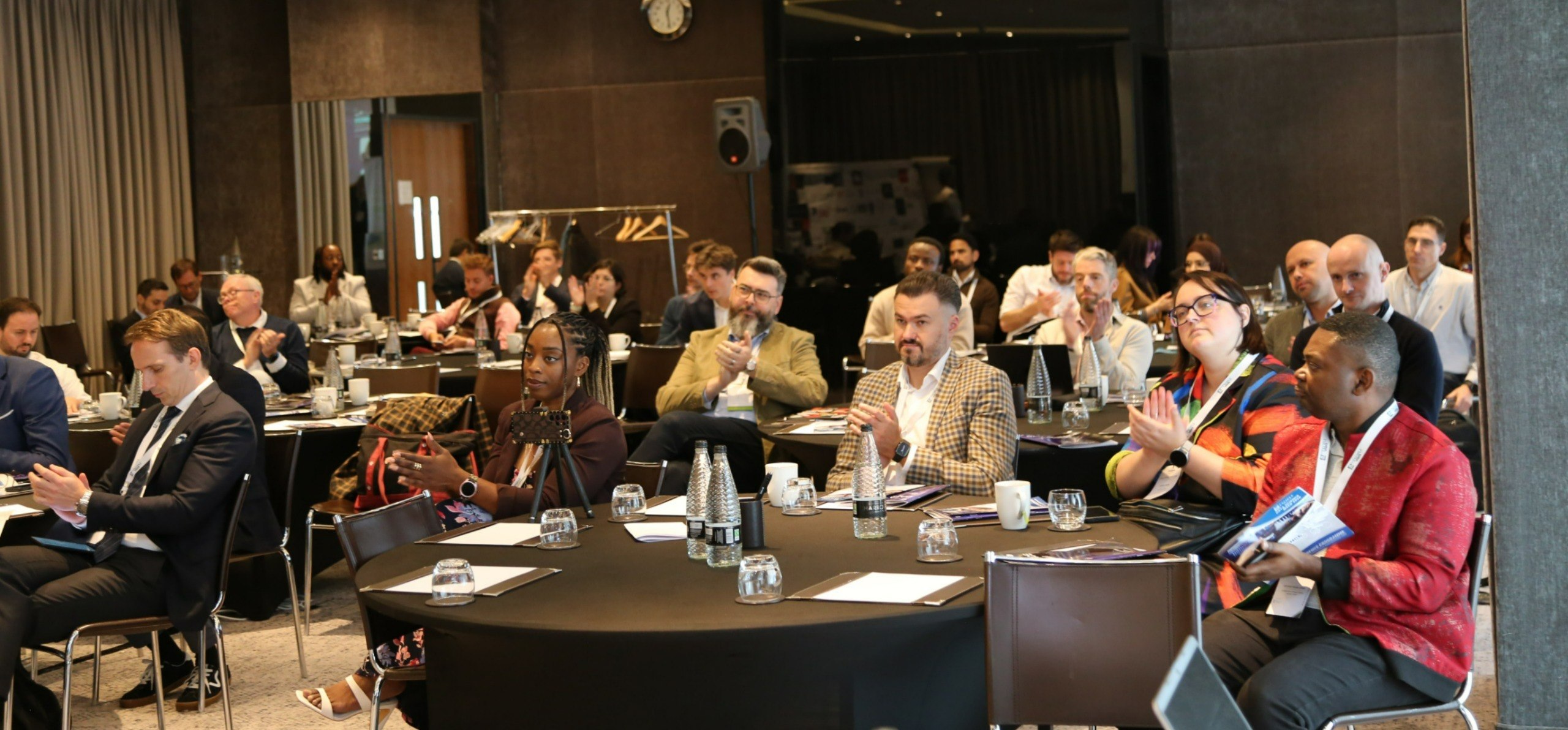
Nader Hosni, founder and chief data and AI officer of IllumiFi, was listed to open day one with “Conversational BI: The Future is ‘Speaking With Your Data’,” followed by AI Technologies chief AI officer Dr Andrea Isoni on implementation governance. Hilary Roberts, CTO of Veritas Fox, added a keynote devoted to AI compliance.
The session “AI in the Boardroom: From Hype to Enterprise Impact” assembled moderator Gabriel Mayrink of M. Corals and Luiss Business School with Pedro Cosa Fernandez of Data Minds Consulting, Atif Siddiqui of Cradle Labs, Jeff Magloire of Bridgelytic Capital, Prescient Labs co-founder Andreas Pfeiffer and Kevin Okot-Ojok of ExitLab.
Their placement early in the programme captured the executive challenge: AI investment decisions now demand evidence of value, appropriate safeguards and a credible path beyond pilots.
Beyond LLMs, the Infrastructure Problem Gets Real
Tara M. Batemon, founder of Her & AI, moderated a session on the next generation of generative AI with contributors from Hitachi, WoWExp, Leo Reg Tech, FinBig Tech and Icosa Computing. Dounia Mokedemi, from Algeria’s Laboratory of Software Implementation and Validation, had a technical presentation on detecting hallucinations in language models using weighted triplets.
The security track juxtaposed “Software Got Cheaper. So Did Attacking It,” credited to PortSwigger’s Catalin Stoiovici and Chris Tomlinson, with Frank Moreno’s presentation on governance for autonomous AI. The implication for engineering teams is clear: faster software production does not automatically mean safer software.
That concern extends beyond the conference. IBM and Ponemon Institute’s 2025 breach research found that 63% of breached organisations surveyed lacked an AI governance policy or were still developing one.
London Business School’s Yuri Romanenkov addressed the prospect of a “Saaspocalypse”—AI disruption to established software business models. McKinsey’s 2026 survey adds a concrete signal: 32% of respondents said their organisations had forgone at least one software purchase because agentic coding tools enabled internal development.
From Sector-Specific Models to Autonomous Workflows
Ignacio Ojeda Aguirre of Plexus moderated an applied-data-science panel bringing together Devendra Sharma of Exadel, Andrei Nita of McKenzie Intelligence Services, Cassandra Rounds of Arizona Public Service, Yekaterina Mijatovic of Data Society Group and Olayinka Jimoh of Sherwood Forest Hospitals NHS Foundation Trust.
An afternoon keynote from Aaron Kalvani and Rune Køhler connected defence, international policy and corporate decision-making. Navin Manaswi of WoWExp subsequently moderated a multi-agent collaboration panel featuring representatives of Plexus, Luca Labs, Levered, Leomayn and We are Purple Cloud.
Day two pushed deployment into sharper focus. Ian Gatley, group CTO of Vector Investment Capital, had a case study on putting agentic AI into production; Ina Schöne, founder of Data Privacy and AI, addressed auditing as a bridge between ethics and implementation. An AI-and-human-collaboration panel chaired by Nita included Natalia Kuroś of Onex Group, Oleh Petrivskyy of Binariks and Ben Clarke of A2A Net.
Human oversight is more than an abstract principle. A 2025 peer-reviewed study of 5,172 customer-support agents found AI assistance increased productivity by 15% on average, but benefits varied considerably with workers’ experience and skill levels.
Responsible AI Meets High-Stakes Deployment
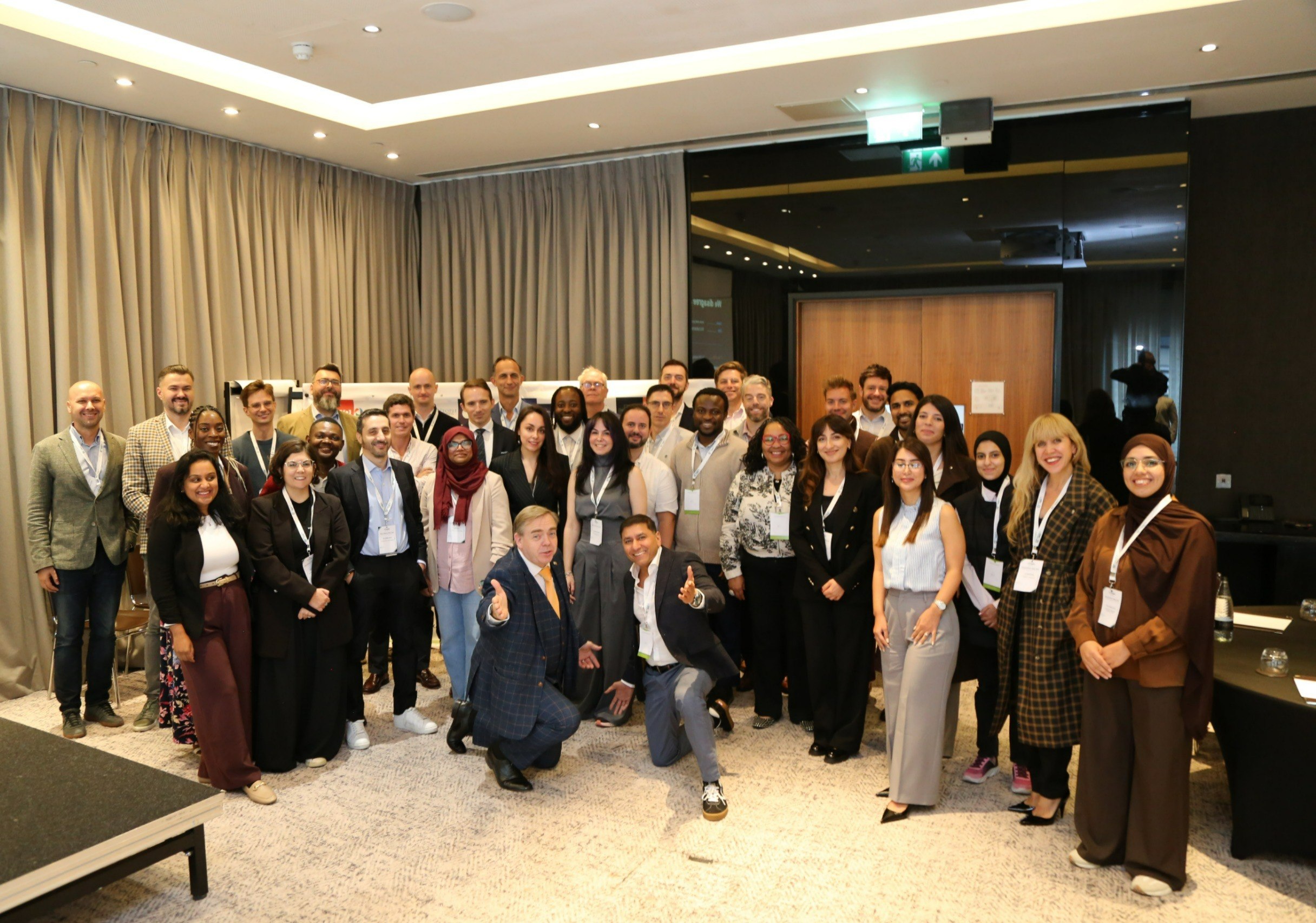
L’Oréal Paris data-science head Chitresh Sharma was listed for a keynote titled “Today, the machine stops waiting for you.” Frank Moreno moderated “Responsible AI: From Ethics to Enforcement,” with Elisa Sai of Capgemini Invent, Oonagh Vanden Berg of Virtual Risk Solutions, Pedro Cosa Fernandez, Aaron Kalvani and Patricia Orji. Sai also moderated a “Women in AI & Tech” discussion with Batemon, Kuroś and Orji.
Healthcare and infrastructure gave the debate tangible stakes. Nina Abide, CEO of Fetal First, focused on governance-first deployment in clinical settings; SPhotonix CFO Igor Konopliastyi addressed growing data-storage demands. The 2026 Stanford AI Index reported 362 documented AI incidents in 2025, compared with 233 the year before, underscoring the wider challenge of responsible implementation.
A digital-transformation session moderated by Batemon brought together Divya Choudhary, Christopher Kenna, Goran Stojanovski, Piush Vaish and Sergei Irisov. Leila Manel Khlidj presented on explainable deepfake detection. The closing agentic-workflows panel, chaired by Gatley, listed Tushar Chhabra of CRON AI, Joe Leung of LaunchLemonade, software engineer Dmitry Orlyakov, Norman Nielsen and Myke Kirkham-Jones of Continuum Intelligence.
The programme’s defining story was not an individual product launch or breakthrough. It was the shift in what enterprise builders must prove: whether AI agents can work reliably inside existing systems, withstand security scrutiny, retain appropriate human oversight and deliver value after deployment—not merely in a demonstration.