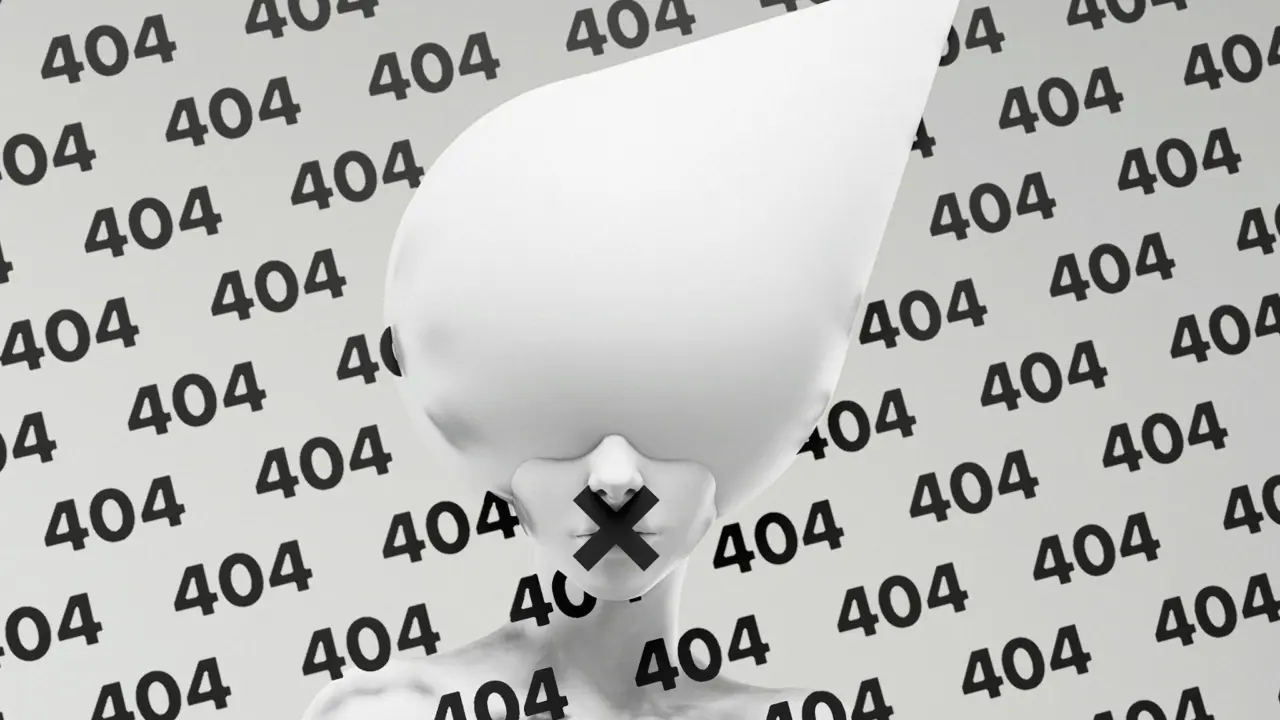
Error 404 is probably one of the most familiar technical messages online. It shows up when you click a link expecting a page, but end up at a dead end instead. For most people, it simply means the page is gone, broken, moved, or can’t be reached from that address.
Technically, however, 404 is not just a random failure message. The official HTTP Semantics specification defines 404 as a “Not Found” status code used when the origin server does not find a current representation for the target resource or is not willing to disclose that one exists.
In simpler terms, the browser reached the server, but the server could not provide the requested page. This is why MDN Web Docs explains that 404 means the server cannot find the requested resource, and links leading to a 404 page are often called broken or dead links.
That technical meaning is helpful, but 404 became famous for another reason. It turned the web’s instability into something everyone could recognize right away.
A small number with a specific job
The number 404 is part of the 4xx group of HTTP status codes, which usually point to problems with the request from the user’s side. A 404 doesn’t mean the whole website is down. It just means the specific page isn’t available at that address.
That’s why 404 is different from a server crash or a DNS problem. Your browser reached the server, but the server couldn’t get the page. This difference is important because it helps developers, search engines, and users understand what went wrong.
The HTTP specification also says a 404 does not indicate whether the missing resource is temporary or permanent. If the server knows a resource is permanently gone, the more precise code is 410 Gone.
This small difference shows that a lot of thought goes into status codes. They aren’t just for people—they also guide browsers, search engines, APIs, and servers. A 404 tells the web how to handle something that’s missing.
The web breaks because it constantly changes
404 became famous because it highlights a simple fact: the web is fragile. Pages move, companies rebrand, blogs close, news sites delete old stories, developers change URLs, and old documentation vanishes. A link that works today might not work tomorrow.
Researchers have studied this problem as link rot. In The Availability and Persistence of Web References in D-Lib Magazine, Frank McCown, Sheffan Chan, Michael L. Nelson, and Johan Bollen found that around 28% of the URLs they studied failed to resolve initially, and 30% failed by the last check.
The study also found that many broken URLs were due to 404 page-not-found errors and 500 internal server errors. In short, 404 errors are common—they’re just part of how the web ages.
A more recent software engineering study, 9.6 Million Links in Source Code Comments, found that almost 10% of links included in source code comments were dead. This shows that broken links are not only a problem for casual browsing; they also affect programmers, documentation, licenses, specifications, and technical attribution.
Broken links damage knowledge, not just navigation
A 404 page might seem like a minor annoyance, but broken links can actually harm knowledge systems. If someone relies on a link for a tutorial, legal reference, software fix, or academic source, a 404 doesn’t just block a page—it takes away important context.
In the study Broken External Links on Stack Overflow, researchers found that 14.2% of links on Stack Overflow were broken based on their analysis of data released on June 2, 2019. That matters because Stack Overflow is not just a discussion forum; it is a large knowledge base used by programmers to solve real problems.
The same Stack Overflow study found that 65% of broken links in sampled questions were used to show examples, while 70% of broken links in sampled answers were used to provide supporting information. This helps explain why 404 is so frustrating: it often appears exactly where proof, explanation, or examples are needed most.
This error sticks in people’s minds because it breaks trust. A working link promises that information is still there. A 404 breaks that promise.
The cybersecurity side of broken links
Error 404 is usually seen as a normal web annoyance, but broken links can also cause security problems. When outside resources disappear, expired domains or abandoned links might get taken over by someone else. This can put users at risk if they click old links.
In Quantification and Modeling of Broken Links Prevalence in Hyper Traffic Websites Homepages, researchers analyzed the top 88,000 homepages from the Majestic Million rankings and found that 35.2% had at least one broken link.
That same broken links study warned that broken external resources can threaten cybersecurity and website credibility because they may be hijacked to eavesdrop on user traffic or inject malicious software.
This gives 404 a deeper meaning. A broken link is not always just a missing page. It can be evidence of poor maintenance, weak content governance, or neglected digital infrastructure.
From technical status code to internet culture
Despite its technical origin, 404 became culturally famous because it is simple, frequent, and emotionally clear. Everyone understands the feeling of looking for something and not finding it. The web turned that feeling into a number.
Wired described the 404 error as having a “meme-like status” and noted that it became a punch line, appearing in jokes, shirts, comics, and online culture.
The same Wired history also addressed the popular myth that 404 came from a physical room at CERN, citing Robert Cailliau’s statement that 404 was never linked to a room or physical place at CERN.
That myth is important because it shows how people like to humanize technology. A simple code seems more interesting when it’s linked to a room, a place, or a story. Even if the story isn’t true, it shows that people want stories behind the systems they use every day.
Why funny 404 pages became common
Eventually, website owners saw that 404 pages didn’t have to be cold or boring. A missing page could be a chance for creative design. It could say sorry, redirect users, offer a search box, show helpful links, or use humor to make things less frustrating.
That’s why many brands now create custom 404 pages. A good 404 page can’t fix the broken link, but it can help by showing users what to do next. Instead of just saying “Not Found,” it can point people in the right direction.
This design choice is important because a 404 page is often the first time a user runs into a problem on a website. If the page looks abandoned, users might think the whole site isn’t cared for. If it’s helpful, the mistake is easier to recover from.
So, a 404 page is both a technical response and a way to communicate. It shows users whether the website values their time.
The famous mistake that reveals the web’s nature
Error 404 became the internet’s most famous mistake because it shows the web’s biggest contradiction. The internet seems permanent, searchable, and endless, but it’s actually unstable. Pages disappear, URLs get old, archives break, and knowledge drifts away.
That is why 404 remains culturally powerful. It is not just a code. It is a reminder that the web is built by humans, maintained unevenly, and constantly changing.
The number became famous because it shows up right when technology fails in a way people can relate to. A user asks for something, and the system replies, “Not found.”
In that small failure, 404 reveals the truth about the internet better than almost any working page: the web is huge, useful, creative, and fragile all at the same time.